What Chores Should a 15 Year Old Do? A Skills-First List
What chores a 15 year old should do: a list built on real life skills like cooking dinner, laundry and errands, with time, points and a sample week.
By Famiyo Editorial Team6 min read
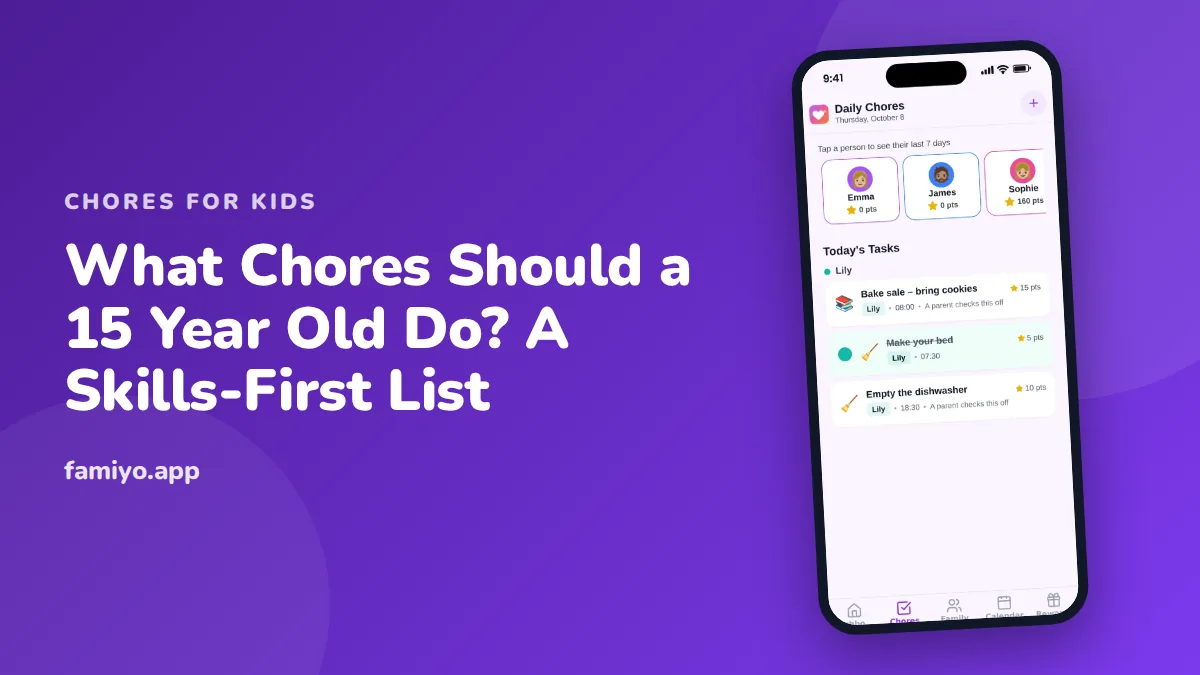
At 15, a chore is no longer about keeping the house tidy. It is practice for the day your teenager has their own kitchen, their own laundry and their own bills, which is closer than it feels. This guide treats each chore as a skill, shows what a 15-year-old can really handle, and gives you the numbers and the words to run it without a standoff.
The short list of chores for a 15-year-old
At this age the age table says: do their own laundry start to finish, cook a family meal, shop from a list, mow the lawn and help with younger siblings, for 30 to 45 minutes a day. Here is how that turns into a working list.
| Area | Chore | How often | Points |
|---|---|---|---|
| Kitchen | Cook one family dinner | Weekly | 20 |
| Kitchen | Load and run the dishwasher, wipe counters | Daily | 10 |
| Laundry | Wash, dry, fold and put away their own | Weekly | 20 |
| Bathroom | Clean the toilet, sink and shower | Weekly | 20 |
| Outdoors | Mow, rake or shovel | Weekly or seasonal | 20 |
| Errands | Shop from a list for a few items | Weekly | 10 |
| Room | Keep their own room tidy and bed made | Daily | 5 |
| Trash | Take out trash and recycling | Twice a week | 5 |
| Family | Help a younger sibling with homework or bedtime | Weekly | 10 |
That is more than most teenagers are asked to do. Pick the ones that fit your home. If you want the chores broken down by frequency, our lists of daily chores for teenagers and weekly chores for teenagers are good complements.
Cooking: from helper to dinner owner
Cooking is the skill with the biggest payoff, and 15 is a good age to move from helping to owning a meal. The ladder looks like this:
- Cook next to you while you do the same dish.
- Cook the dish while you stay in the room.
- Pick, shop for and cook a dinner of their own, with you out of the room.
- Cook a full family meal once a week without any help.
Start with something forgiving: tacos, pasta with sauce and a salad, a stir-fry, sheet-pan chicken and vegetables. Teach knife grip, hot pans and when meat is done. Our article on when a child should learn to cook lays out the earlier steps if your teen is behind.
Keep the rules simple: they plan it, they shop for it, they cook it, and someone else does the dishes. That last part is what makes them want to do it again.
Laundry, bathrooms and the other real jobs
Laundry is the best first chore to hand over completely. Show them the labels, the dial and how to avoid shrinking things once, then step back. They own the whole cycle: collect, wash, dry, fold, put away. Expect some pink socks and a shrunken sweater, and let the consequences teach.
For bathrooms, give them a short written routine with the products and the order. Spray, wait, scrub, rinse, wipe. For outdoor jobs, specify the tool and the area: "Mow the back lawn, edge along the fence, empty the bag." Vague tasks produce vague work at any age.
Errands and money tasks
A 15-year-old can go to the store with a short list and a set amount, return the change, and tell you what it cost. They can also call to book a dentist appointment, pick up a prescription with you nearby, or pay for something at a counter. These are not chores in the old sense, but they belong on the list because they are what adults do all week.
A few starter ideas:
- Buy the three items for tonight's dinner from the corner store.
- Return a library book or a package.
- Call the pharmacy to ask when a prescription is ready.
- Compare prices on one item before you buy it.
What does not belong on a 15-year-old's list
A teenager is not a second adult, and a list that treats them like one backfires. Leave off anything that is really your job: the weekly meal plan, the household budget, paperwork, and regular childcare for younger siblings that stops them from doing their own homework. An evening of babysitting now and then is a favor to the family. Every night is a second job.
Also leave off chores that need tools or chemicals they have not been taught to use. Mixing cleaning products, using a chainsaw or climbing a ladder are not first-week jobs. Teach them, supervise a few times, and only then hand them over. If you want a longer view of what to teach before they leave home, see our life skills for teenagers checklist and use it to pick the next skill after the ones here.
How much is too much?
Fifteen-year-olds are busy. Between school, sleep (8 to 10 hours at this age), sports, a job or friends, there is a real limit. The 30 to 45 minute figure is a good cap on a school day, and the weekend can carry more.
| Day | Jobs | Time |
|---|---|---|
| Monday | Dishes, take out trash | 20 minutes |
| Tuesday | Tidy room, dishes | 20 minutes |
| Wednesday | Cook dinner | 60 minutes |
| Thursday | Dishes, take out trash | 20 minutes |
| Friday | Free (busy day) | 0 |
| Saturday | Laundry, bathroom, mow | 90 minutes |
| Sunday | Errand, dishes | 40 minutes |
That is roughly 4 hours a week, spread to fit. If an exam week or a tournament pushes it out, shrink it openly: "This week, just the dishes and your laundry." Teens notice when the system flexes fairly, and they are more likely to keep it going.
Points, pay and what they buy
Use the same point sizes as for younger kids: 5 for a quick job, 10 for a medium one, 20 for a big one, plus 2 for doing it without a reminder. With the list above, a teenager earns around 130 to 160 points in a week. At 15, rewards should be real: a larger screen-time block, a later weekend curfew you already planned to give, a trip out, or pocket money. If you convert points to cash, 100 points is $1, and a typical allowance at 14 and older runs $15 to $25 a week. Basic chores stay in the unpaid column, and extra work earns more.
What to say when they push back
Teenagers react to tone more than to the job. A few lines that tend to work:
- "I am not asking you to like it. I am asking you to do it by 6."
- "You know how to do it. What do you need to make it happen today?"
- "You choose the order. The list gets done before the game."
When a job is skipped, do not do it for them and do not escalate. Name it once, keep the consequence small and predictable, and move on. A teen who feels respected is far more likely to keep their side of the deal.
Tracking it with Famiyo
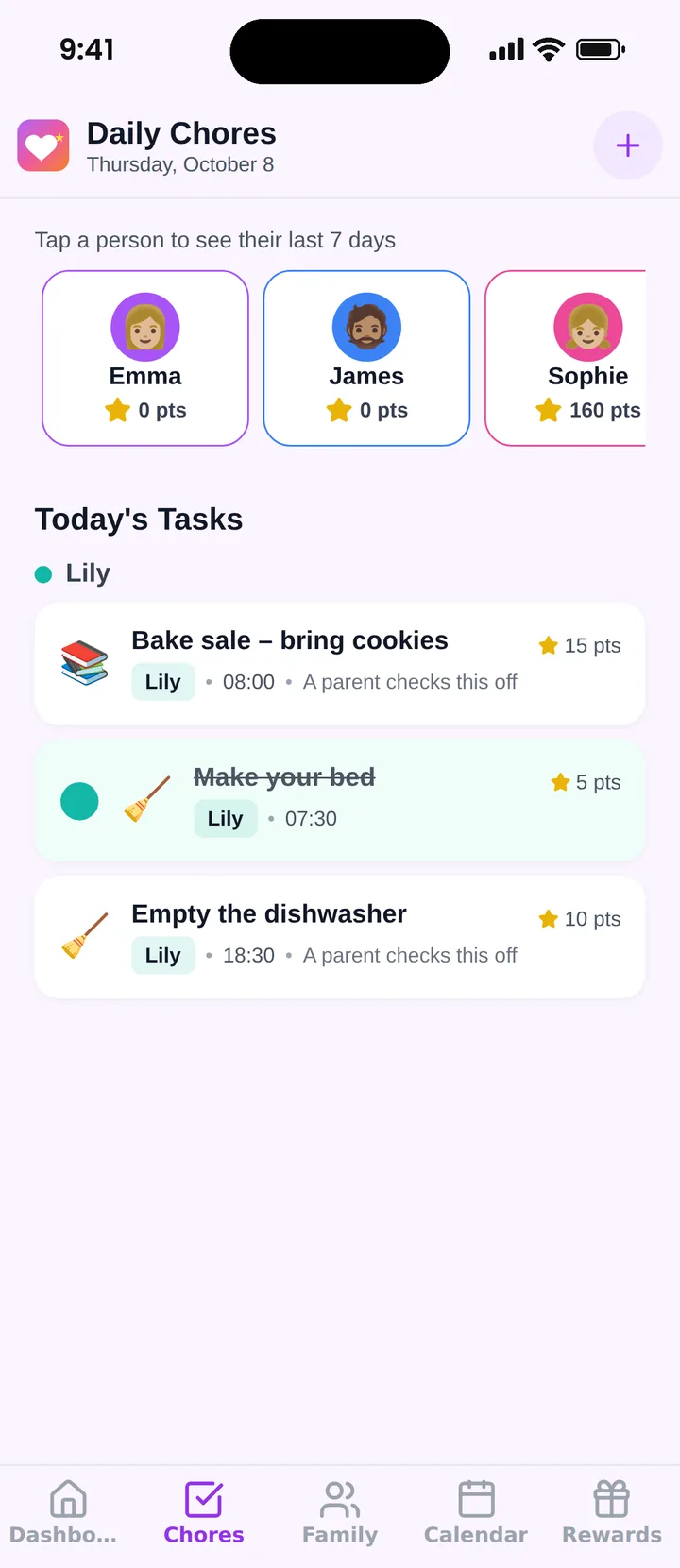
Famiyo is a free family app for iPhone and Android that combines a shared family calendar, chores with points and a rewards shop; kids join with a code, no email needed. Turn each skill into a repeating chore with points: laundry on Saturday, dinner every Wednesday, dishes every night. Your teenager sees only their own list on their own phone and ticks jobs off, or you approve them. Parents are notified when a chore is done or a reward is redeemed. Compare apps in our list of the best chore apps for kids.
This week, pick the one skill you most want them to have by 16 and hand it over completely.
Frequently asked questions
How many chores should a 15 year old have?
Three to four daily jobs and two or three weekly jobs, about 30 to 45 minutes a day in total. On heavy school or sports days, trim the daily list and move the weekly jobs to the weekend. Quality and reliability matter more than the number of items.
Should a 15 year old get paid for chores?
Keep basic household chores unpaid, since everyone who lives in the home helps run it. Pay for extras beyond the normal list, such as washing both cars or a big yard job. A common range for a big extra job is $2 to $5, and a common allowance at 14 and older is $15 to $25 a week.
Can a 15 year old cook dinner on their own?
Most can cook a simple meal on their own, such as pasta with sauce, tacos or eggs and vegetables, once they have done it a few times with you beside them. Start with an adult in the house, then move toward solo. Teach knife and stove safety first.
What do I do if my 15 year old refuses chores?
Stay calm and bring it back to the agreement made earlier. Ask what makes the job hard, adjust the time or the size, and use a clear, doable consequence, such as phone time after the jobs are done. Avoid long lectures, which tend to harden the refusal.
Are chores or homework more important for a teenager?
Both matter, and they don't compete when the schedule is planned. Put the most important school work first on heavy days and keep a short, fixed chore list so chores stay a habit. A teen who runs a household job well also learns planning, which helps school.
Try Famiyo With Your Family
Chores with points, a rewards shop for kids and one shared family calendar. Set it up in a couple of minutes.



Free to download • No credit card required • Available on iOS & Android