Kids Habit Tracker: Start Small and Keep the Streak
How to use a kids habit tracker that sticks: pick one tiny habit, tie it to a cue, track it together and handle missed days. Starter habits by age.
By Famiyo Editorial TeamUpdated 6 min read
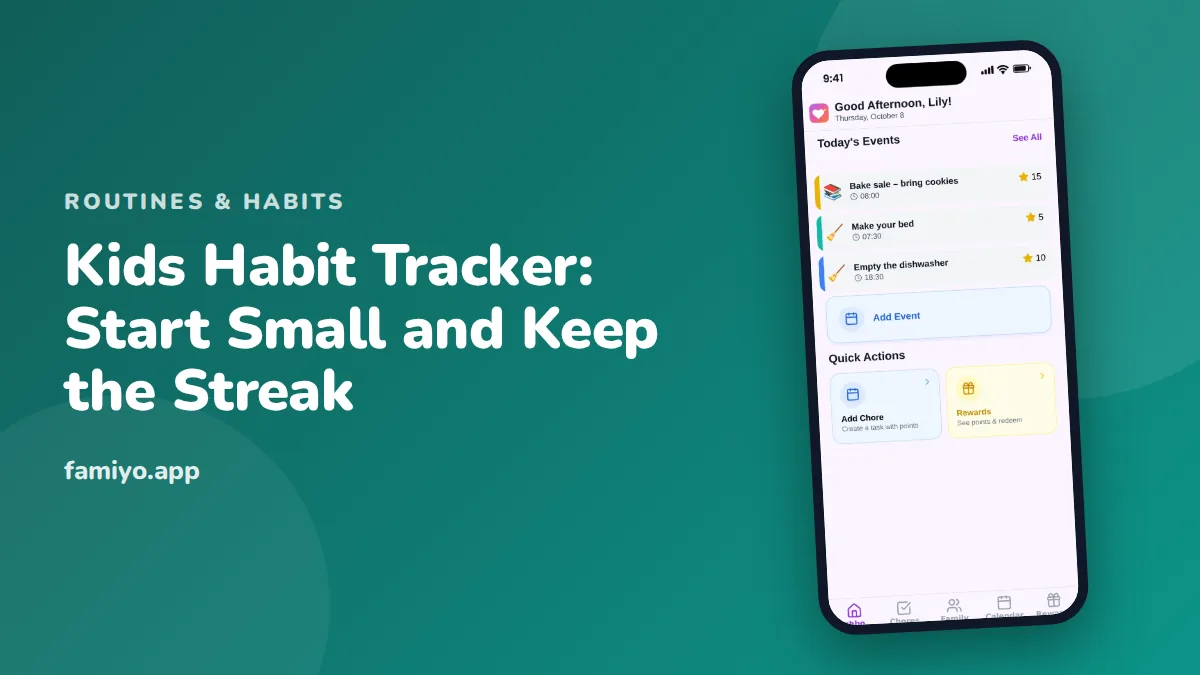
Habits are the boring middle of parenting. Nobody celebrates the fortieth time a child brushes their teeth without being asked, but that fortieth time is the goal. A kids habit tracker makes the repetition visible and a little fun, which helps most children keep going until the habit runs itself. This guide is a hands-on plan: how to choose a first habit, how to tie it to a cue, what to do when the streak breaks, and starter habits for each age.
What is a kids habit tracker?
A habit tracker is a simple record of a small action done on repeat, like a daily tick on a grid. The tick gives the child a small sense of success, and the row of ticks shows them how far they have come.
It differs from a chore chart in focus. Chores serve the household (feed the cat, empty the dishwasher). Habits serve the child (brush teeth, read, practice, drink water, get the bag ready). A good family often uses both, and our guide to building good habits in kids explains the science of why repetition in a steady spot works. This page is about the tracking part.
Pick one tiny habit first
The most common mistake is starting with five habits. The second most common is picking a habit that is too big. "Be healthy" is a goal. "Drink a glass of water with breakfast" is a habit.
Make the first habit so small that it feels almost silly. Two minutes of reading. One page of piano. Hanging the coat on the hook. Success matters more than size at the start, and you can grow it later.
Choose it together. Ask, "What's one thing you'd like to get better at?" Children keep up habits they chose, even if the choice looks odd to you.
Tie the habit to a cue
Habits stick best when they follow something that already happens every day. This is called a cue. "After breakfast, brush teeth." "When I get home, bag on the hook." "After dinner, 10 minutes of reading."
Write it as a sentence: "After I ___, I will ___." Put it on the tracker. Children rarely forget the cue, and the cue pulls the habit along.
Watch the time of day. A habit that needs energy, such as practicing an instrument, does not work at 8:30 pm when everyone is tired. Put it earlier.
Starter habits by age
Use this table as a menu. Pick one row item, not the whole row.
| Age | Starter habits | Cue that works | Time |
|---|---|---|---|
| 3-4 | Wash hands, put shoes by the door, tidy 3 toys | Before meals, after coming home, before bath | 1 to 2 minutes |
| 5-6 | Brush teeth, pick tomorrow's clothes, drink water | After breakfast, after bath, with breakfast | 2 to 3 minutes |
| 7-9 | Read, pack the school bag, practice an instrument | After dinner, before screens, after snack | 10 to 15 minutes |
| 10-12 | Homework before screens, stretch or walk, journal | After snack, after school, before bed | 10 to 20 minutes |
| 13+ | Own sleep time, a daily outside walk, own laundry | Phone down, after school, Sunday evening | 10 to 30 minutes |
For habits that support health, such as sleep, water and movement, see our healthy habit tracker for kids for specific ideas.
How to track it, day by day
Keep the record very simple, so ticking takes seconds. A grid with the days across and the habit down the side is enough. A calendar with a sticker per day also works. Let the child do the ticking, because the act of checking is the reward.
- Write the habit and its cue at the top.
- Tick or sticker it right after it happens. Do not wait until the evening.
- Mention the streak: "That's four days in a row."
- Celebrate small milestones: day 3, day 7, day 14. A high five or a favorite breakfast is plenty.
- At two to three weeks, ask, "Does this feel easy yet?" If yes, add the next habit. If no, keep going.
Do it with them. Many parents have found that a family-wide habit, like everyone reading for 10 minutes after dinner, works better than a single child's chart. Children copy what they see you do, and a parent ticking their own box makes the tracker feel like a team game.
What to do when the streak breaks
It will break. A sick day, a trip, a late night. How you respond decides whether the habit survives.
Say it plainly and move on: "We missed yesterday. Let's tick today." Do not lecture and do not restart the count at zero in a way that feels like punishment. Some families switch from a strict streak to a weekly total ("5 out of 7 days") so one miss does not wipe out progress.
A useful rule is never miss twice. One missed day is a blip. Two in a row starts a new pattern. If a miss happens, make the next day's habit as easy as possible, even a shrunk version, such as one page instead of ten minutes.
If misses become common, the habit is probably too big, tied to a poor cue, or competing with something else. Shrink it, move it, or pause it. Pressure rarely helps.
Make it active: habits you do together
A tracker on a screen only goes so far. Habits grow faster when the family does them side by side, and the ones that involve moving, going outside or making something are the easiest to keep alive.
Try a few shared habits. A 10-minute walk after dinner, with the tracker ticked at the door. Everyone reads for 10 minutes before bed, parent included. A Saturday morning "fix one thing" slot, where each person picks a small job around the home and does it together. A weekly kitchen night where a child cooks a simple meal with an adult nearby, which suits kids aged 10 and up.
These do double duty. The habit gets done, and you spend ten minutes with your child, which is often the reward they want most.
Give children a role in the habit, not just a box to tick. A 5-year-old can be in charge of timing the walk. A 9-year-old can pick the book. A 12-year-old can choose the route. Ownership turns "my parent's habit" into "our habit".
Be honest about your own misses, too. Saying "I forgot my walk yesterday, so I'm doing a short one now" shows a child how to handle a slip with a shrug and a restart, which is the skill that matters most.
When a habit becomes automatic, celebrate it and retire it from the tracker. A short ceremony helps: "You've brushed your teeth without reminders for three weeks. That's yours now." Then choose the next one together. A child with four or five retired habits has a pile of evidence that they can change their own behavior, and that belief is worth more than any single habit.
Do rewards help a habit tracker?
Sometimes. A small, quick reward can help a habit get going in the first weeks, and then you phase it out so the habit does not depend on it. A good pattern is to celebrate a streak of 7 days with a family choice, such as picking the weekend breakfast.
Many habits, such as reading, carry their own reward once they are comfortable. If your child is enjoying the tracker, you do not need to add one. When you do, keep it small and tied to effort, not to perfection. Our guide to how to teach kids responsibility covers when to hand over more ownership of the tracker itself.
Tracking habits in Famiyo
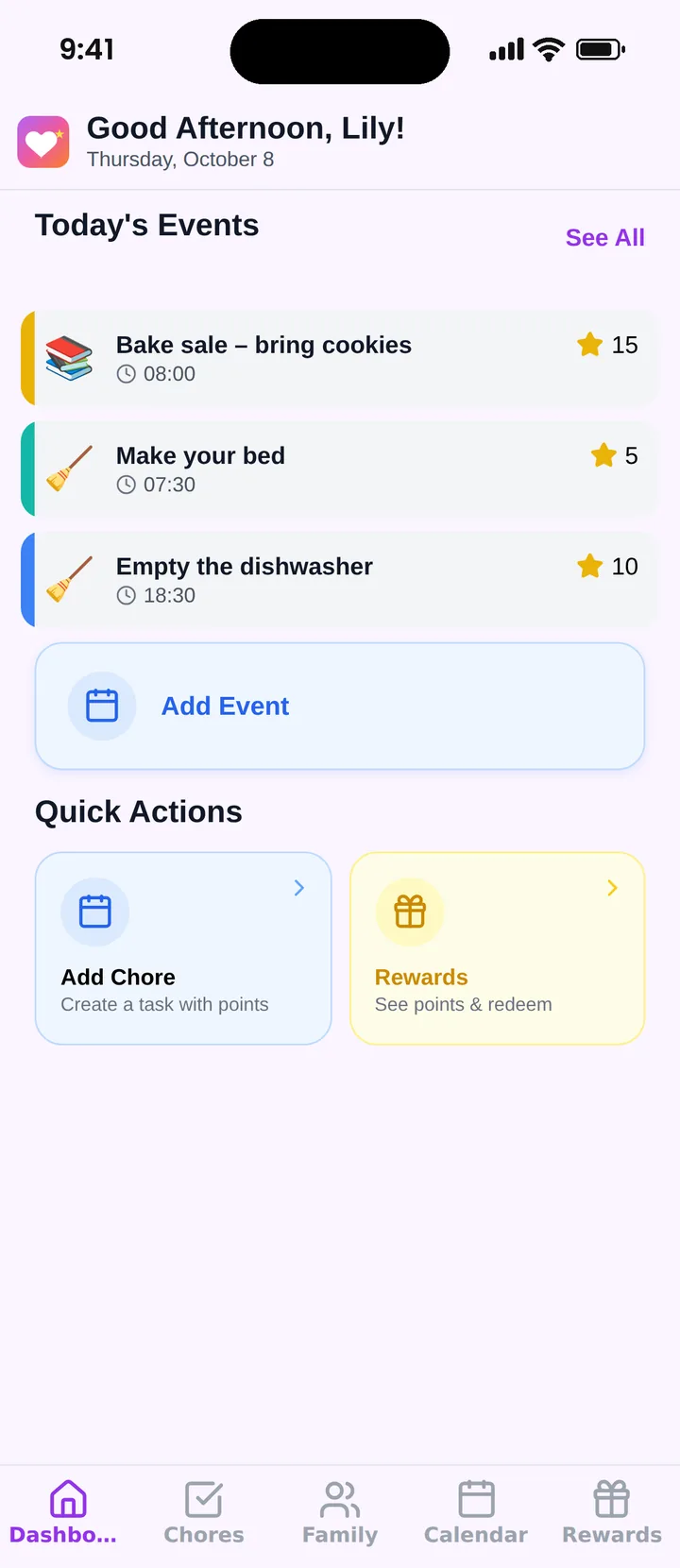
Famiyo is a free family app for iPhone and Android that combines a shared family calendar, chores with points and a rewards shop; kids join with a code, no email needed. Habits can be set up as repeating tasks for each child, such as "Read 10 minutes", with or without points. Kids tick them off on their own phone, and a parent can approve instead if you prefer. A child's last 7 days of tasks show as a quick history, which suits the 5 out of 7 days approach. Points can buy rewards in the shop. Free plan includes 1 repeating task and up to 3 members, with Premium lifting the limits. See our list of the best reward chart apps for kids.
Choose one habit and one cue tonight, and tick the first box tomorrow morning together.
Frequently asked questions
How many habits should a child track at once?
Start with one. After 2 to 3 weeks of steady use, add a second. Most children do fine with three habits at a time. More than that and the tracker turns into a long to-do list and gets dropped.
What age is right for a kids habit tracker?
From about age 3 with pictures and a parent beside them. Ages 5 to 8 enjoy ticking boxes and watching a streak grow. Older kids can run their own tracker and may prefer a private one over a family chart.
How long does it take for a habit to stick?
It varies by child and by habit, so beware of any magic number. A fair working rule is to give a new habit 2 to 3 weeks of consistent use, then check whether it happens without a reminder.
What should we do when a child misses a day?
Treat one missed day as normal and carry on the next day without comment. Aim never to miss twice in a row. If misses pile up, shrink the habit or move it to a better time instead of adding pressure.
Is a habit tracker different from a chore chart?
Yes. A chore chart tracks household jobs. A habit tracker tracks personal routines such as brushing teeth, reading or practicing an instrument. They can share one app, but habits are about the child's own growth, not what they do for the home.
Try Famiyo With Your Family
Chores with points, a rewards shop for kids and one shared family calendar. Set it up in a couple of minutes.



Free to download • No credit card required • Available on iOS & Android