53 guides
Chores for Kids: Ideas, Charts and Getting Them Done
Everything about chores for kids: what they can do at every age, chore charts that work, printable templates and how to get kids to help without nagging.
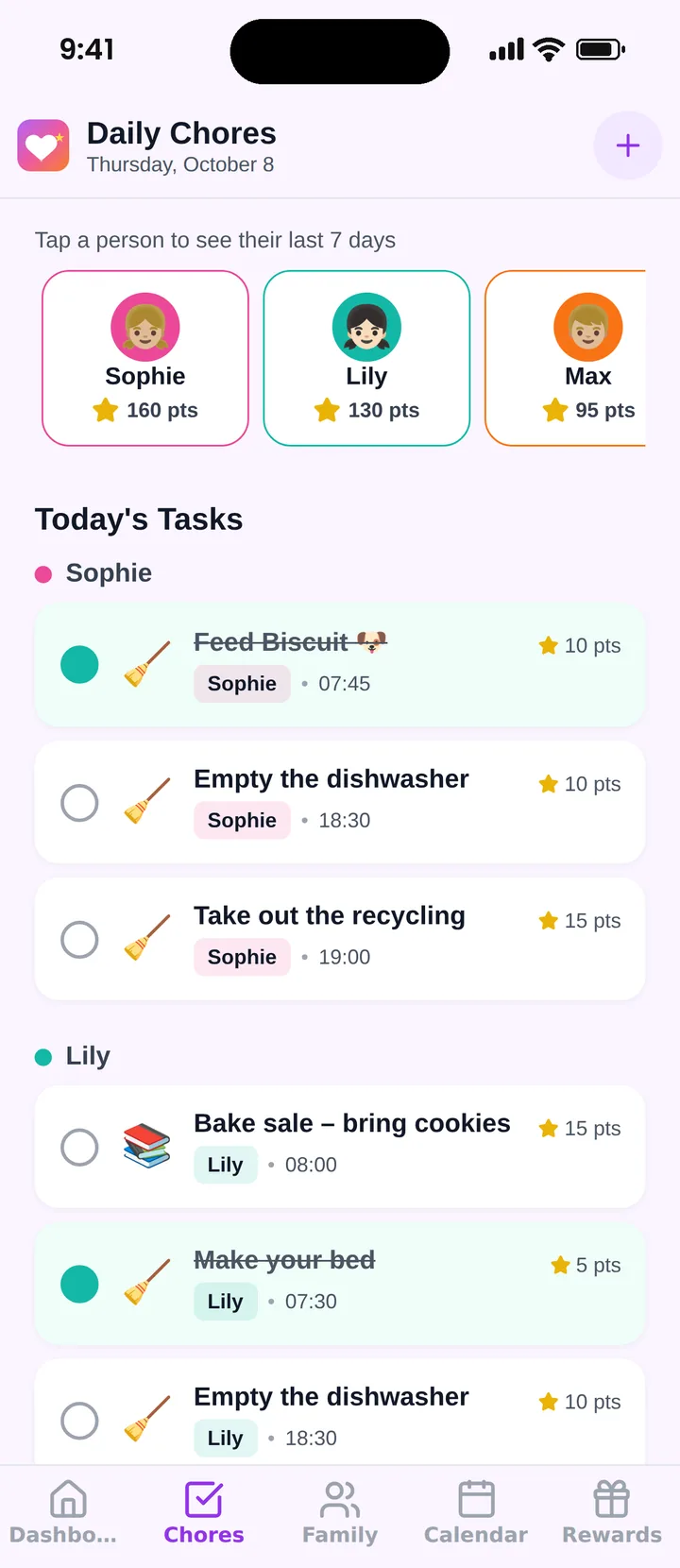
Chores by age
- Age-Appropriate Chores for Kids: What Each Age Can Do
Age-appropriate chores for kids from 2 to 13+, with time per day, the skill each job builds, how many to assign and how to teach a new one.
- Chores for 10-Year-Olds: 25 Jobs They Can Do Without Reminders
25 chores a 10-year-old can own from start to finish, a sample week with points, and a simple method to get them done without you reminding every day.
- Chores for 11-Year-Olds: 25 Jobs for Tweens
25 chores for 11-year-olds, grouped by room with points, a sample week of about 30 minutes a day, and how to teach the jobs that still need an adult nearby.
- Chores for 12-Year-Olds: 25 Jobs Before the Teen Years
25 chores for 12-year-olds sorted by room, which skills to master before 13, a sample week, and how long each job takes. The same list works for any kid.
- Chores for 13-Year-Olds: What a Young Teen Should Handle
25 chores a 13-year-old can own, from laundry start to finish to cooking a family meal, plus how much time to expect each day and how to hand jobs over.
- Chores for 14-Year-Olds: Responsibilities That Prepare Them for High School
What chores a 14-year-old should do, matched to the skills high school asks for: planning, early mornings, self-care and running a job without reminders.
- Chores for 15 Year Olds: A Realistic List That Works
Chores for 15 year olds that fit a real school week: a list by area, minutes per job, a sample week, points and what to say when they push back.
- Chores for 16 Year Olds (Home, Car and Money Tasks)
Chores for 16 year olds beyond the dishwasher: home jobs, car care, errands and money tasks, with times, a sample week and fair rules for driving.
- Chores for 17 Year Olds Getting Ready to Leave Home
Chores for 17 year olds as a practice run for adult life: skills to master, a 12-month plan, a run-the-house week and how to check progress.
- Chores for 18 Year Olds Living at Home
Chores for 18 year olds living at home: what is fair to expect, a household agreement, a sample list, and how to talk to an adult child without a fight.
- Chores for 2-Year-Olds: 12 Simple Jobs Toddlers Can Really Do
12 real chores for 2-year-olds, from toys in the bin to scrubbing potatoes, with how to teach each one, a sample day and what to keep out of reach.
- Chores for 3-Year-Olds: 15 Easy Jobs That Build Independence
15 easy chores for 3-year-olds, from putting toys in a bin to wiping up spills, with how long each takes, how to teach it and what to expect.
- Chores for 4-Year-Olds: 18 Jobs Preschoolers Can Handle
18 chores a 4-year-old can really do, with minutes, point values and the exact words to teach each one. Start with two or three and build from there.
- Chores for 5-Year-Olds: 20 Kindergarten-Ready Jobs
20 chores a 5-year-old can do, grouped by where they happen, with time, points and how to build a kindergarten routine. Includes boys, girls and a sample week.
- Chores for 6-Year-Olds: 20 Jobs Kids Can Do on Their Own
20 chores a 6-year-old can do without help, what done looks like for each, how long they take, and how to teach them so first graders work on their own.
- Chores Kids Should Do Every Day (and the Ones That Can Wait)
The few chores kids should do every day, by age, and the bigger jobs that can wait for a weekly slot. With daily minutes and a sample school day.
Chore charts & systems
- Chore App for Teens and Tweens: What Works
What a chore app for teens and tweens must do to get used: phone-first check-offs, fair points, no nagging. Questions to ask, red flags and a week-one setup.
- Chore Chart for Kids: How to Make One That Sticks
Choose a chore chart format for your child's age, pick the right chores, build it in one evening, introduce it well and run the first three weeks.
- Chore Rotation: How to Rotate Chores Fairly
How to set up a chore rotation that feels fair to every kid: four rotation methods, how to balance jobs across ages, a sample 3-week chart and swap rules.
- Chore Schedule for Kids: Daily, Weekly and Monthly Plans
Build a chore schedule for kids that fits school days: what goes daily, weekly or monthly, when in the day chores work best, and sample weeks by age.
- Chore Schedule for the Family: A Weekly Plan That Works
How to build a family chore schedule that covers adults and kids: daily, weekly and monthly jobs, a sample week for a family of four and a weekly check-in.
- Chore Wheel Generator: How to Spin Chores Fairly
How to use a chore wheel generator to assign chores at random, with rules that keep it fair, a paper version to make at home, and when to switch to a rotation.
- DIY Chore Chart for Kids: 5 Ways to Make One at Home
Make a DIY chore chart for kids in under an hour: five homemade designs with materials, steps and tips for keeping the chart in use past week three.
- Fair Play Chores: The Card System Explained
Fair Play chores explained: how the card system splits household work, what conception, planning and execution mean, and how to adapt a card list for kids.
- Family Chore App: What to Look For and How to Start
How to choose a family chore app, which features matter, how to set it up in one evening, and the mistakes that make families quit after two weeks.
- How to Make a Chore Chart for 3 Kids (Without a Fight)
Make one chore chart that works for three kids of different ages: split the jobs fairly, rotate them, set up the grid and keep it running past week two.
- Kids Chore Tracker: Paper, Spreadsheet or App?
Pick the right kids chore tracker for your family: what it has to record, how paper, spreadsheets and apps compare, and a 10-minute weekly check.
- Kids To-Do List: How to Make One They Actually Follow
How to make a kids to-do list that works: what to put on it, how many items by age, wording kids can check off, and sample lists for ages 5, 8 and 12.
- Sticker Chart for Kids: How to Use It Well
How to set up a sticker chart for kids: which behavior to pick, how many stickers before a reward by age, when to give them and how to phase the chart out.
- Thanksgiving Chores for Kids (Age-Right Jobs for the Big Day)
Thanksgiving chores for kids by age, from table-setting for 4-year-olds to carving-day prep for teens, with a timeline and a free printable checklist.
- What to Put on a Chore Chart: Tasks, Columns and Rewards
What belongs on a chore chart: the parts every chart needs, tasks by age, how many to list, what to leave off and a sample week you can copy tonight.
Charts by age
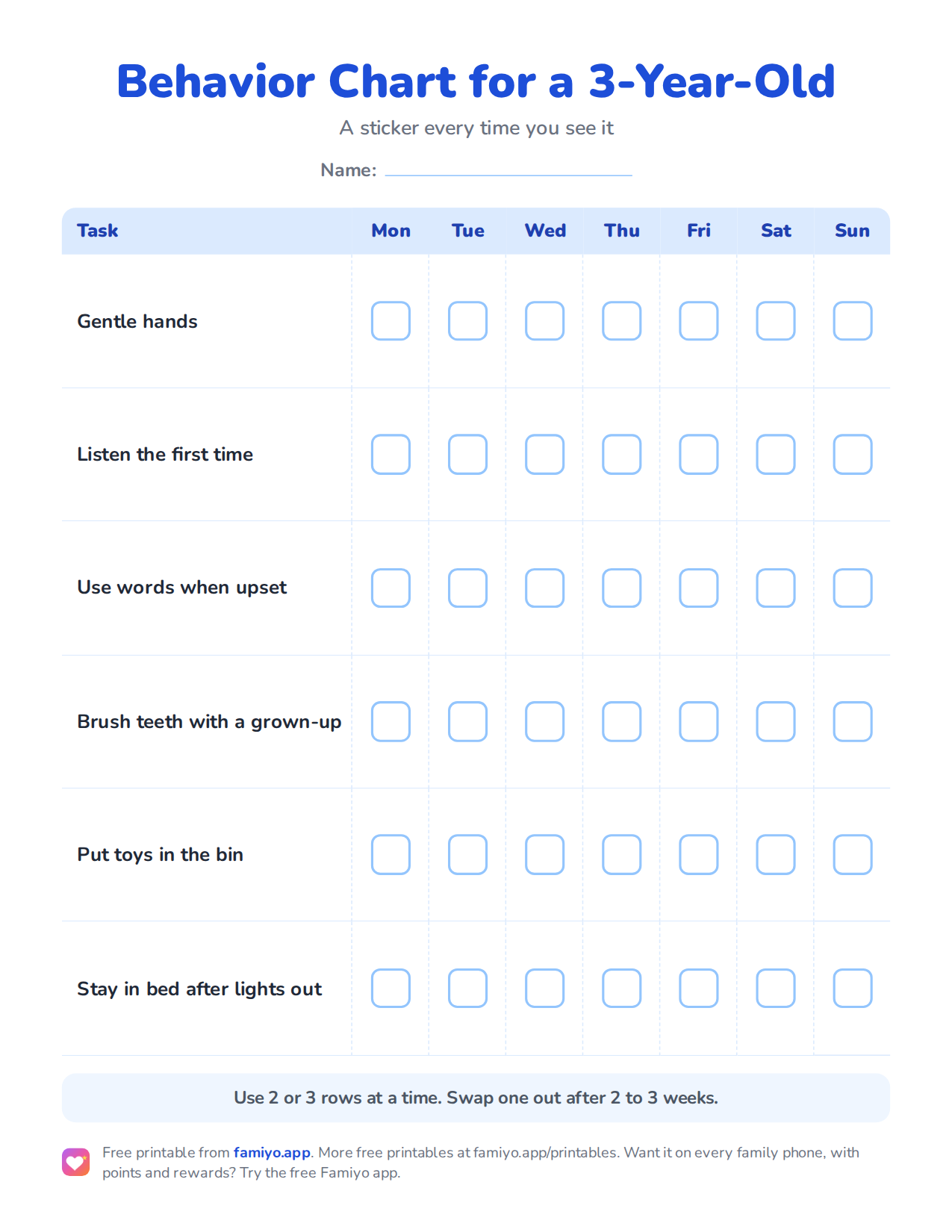
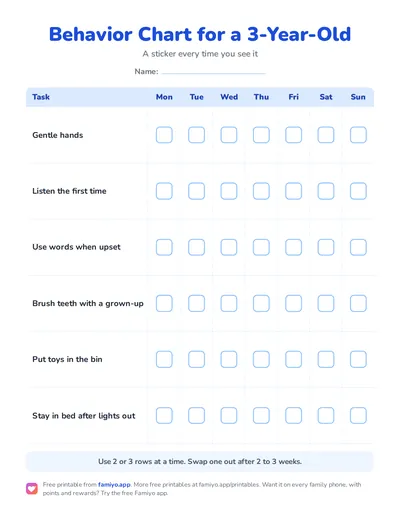
- Behavior Chart for a 3-Year-Old: How to Make It Work
How to build a behavior chart a 3-year-old understands: two or three positive behaviors, a sticker right away, a fresh start daily, plus a free printable.
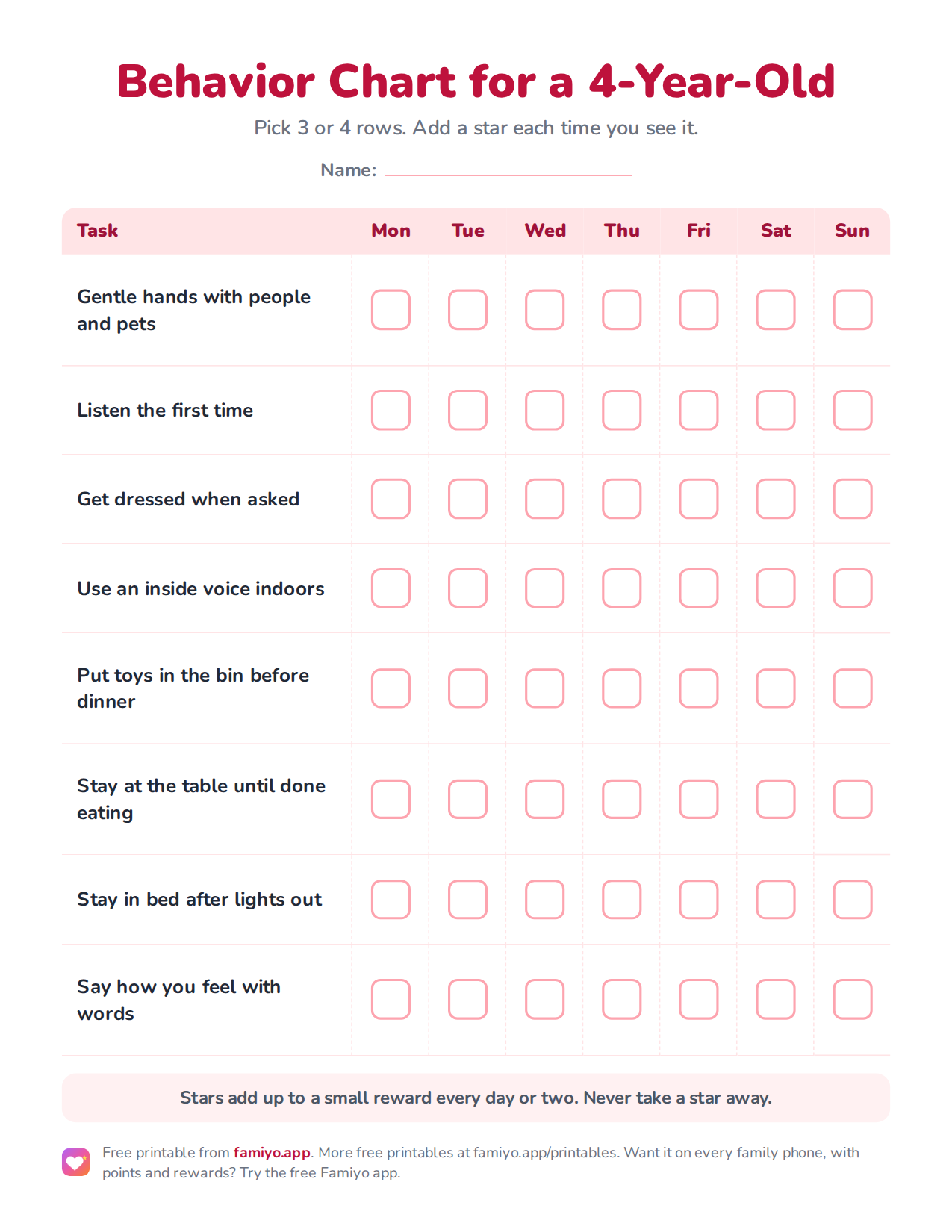
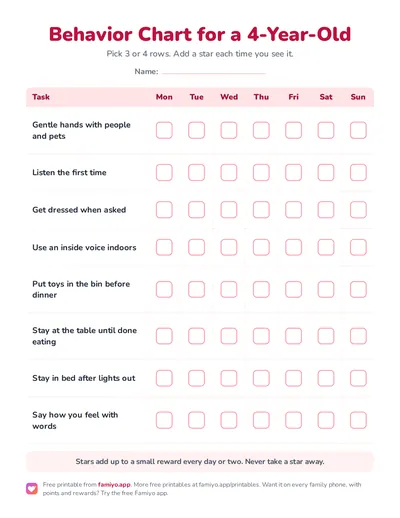
- Behavior Chart for a 4-Year-Old: How to Make It Work
A behavior chart for a 4-year-old that works: which 3 or 4 behaviors to track, how to word them, rewards that fit the age, plus a free printable weekly chart.
- Behavior Chart for a 5-Year-Old: How to Make It Work
A behavior chart for a 5-year-old that works: 3 to 5 positive goals, a star each time, a reward within a few days, and a free printable weekly chart.
- Chore Chart for a 3-Year-Old: Ideas That Actually Get Done
A chore chart a 3-year-old can follow: 2 or 3 picture chores tied to daily moments, done side by side with you, plus a free printable weekly chart.
- Chore Chart for a 4-Year-Old: Ideas That Actually Get Done
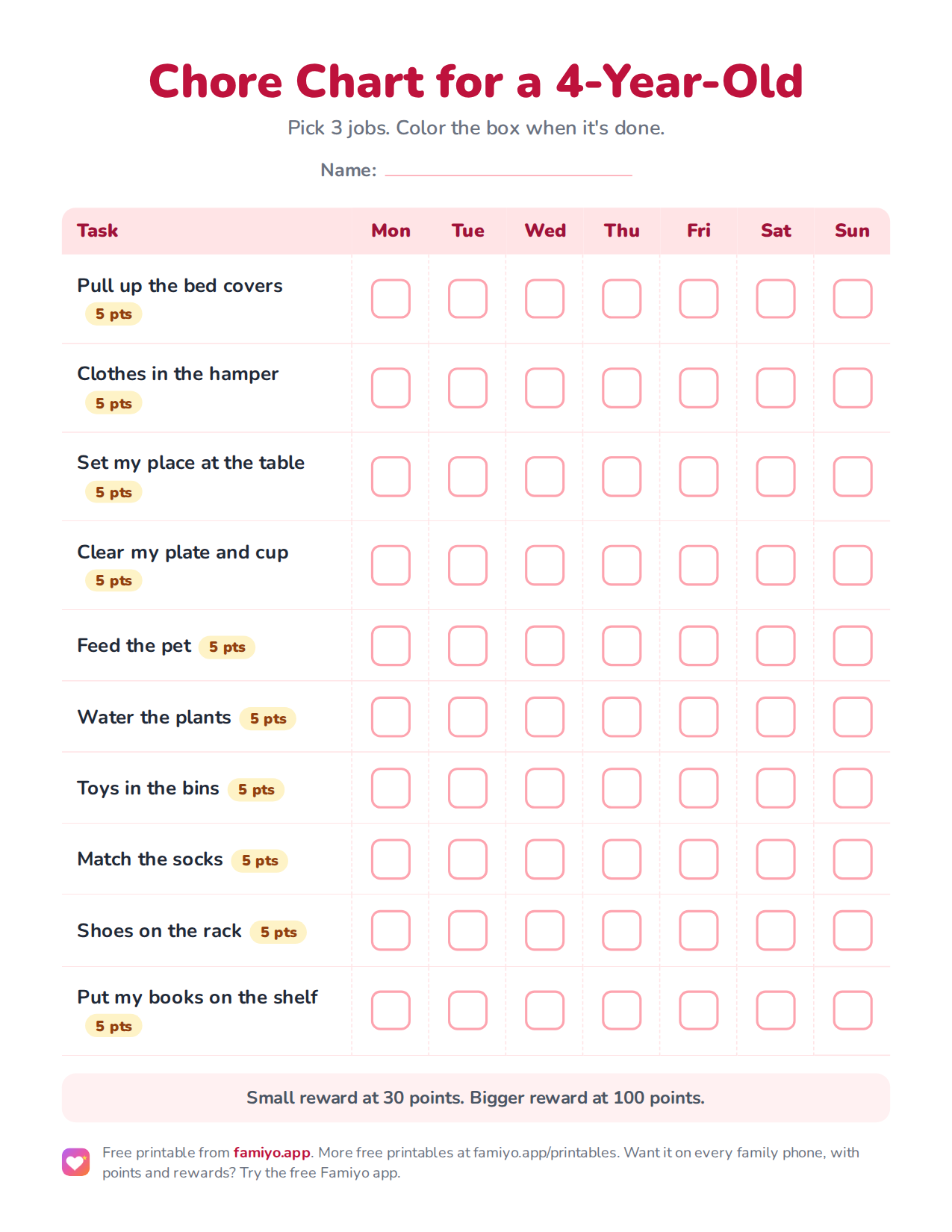
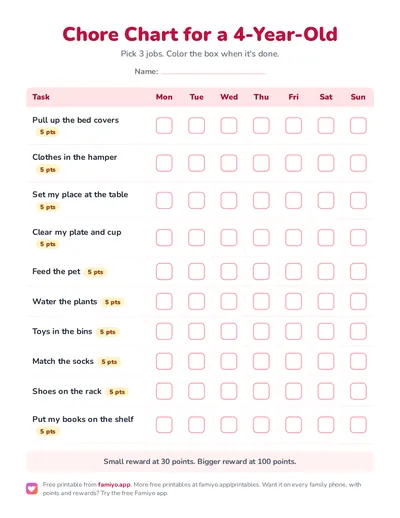
A chore chart for a 4-year-old with 10 jobs preschoolers can really do, what done looks like, points per job, rewards, and a free printable weekly chart.
- Chore Chart for a 5-Year-Old: Ideas That Actually Get Done
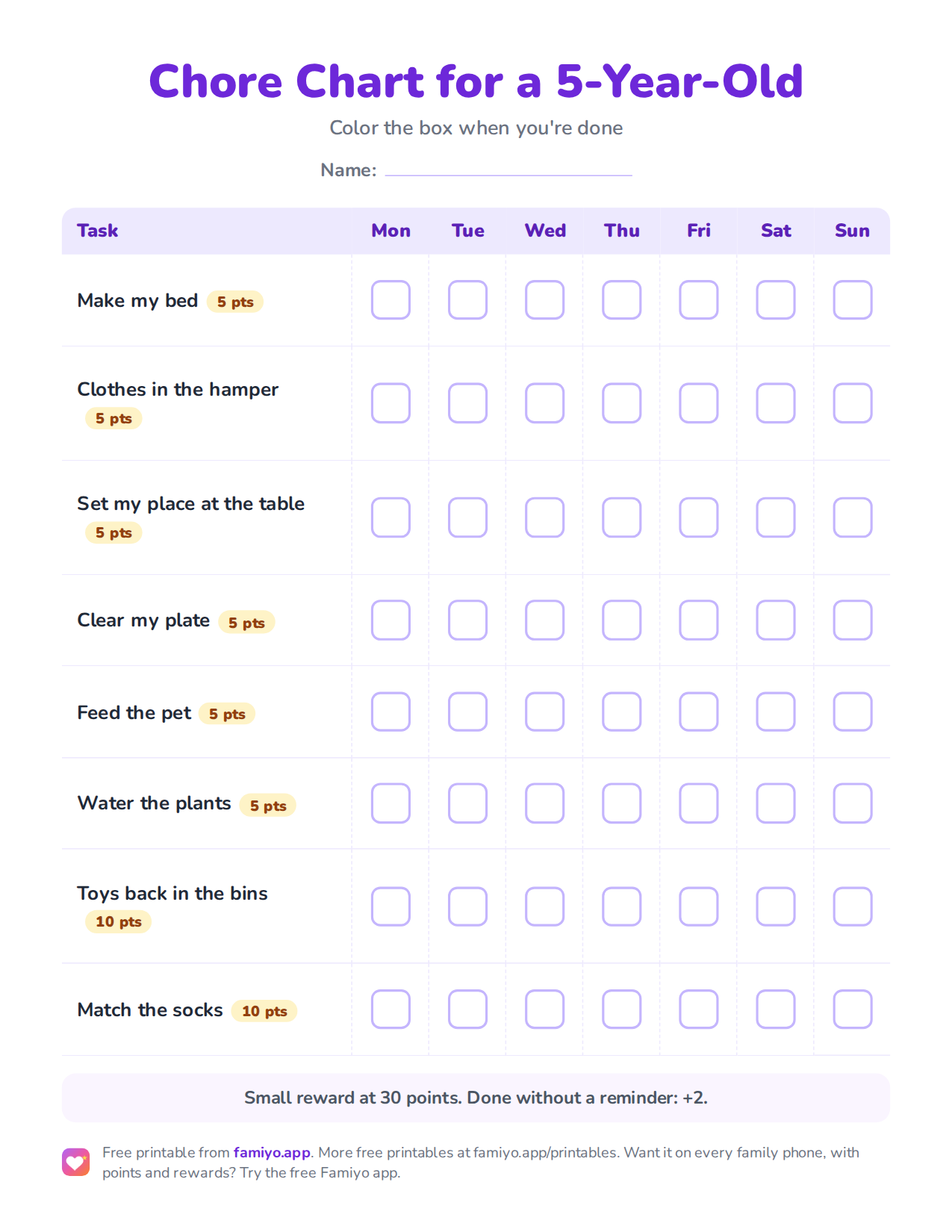
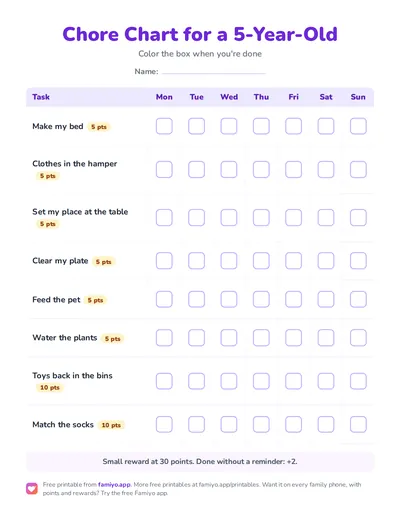
A chore chart for a 5-year-old with 3 or 4 picture-based jobs, what done looks like for each, five chart ideas for kindergartners and a free printable.
- Chore Chart for a 6-Year-Old: Ideas That Actually Get Done
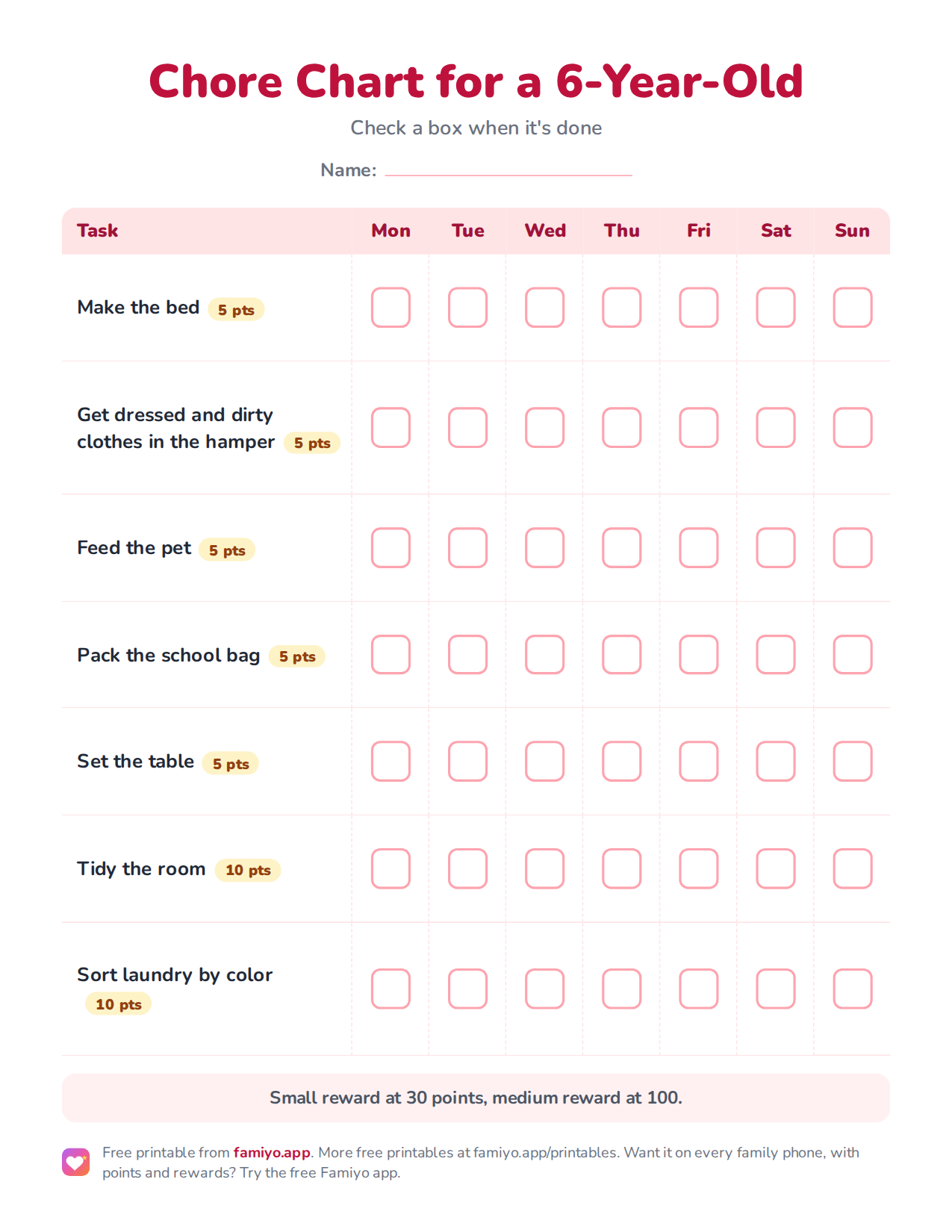
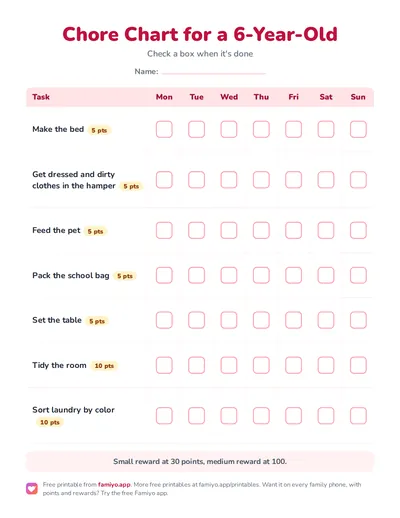
A free printable chore chart for a 6-year-old with seven age-right jobs, point values, a sample week and tips for keeping a first grader on track.
- Chore Chart Ideas for 7-Year-Olds (With a Free Printable)
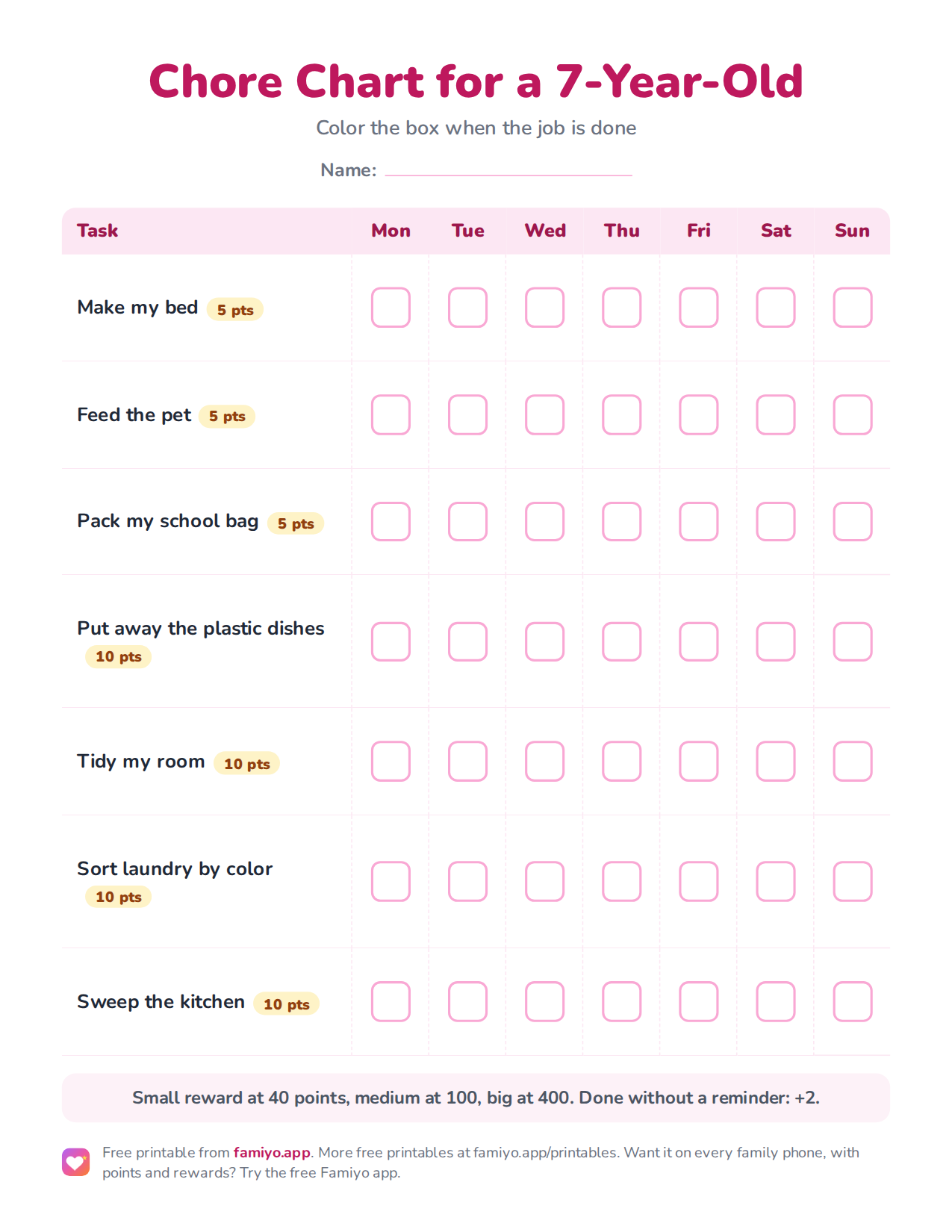
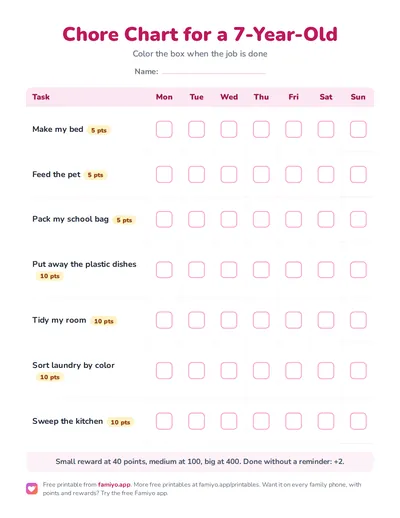
Six chore chart ideas that fit a 7-year-old's skills, a table of chores with points and a free printable weekly chart with jobs a second grader can do alone.
- Chore Chart Ideas for 8-Year-Olds
Chore chart ideas for an 8-year-old: which jobs fit the age, how many to put on the chart, chart formats that work, and a free weekly printable with points.
- Responsibility Chart for a 9-Year-Old: What to Include
A responsibility chart for a 9-year-old with seven age-fit tasks, a points scale and rewards, plus a free printable weekly chart to start using today.
Getting kids to help
- Chore Charts That Actually Work: 9 Rules
Most chore charts fade by week three. These 9 rules fix the usual causes: too many chores, vague jobs, nagging, slow rewards and the midweek collapse.
- Chores for Autistic Kids: Visual, Predictable and Doable
Chores for a 10-year-old autistic boy that actually get done: which jobs suit him, how to break them into visual steps, sensory fixes and a calm sample week.
- Chores for Boys and Girls: Why the Same List Matters
Boys and girls should get the same chores, chosen by age. Here's how lists drift apart without anyone meaning it, a 15-minute audit and what to say to kids.
- Gentle Parenting and Chores: Cooperation Without Coercion
How gentle parenting works with chores: firm expectations without threats or bribes, what to say when kids refuse, and where points and charts still fit.
- Get Kids to Do Chores Without Nagging: What to Say
Stop repeating yourself five times. Exact scripts, a one-reminder rule, a 3-week plan and honest advice for the days it all falls apart anyway.
- Household Chores Rules Every Family Should Agree On
Ten household chores rules for families, the exact words to use with kids, what to do when a rule gets broken and how to agree on them in one short meeting.
- How to Get Kids to Clean Their Room (Without a Nightly Fight)
Why 'clean your room' fails and what works instead: a clear definition of done, a 10-minute reset, a script for the first ask and a plan for when it all falls apart.
- How to Get Kids to Clean Up After Themselves
Get kids to clean up after themselves by giving every activity a clear last step, the words to prompt it, an easy setup and two short daily resets.
- How to Get Kids to Do Chores Without Asking
Kids wait to be asked because you are the reminder. Move the cue to a time, place or list, then fade yourself out with this 4-week handoff plan and scripts.
- Teaching Kids to Cook: An Age-by-Age Guide
Teaching kids to cook, age by age: which kitchen jobs fit ages 2 to 14, when to hand over knives and the stove, first recipes, and how to make it a weekly habit.
- Why Do Kids Hate Cleaning Their Room?
Kids hate cleaning their room because the job is too big, too vague and too lonely. Seven real reasons, what each looks like, and the fix that matches it.
- Why Kids Don't Want to Do Chores (and What Actually Helps)
Why kids don't want to do chores, from unclear jobs to tired brains, and what helps: smaller tasks, fewer reminders, real choices and a system that nags for you.
Free printables
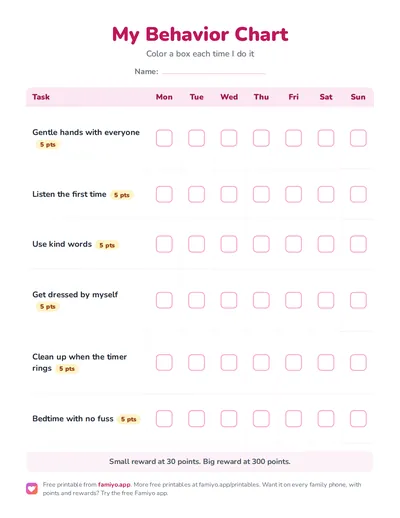
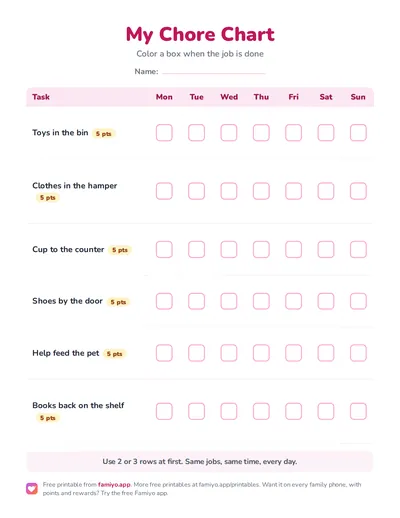
Download as PDF or image and print at home.
Choosing an app for this?
Common questions
At what age should kids start doing chores?
Around age 2. Toddlers can put toys in a bin, drop clothes in the hamper and help feed a pet. The goal at that age is the habit of helping, not a clean house, so keep tasks to a few minutes and do them together.
How many chores should a child have?
Two to three short daily tasks for preschoolers and three to four for school-age kids, plus one weekly bigger job from about age 8. Fewer chores done every day beat a long list that nobody finishes.
Should kids be paid for chores?
Many families keep everyday "family member" chores unpaid and pay or give points for extra jobs. That way kids learn that helping at home is normal, and they can still earn money or rewards for doing more.
More guide topics
Make it stick with Famiyo
A shared family calendar, chores with points and a rewards shop for kids. Free on iPhone and Android.