Chores for Tweens (Ages 9 to 12): Building Real Independence
Chores for 9 to 12 year olds: what tweens can really handle, a table of jobs by age, how long they take, and how to move from reminders to ownership.
By Famiyo Editorial Team4 min read
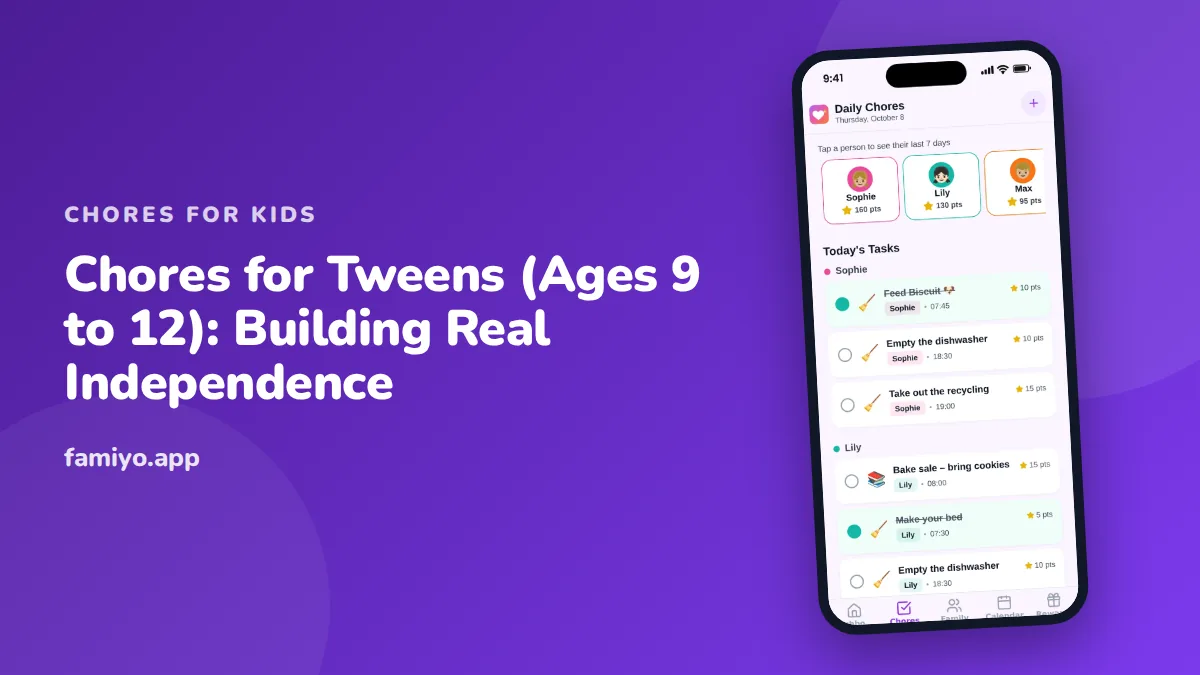
Between nine and twelve, children make a big jump. They can read a recipe, work a washing machine and handle a task for 30 minutes. They're also more likely to push back, which is a good sign: it means they want some say. This list shows what tweens can realistically own, in what order, and how to shift from "I told you three times" to "that's your job."
What changes between 9 and 12
Younger children need you nearby for every step. A tween needs you to show the job once and then stop hovering. Their coordination, reading and sense of time are good enough that the real obstacle is usually follow-through, not ability. That's where ownership helps: a chore that is clearly theirs, with a clear end and a clear day, is much easier to keep than one that's fuzzy and shared.
Time matters too. A 9-year-old does about 20 to 30 minutes a day in total, and by 12 it's around 30. Keep homework, sports and sleep in the picture. A 9 to 12-year-old needs 9 to 12 hours of sleep, and a chore load that crowds that out is too big.
Chores by age, 9 to 12
Each age keeps the jobs from the one before and adds something.
| Age | Daily | Weekly |
|---|---|---|
| 9 | Make the bed, load or empty the dishwasher, take out the trash, pack the school bag | Vacuum one room, fold and put away laundry, water plants |
| 10 | All of the above, plus feed and walk the pet, clear and wipe the table | Clean the bathroom sink and mirror, rake or sweep outside, run a load of laundry |
| 11 | Own morning routine without prompts, make a simple snack or breakfast | Clean the toilet and bathroom floor, change bed sheets, mop the kitchen |
| 12 | Help with dinner prep, keep their room at a standard | Cook one simple meal with an adult nearby, wash the car, do all of their own laundry |
If you want the age-by-age detail, we have full lists for 9-year-olds, 10-year-olds, 11-year-olds and 12-year-olds.
Jobs worth giving a tween ownership of
Ownership means a job belongs to them every time, and nobody else steps in unless there's a real problem. Strong candidates:
- Their own laundry from hamper to drawer, once a week. Start with towels and sheets, then clothes.
- The dishwasher, both loading and emptying, on a daily schedule.
- One pet's daily care, including food, water and a walk.
- One meal a week. A 10 to 12-year-old can plan it, shop for the three ingredients and cook with an adult nearby.
- A zone, like the bathroom or the entryway, that stays theirs for a month before it rotates.
- Packing their own bag, snacks and sports kit the night before.
A single owned job done well builds more pride than six shared ones done sloppily.
Teach it properly, then let go
Tweens will often do a chore badly once and then claim it's "too hard." Use the sequence of watch, help, solo. First they watch you do it and hear what "done" means. Then you do it together. Then they do it alone and you check against a short list.
Write the finish line in observable terms. "Clean the bathroom" is vague. "Sink wiped, toilet scrubbed and flushed, floor swept, towels in the hamper" can be checked. A short photo or checklist on their phone helps. When you do correct something, correct the job, not the child: "The mirror still has streaks on the left. Try again with the dry cloth."
Motivation at this age
Tweens react badly to being nagged and well to being trusted. A few things tend to help:
- Give choices. Let them pick between two chores or choose when in the day to do one.
- Put the schedule in writing, so the reminder comes from the list and not from you.
- Offer a points bonus of 2 for finishing without being asked.
- Reward extra jobs, not daily ones. Our ideas for reward charts cover options beyond money.
- Make the big weekly job count for more. Something like a bathroom clean or lawn mowing is worth 20 points, compared with 5 for a small daily task and 10 for a medium one.
For the nagging part specifically, see how to get kids to do chores without nagging.
Keeping the list in Famiyo
Famiyo is a free family app for iPhone and Android that combines a shared family calendar, chores with points and a rewards shop; kids join with a code, no email needed. At this age, kids usually have their own phone or tablet, which makes it a natural place to hold the list.
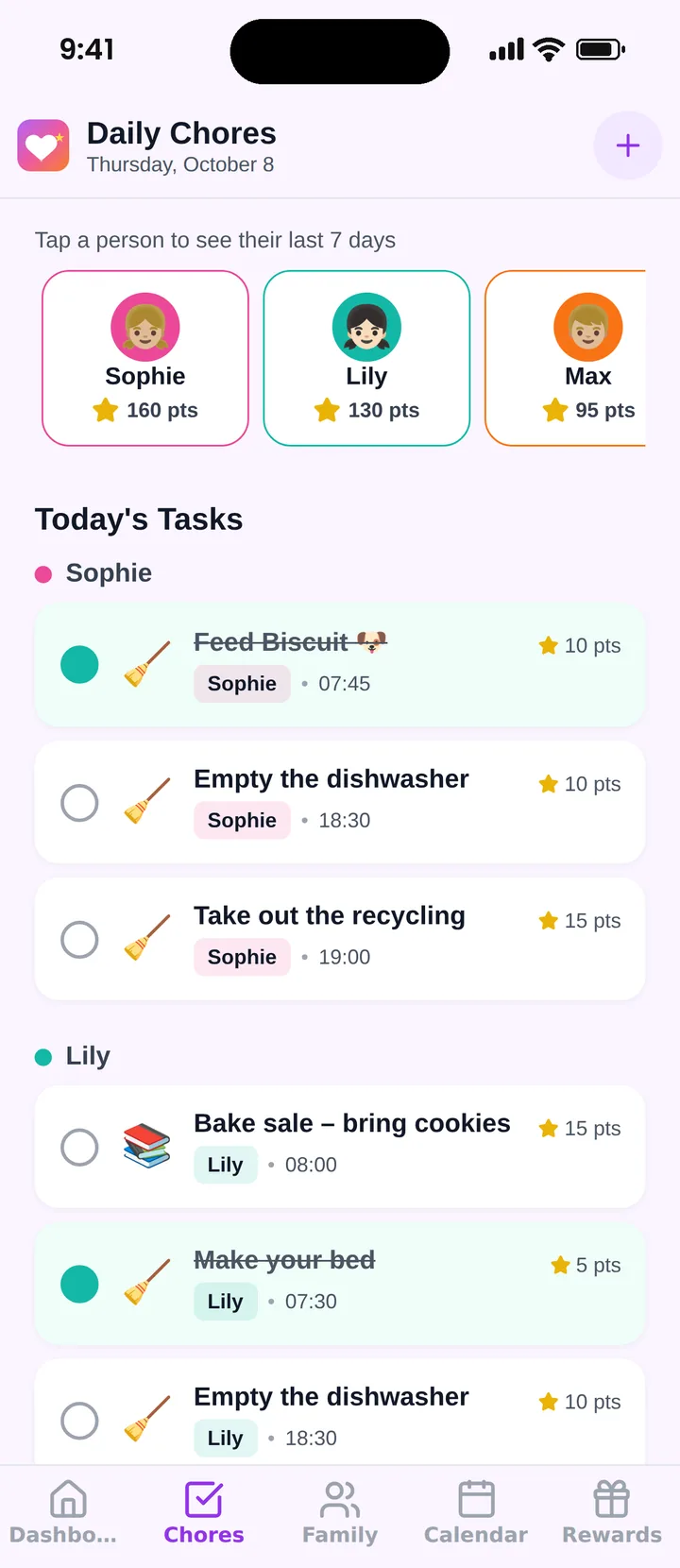
You add each chore once, set it to repeat, pick which child does it and how many points it earns, then decide whether they check it off themselves or you approve it. Your tween gets a notification when a new task appears, and you see when it's done. Points go toward rewards in the family rewards shop. See our list of the best chore apps for kids when you compare options.
Start with a short list
If your child has been doing almost nothing, don't hand over twelve jobs on Saturday. Choose three daily tasks and one weekly one from the table, teach each, and give it two to three weeks before adding more. Raise the standard slowly, and let them see that doing the work well brings more trust, more choice and more freedom with their time.
Frequently asked questions
What chores can a 10-year-old do?
A 10-year-old can usually load and empty the dishwasher, run a full load of laundry, vacuum, take out the trash, clean a bathroom sink and toilet, and help cook a simple meal with an adult nearby. Start with a short list and add as they succeed.
How many chores should a tween have?
Three to four daily tasks plus one bigger weekly job is a good starting point for ages 9 to 12. Total time should stay around 20 to 30 minutes a day at 9 and about 30 minutes by 12, with schoolwork and activities in mind.
Should tweens be paid for chores?
Many families keep daily household chores unpaid and pay only for extra jobs, such as $0.25 to $1 for small ones and $2 to $5 for big ones. Points toward rewards are another option that avoids turning every task into a negotiation.
How do I get my tween to do chores without reminding them?
Give them ownership of a specific job with a clear finish and a deadline, then let a system do the reminding instead of you. Checklists, repeating tasks and a short bonus for no reminders move kids from being told to doing it on their own.
Try Famiyo With Your Family
Chores with points, a rewards shop for kids and one shared family calendar. Set it up in a couple of minutes.



Free to download • No credit card required • Available on iOS & Android