How to Motivate a Teenager With ADHD: What Works
Why motivation looks different with ADHD, and what to try: shorter steps, immediate rewards, real choices and a rewards shop a teen will actually use.
By Famiyo Editorial Team4 min read
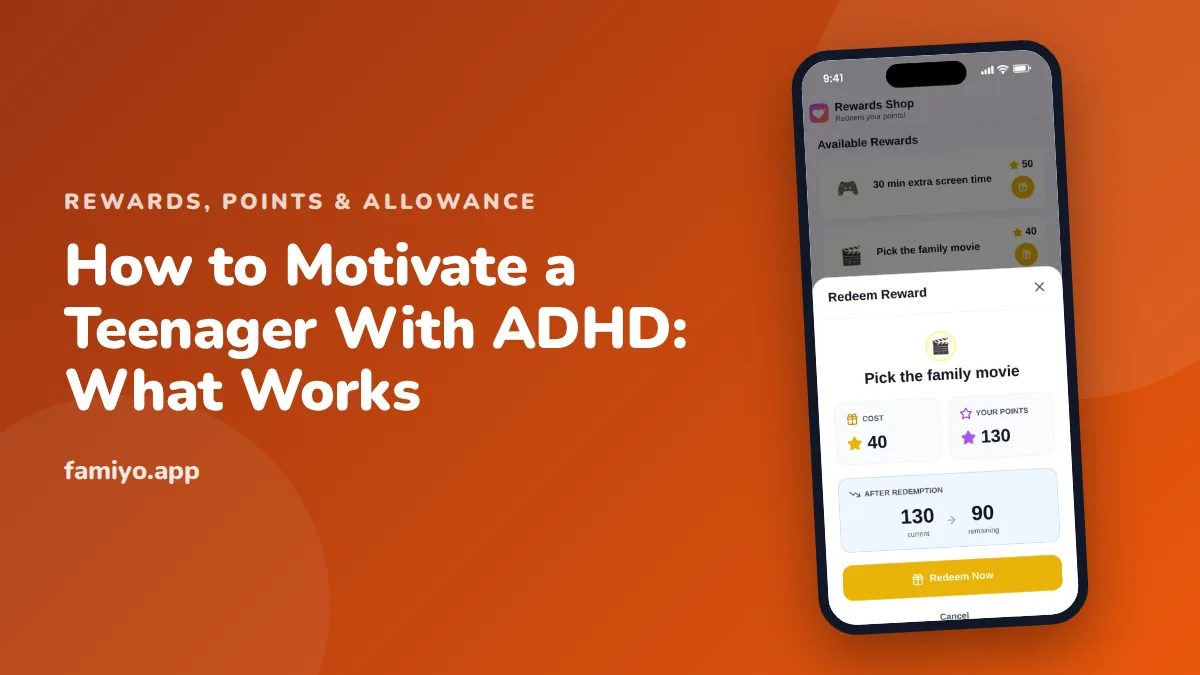
Telling a teenager with ADHD to "just try harder" is like telling a nearsighted person to squint. They are often trying, and exhausted by it. This guide explains why motivation behaves differently with ADHD, then walks through seven approaches that parents use at home, with the words to say and a way to build a rewards system that doesn't feel like a toddler's sticker chart. None of it replaces advice from your teen's doctor or therapist.
Why motivation looks different with ADHD
ADHD is a difference in how the brain manages attention, planning and starting tasks, often called executive function. Guidance from the CDC and the American Academy of Pediatrics describes it that way, and describes behavioral support as a core part of care alongside whatever else a clinician recommends.
For motivation, the practical consequence is that importance doesn't reliably produce action. A teen can know a history paper matters and still not begin. What tends to produce action is something that is interesting, new, urgent or rewarded right away. That's why the same teen can build a game server for six hours and can't take out the trash.
Seeing it this way changes what you ask. The question stops being "Why won't you care?" and becomes "What would make starting easier?"
Seven things that tend to help
Every teen is different, so test one change for two weeks before adding another.
- Shrink the first step. "Clean your room" is a wall. "Put every dish in the kitchen" is a start. Once someone is moving, the rest often follows.
- Make the reward quick. A reward promised for the end of the semester does nothing on a Tuesday. A small payoff the same day works better.
- Offer a real choice. "Laundry before dinner or after?" gives control without removing the task.
- Use a body double. Sit nearby while they work, on your own laptop, with no commentary. Many teens with ADHD find tasks easier with someone else present.
- Add a timer. Twenty minutes on, five off. The deadline creates urgency, and the break makes stopping part of the plan.
- Cut the reminders down to one, ideally from something that isn't you. A shared list or a phone notification feels less personal than a parent's voice.
- Praise the specific start, not the personality. "You got going without me asking" lands better than "I knew you could do it."
What to say, and what to skip
Words matter more at this age than at 8. Teens can hear a lecture coming from the next room.
| Instead of | Try |
|---|---|
| "Why can't you ever just do it?" | "What's the hardest part about starting?" |
| "You're so lazy." | "That looks like a lot. Want to pick the first two things?" |
| "If you don't do this, no phone for a week." | "The phone is back on when the dishes are done." |
| "I've asked you five times." | "Can you set a reminder on your phone, or do you want me to?" |
| "Your brother does it without a fuss." | "Tell me what would make this easier." |
The right column is simple on purpose. It tells the teen what you want and leaves room for them to answer. If something goes wrong, a calm "Okay, let's try again tomorrow" keeps the plan alive.
How to build a rewards system a teen will accept
A rewards system for a teen with ADHD has to feel respectful. It should not be a sticker chart. The pieces that tend to work are the same ones found in good behavioral programs: clear targets, fast feedback and rewards the teen chose.
- Pick two or three targets, not ten. Starting small matters more than starting complete.
- Define each in one sentence, such as "Homework started by 5 p.m." or "Dishwasher emptied after dinner."
- Give each target points. Using the default scale, small tasks are worth 5 points, medium ones 10 and big ones 20, plus 2 bonus points when done without a reminder.
- Let your teen choose the rewards. Small ones cost 30 to 50 points, medium ones 100 and big ones 300 to 500.
- Aim for something affordable every 2 to 3 days. If your teen has to wait longer than that for the first reward, the system stalls.
- Review it every two weeks. ADHD brains habituate quickly, so a reward that thrilled them in October may mean nothing by December. Swap in new ones before they get bored.
For general reward principles, see our guide on how to motivate a teenager, and for younger siblings, how to motivate a child with ADHD.
When it feels like they don't care at all
Sometimes the problem is bigger than a missing reward. A teen who has been criticized for years may have decided that trying isn't worth the risk. Shame is a poor motivator, and ADHD teens often carry a lot of it.
Go back to basics. Ask what feels hard rather than what is wrong. Make sure they're sleeping, since the AAP recommends 8 to 10 hours for ages 13 to 18. And watch for signs of something more than ADHD, such as ongoing sadness, withdrawal or loss of interest in everything. Those deserve a conversation with their doctor. Our article on how to motivate a teenager who doesn't care covers that side in more detail.
Using the Famiyo rewards shop
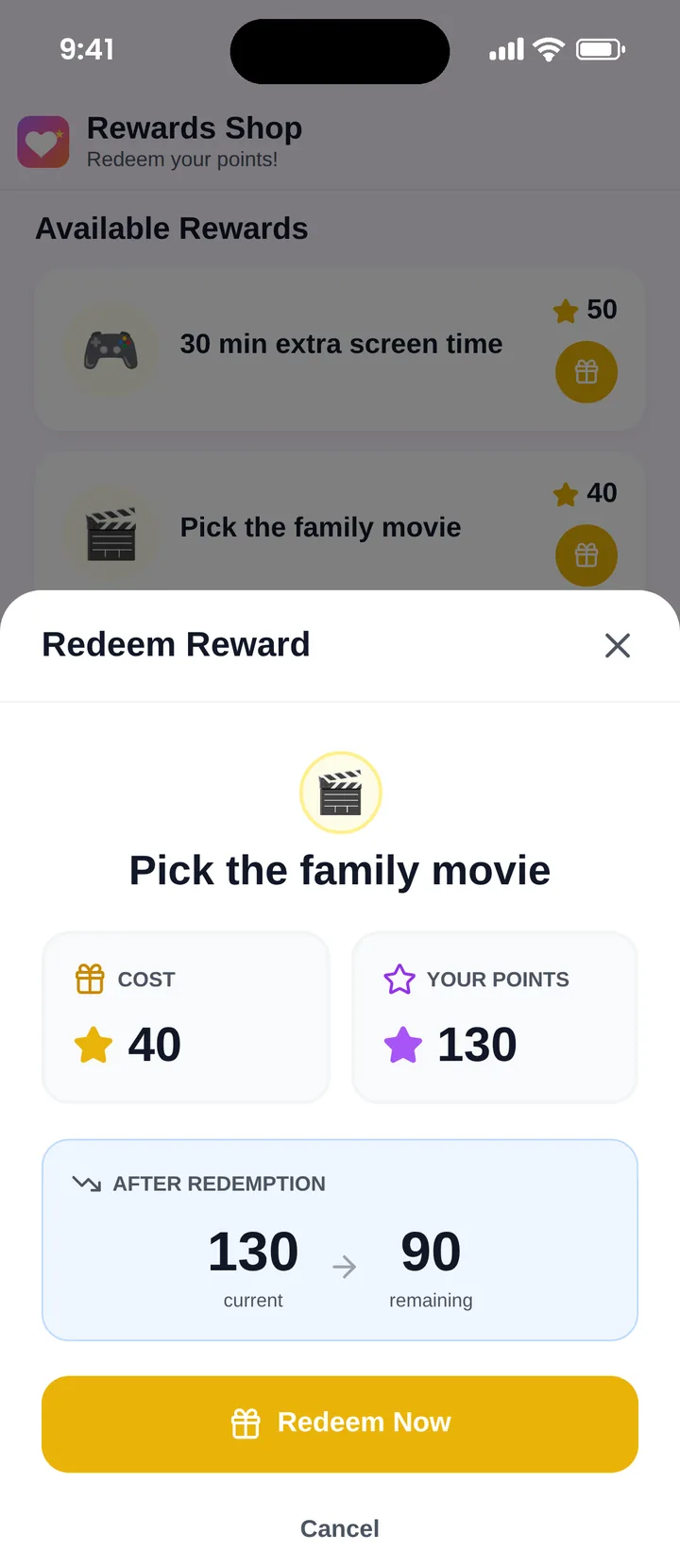
Famiyo is a free family app for iPhone and Android that combines a shared family calendar, chores with points and a rewards shop; kids join with a code, no email needed. For a teen with ADHD, the useful part is the quick loop. You add a task with a point value, your teen gets a notification, and the points arrive as soon as it's done. In the rewards shop you set each reward's price in points, how many are available and when. Your teen redeems from their own phone and sees how many points they'll have left. Compare options in our list of the best reward chart apps for kids.
Start with two targets and three rewards your teen helped pick. Run it for two weeks and then change one thing.
Frequently asked questions
Why is my teenager with ADHD unmotivated?
It often is not a lack of caring. ADHD affects how the brain starts tasks and weighs distant rewards, so a task with no immediate payoff is genuinely hard to begin. Fatigue, anxiety and low mood can also play a part, so mention changes to a doctor.
Do reward systems work for teens with ADHD?
They can, if rewards are quick, small and negotiated with the teen. Large rewards that take weeks to earn tend to fade. Many teens do better when they help choose the rewards and can see their progress.
Should I take away privileges to motivate a teen with ADHD?
Use this carefully. Taking things away adds stress without teaching the missing skill. Clear, calm expectations set in advance, with earned privileges, tend to work better than punishments piled up after the fact.
When should I talk to a doctor about my teen's motivation?
If motivation drops suddenly, sleep or appetite change, or your teen seems sad, anxious or hopeless, contact their pediatrician or therapist. Those signs can point to something beyond ADHD that needs its own support.
Try Famiyo With Your Family
Chores with points, a rewards shop for kids and one shared family calendar. Set it up in a couple of minutes.



Free to download • No credit card required • Available on iOS & Android