How to Motivate a Child With ADHD: What Actually Works
Why motivation looks different with ADHD and 7 methods that work: faster rewards, shorter tasks, interest, and a calm way to set up a points-and-rewards system.
By Famiyo Editorial Team4 min read
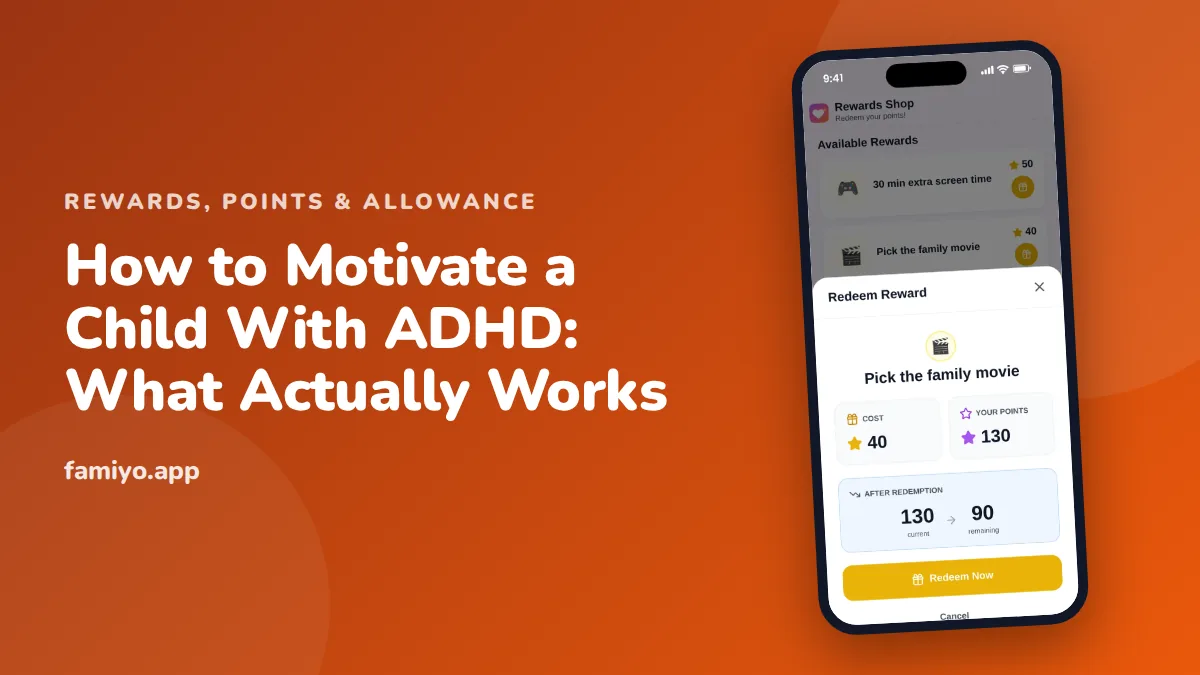
Parents of children with ADHD often say the same thing in different words: "They can do it when they want to." That sentence points at the real issue. Motivation with ADHD is not missing, it is inconsistent, and it depends heavily on how soon the payoff arrives, how interesting the task feels, and how big it looks. This page explains why, then walks through what to change.
It is general parenting information, not treatment advice. Your child's pediatrician or therapist should guide anything medical or therapeutic.
Why motivation works differently with ADHD
ADHD affects executive functions such as starting a task, holding instructions in mind and keeping going when something is dull. It also changes how a child weighs now against later. A reward that arrives on Saturday has little pull on a Tuesday afternoon, even if the child wants it badly.
The practical result is that the usual parenting tools, "finish this and you can have that next week", often under-deliver. The tools that tend to work shrink the gap between effort and payoff. That is consistent with behavioral approaches the American Academy of Pediatrics describes in its ADHD guidance, which centers on clear expectations, specific praise and prompt consequences. For preschoolers the AAP recommends parent training in behavior management first, and for older children it combines behavioral work with other treatment decisions made with the doctor.
7 ways to raise motivation
- Make the payoff immediate. A point, a tick or a quick "yes, that's it" within seconds of finishing beats a reward at bedtime.
- Shrink the task. "Get ready for school" is twelve steps. "Shoes on" is one. Break it into steps and reward the early ones.
- Use a timer as a game. "Ten minutes, I'll set it, beat it." A visible clock turns a vague job into a short race.
- Add a little novelty. Change the order, the music, the place. What feels dull on day 15 can feel fresh on day 16.
- Offer choice. "Trash or dishes first?" gives control without handing over the decision.
- Praise the effort, specifically. "You started without being asked" teaches more than "good job".
- Do the first minute together. Starting is often the hardest part. Sit beside them, begin the task, then ease away.
Rewards that fit how ADHD works
A good reward setup for ADHD is frequent, small, visible and flexible. Points work well because they can be earned in seconds and spent later, which splits the immediate hit from the bigger goal.
| What | Example | Why it helps |
|---|---|---|
| Quick points | 5 points for making the bed | Payoff right away |
| Small rewards | 30 to 50 points: 15 extra minutes of screen time, choose dessert | Reachable in 2 to 3 days |
| Medium rewards | 100 points: pick the family movie, stay up 30 minutes later | A visible short-term goal |
| Big rewards | 300 to 500 points: a day out, a toy around $20 | A longer goal, still reachable in a few weeks |
| Bonus | +2 points for doing it without a reminder | Rewards independence |
Aim for a child to afford a small reward every 2 to 3 days. If it takes longer, the system loses its grip. For help setting point values, see our guide to the token economy for kids in the same cluster, or, for schoolwork specifically, how to motivate a child with ADHD to study.
Matching the method to the moment
Not every day needs the full system. On a good morning, a single specific compliment may be plenty. On a day when everything stalls, go back to the smallest step: "Just put your shoes by the door." Notice what your child does well on their own, such as building, drawing or sports, and borrow from it. A child who can focus for an hour on a game is showing you the conditions that work: quick feedback, clear goals and a bit of challenge. Rebuild a chore or homework task along those lines, with a countdown, a visible score and a clear end.
If motivation problems are widespread across school, home and friendships, or they are wearing the whole family down, it is reasonable to raise it with your pediatrician or your child's therapist, who can look at the full picture.
What tends to backfire
Taking rewards away after they are earned is a common trap, because the child learns that points are not safe. Long lectures, repeated reminders and comparisons to siblings also tend to raise resistance. Rewards tied to perfect behavior all week are too distant. And a system that only the parent runs, by hand, usually fades by the third week, because remembering to hand out points is itself an executive function task.
When a child hits a rough patch, resist the urge to add more rules. Cut the number of tasks, make the next reward closer, and go back to praising anything that is going right. For a different age and subject, how to motivate kids to study and how to motivate kids to learn cover motivation outside of home tasks.
Setting it up in Famiyo
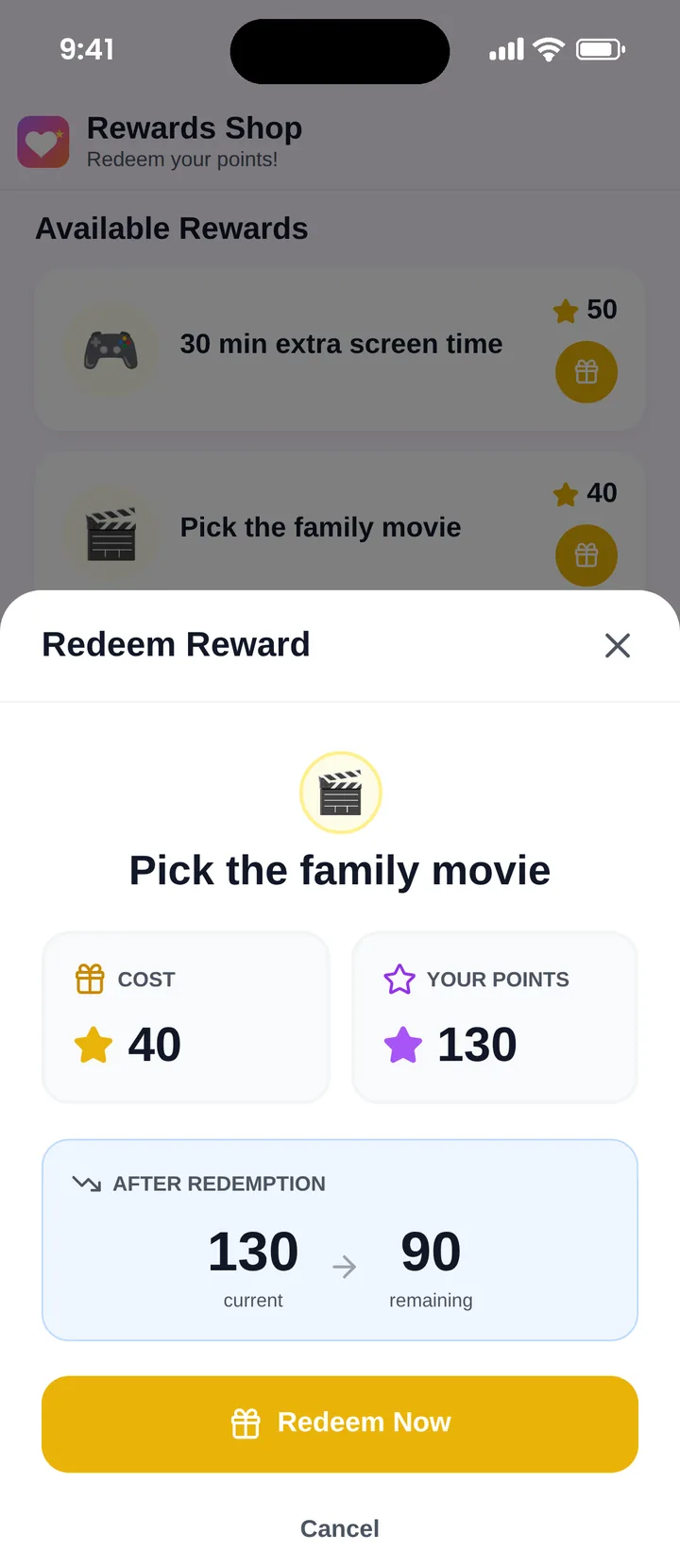
Famiyo is a free family app for iPhone and Android that combines a shared family calendar, chores with points and a rewards shop; kids join with a code, no email needed. The rewards shop is where the "spend it soon" part lives. You create rewards with a price in points, how many are available and when, and your child redeems from their own phone, seeing how many points they will have left before they confirm. That makes the trade visible, which suits a child who needs to see the payoff. You get a push notification when something is redeemed.
Comparing tools? Our list of the best reward chart apps for kids covers the options.
Try it for 2 to 3 weeks before judging. Pick one routine, set quick points, and put two small rewards on the menu this week.
Frequently asked questions
Why is it so hard to motivate a child with ADHD?
ADHD affects attention, working memory and how the brain handles delayed payoffs. A task that is boring now and rewarding later gives little pull. This is not laziness or defiance, which is why rewards need to be quicker and tasks smaller.
Do rewards work for kids with ADHD?
Often yes, when they are immediate and frequent. Behavioral approaches built on clear expectations and quick consequences are a recommended part of ADHD care in AAP guidance. Rewards that arrive weeks later usually do not change what happens today.
How often should I reward a child with ADHD?
More often than seems necessary at first. Give a point, a check mark or specific praise within seconds of the task, and let the child spend points every few days. As the habit sticks, you can stretch the gap between rewards.
What should I do when the reward stops working?
It is common for a reward to lose its pull after a few weeks. Refresh the menu with new choices, ask your child what they want, change the price, or rotate rewards. Keep the structure the same and change the content.
Try Famiyo With Your Family
Chores with points, a rewards shop for kids and one shared family calendar. Set it up in a couple of minutes.



Free to download • No credit card required • Available on iOS & Android