How to Teach Kids to Do Laundry, Step by Step by Age
How to teach kids to do laundry: which steps fit each age, a 5-lesson plan from sorting to a full load, and how to live with the pink socks along the way.
By Famiyo Editorial Team5 min read
Laundry has a reputation as an adult job, yet it is one of the easiest chores to hand over in pieces. It is also one of the places where things go wrong in a spectacular way. A red sock will find the white load. A sweater will come out doll-sized. This guide breaks laundry into steps that fit each age, gives you a five-lesson plan, and tells the truth about what to expect when your child is learning.
What kids can handle at each age
Think of laundry as eight small jobs, not one big one: gather, sort, load, add soap, start, move to the dryer, fold, put away. Different ages can own different pieces. The ages below are a starting point, and they match the typical chores by age.
| Age | What they can do |
|---|---|
| 2 to 3 | Put dirty clothes in the hamper, carry a small item to the machine |
| 4 to 5 | Match socks, drop clothes into the basket, help push the dryer door shut |
| 6 to 7 | Sort laundry by color (lights, darks, towels) |
| 8 to 9 | Fold and put away their own clothes, load the machine with you present |
| 10 to 12 | Run a full load with an adult nearby, switch loads, handle the dryer |
| 13+ | Do their own laundry start to finish |
A child who can sort at 7 and fold at 9 will be ready to run the machine at 11 without drama. Skipping the early steps is where most laundry fails come from.
Before the first lesson
Set the scene so your child can succeed.
- Put the hamper where the clothes come off, in the bedroom or bathroom. A hamper in the hall closet is a hamper nobody uses.
- Use two baskets or a divided hamper for lights and darks. Then the sorting is half done before laundry day.
- Keep detergent in a spot that is reachable, in pre-measured pods or with a clear scoop line, so nobody pours a cup of soap into a load of socks.
- Choose a regular laundry day. Having one fixed day takes away the question of when.
- Decide what the "good" version looks like. Is a rough fold okay? Do shirts go on hangers? Agree on it ahead of time.
A five-lesson plan from sorting to a full load
Run each lesson for a week or two, and move on only when your child is comfortable. This is deliberately slow. Rushing the plan is the quickest way to end up doing it yourself.
- Lesson one: sort. Dump a basket on the floor and make three piles together: lights, darks, towels. Say why: dark dyes can run, and towels shed lint. Then let your child sort a basket alone while you check it.
- Lesson two: load and soap. Show how much detergent to use, where it goes and how to load without stuffing the drum. Let them do it with you watching. Take a photo of the dial setting you use most often.
- Lesson three: wash and dry. Show the cycle for everyday clothes, usually cold water and a normal setting. Explain which items never go in the dryer, such as sweaters, anything labeled "lay flat" and gym gear with elastic.
- Lesson four: fold and put away. Fold three shirts, then let your child fold the next three. Fold a pair of pants, then a towel. Expect lumpy results at first. Praise the effort and let it go.
- Lesson five: the whole load. Your child runs it start to finish while you stay in the next room. They come find you only if something is unclear.
By lesson five, say out loud what you are handing over: "From now on, Tuesday's load is yours."
What to say when it goes wrong
It will go wrong. The honest part of teaching laundry is that your child will shrink something, bleach something or forget a load in the washer for two days until it smells.
Try to keep your reaction short. Say "Okay, that happens. What do you think went wrong?" instead of "I told you to check the label." Let the child answer, then tell them the fix: re-wash the forgotten load with a cup of vinegar, move the sweater to the "air dry" pile, check pockets next time. Kids who are not afraid of a mistake are the ones who keep doing the job.
Start with cheap or old clothes for the first few months. Keep delicate items, school uniforms you cannot replace and anything sentimental out of the hands of beginners. If you want a broader plan for teaching any chore, our guide on how to teach kids to do chores step by step walks through the same show, share and step-back pattern.
When your child will not do it
Sometimes the problem is not skill. It is willingness. If your child agrees in the moment and then ignores the laundry basket for a week, you are dealing with a motivation issue and not a teaching one. Our article on what to do when your child refuses to do chores covers that situation in detail, and how to motivate kids to do chores looks at points, praise and rewards.
A few quick fixes that work for laundry in particular:
- Tie it to something they want, such as the favorite hoodie being clean on Friday.
- Put the laundry day on the calendar, so it is not a surprise.
- Let the hamper fill. If the clothes they want are in the dirty pile, they will notice faster than any lecture.
- Skip the reminder, once. Let a natural consequence do some of the work.
Letting the app do the reminding
Most laundry battles are not about the laundry. They are about who remembers. If you are the one reminding, you will also be the one nagging.
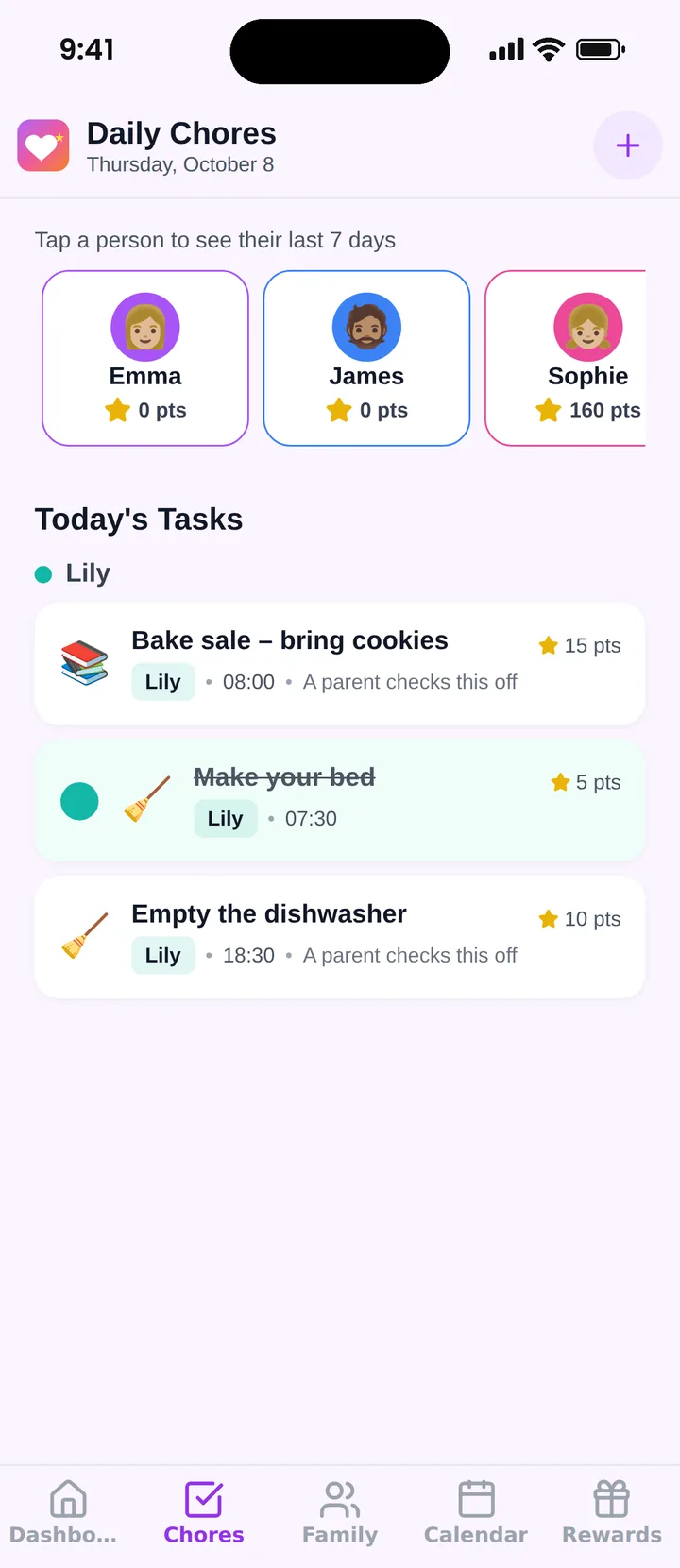
Famiyo is a free family app for iPhone and Android that combines a shared family calendar, chores with points and a rewards shop; kids join with a code, no email needed. Add a repeating chore such as "Run the Tuesday laundry" worth 10 points, and your child gets a push notification about the task on their own phone. They check it off themselves or you approve it, and you hear when it is done. The reminder comes from the app, so you do not have to deliver it.
For more options, see our list of the best chore apps for kids.
Do not wait for perfect folding
A child who folds a towel into a lopsided square has still done the job. Pick one lesson from the plan above, start it this week, and accept lumpy results for a while.
Frequently asked questions
What age can kids start doing laundry?
Toddlers can drop clothes in a hamper, kids around 6 or 7 can sort by color, and 8 or 9 year olds can fold and put away. Many 10 to 12 year olds can run a load with you close by, and teens can handle everything.
How do I teach a child to use the washing machine?
Do it together a few times first: sort, load, add detergent, pick the cycle. Then let them do each step while you watch, and finally leave them to it. Put a short card with the settings on the machine so they do not need to ask.
What if my child ruins clothes while learning?
Expect a shrunken sweater or a pink sock at some point. Start with cheap, forgiving items, use a simple cold cycle, and treat mistakes as part of the lesson. A pink T-shirt teaches color sorting faster than any lecture.
How often should a child do laundry?
Younger kids can handle a daily hamper habit and a weekly folding session. Older kids and teens do well with one fixed laundry day a week, so their clothes do not pile up and you are not guessing when it is happening.
Try Famiyo With Your Family
Chores with points, a rewards shop for kids and one shared family calendar. Set it up in a couple of minutes.



Free to download • No credit card required • Available on iOS & Android