Chore Chart for a 7 Year Old: What to Put On It and Why
A chore chart for a 7 year old with 4 daily jobs, a weekly extra, the words to write on it and a free printable weekly chart a second grader can read.
By Famiyo Editorial Team4 min read
Free printable
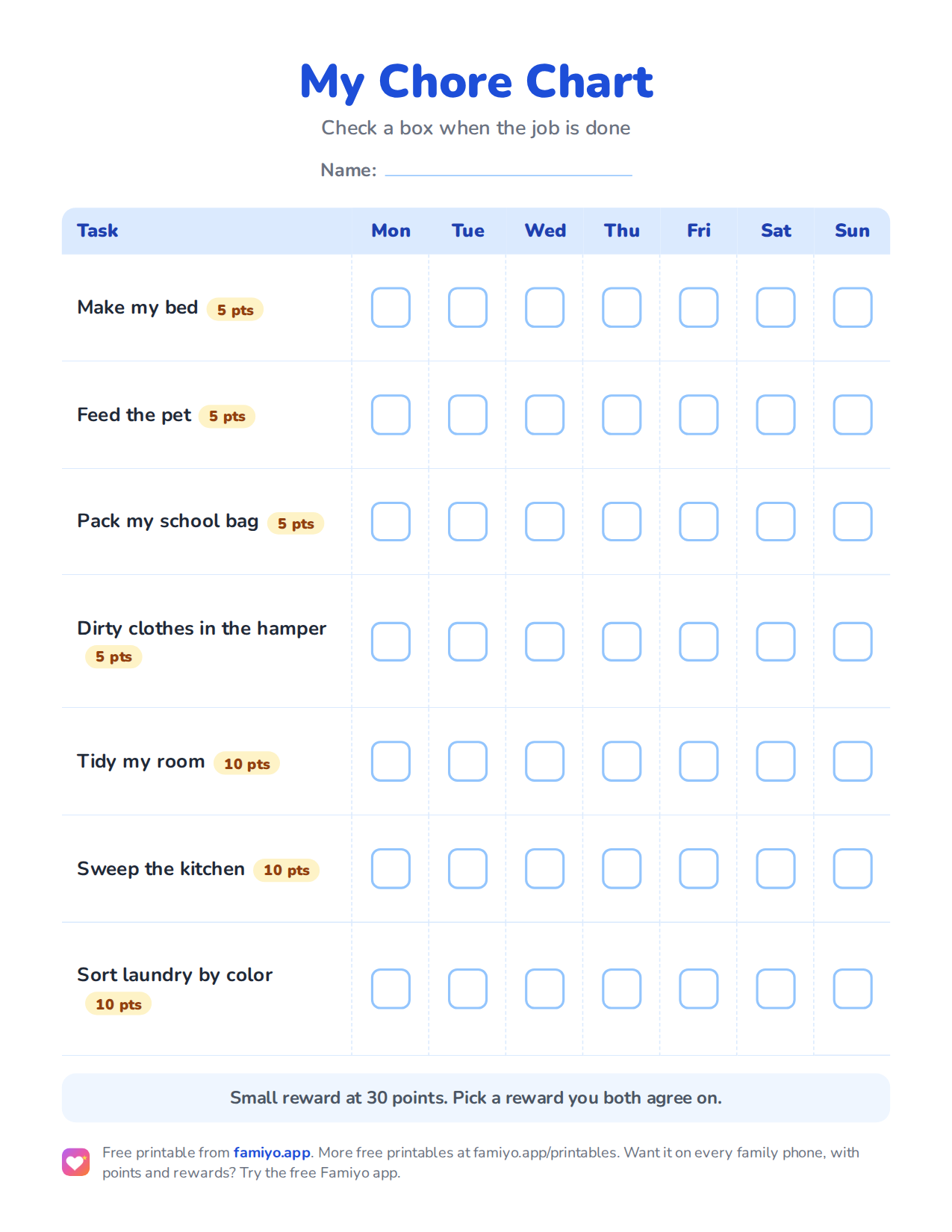
My Chore Chart
A weekly chart on one US Letter page. Download the PDF to print it, or save the image to use it on a tablet or in a document.
Free for home, classroom and nonprofit use, see the license. More free printables.
Seven is the age when a child starts to care whether things are fair, whether a job is really finished, and whether a grown-up noticed. That makes it a very good age for a chore chart, and a very easy one to get wrong. This page gives you the jobs that fit a second grader, the exact words to put on the chart, a sample week and a free printable.
What a 7-year-old can do on a chart
Most 7-year-olds can read short phrases, hold three steps in their head and tell you when a job is finished. They can work without you standing next to them, though they still forget. Their hands can manage a broom, a laundry basket and an unbreakable dish. What they can't yet do is plan their own evening, so the chart has to do that for them.
The numbers from the age table in our guide to household chores for kids by age apply here: roughly 15 to 20 minutes a day, in 3 to 4 daily tasks. Sorting laundry by color, sweeping, packing the school bag and tidying the room are all within reach.
What goes on the chart, row by row
Write each row the way you would say it to your child, with a verb first. Under it, decide what done looks like, because "tidy your room" means something different to you and to a 7-year-old.
| Row on the chart | What done looks like | When | Points |
|---|---|---|---|
| Make my bed | Blanket pulled up, pillow on top | After waking up | 5 |
| Feed the pet | Food in the bowl, fresh water | Before breakfast | 5 |
| Pack my school bag | Folder, water bottle and shoes at the door | After dinner | 5 |
| Dirty clothes in the hamper | Nothing left on the floor | At bedtime | 5 |
| Tidy my room | Toys in bins, books on the shelf, floor clear | Before bath | 10 |
| Sweep the kitchen | Crumbs in the dustpan, dustpan in the trash | Saturday | 10 |
| Sort laundry by color | Lights, darks and towels in three piles | Sunday | 10 |
Pick four of the first five as the daily core and treat the last two as a weekend rotation. All seven on one day is too much for this age.
A sample week
A schedule that fits on a single screen looks like this. Notice that the heavy day is the weekend, when nobody is rushing for the bus.
| Day | Daily core | Extra |
|---|---|---|
| Mon to Fri | Make my bed, feed the pet, pack my school bag, dirty clothes in the hamper | None |
| Saturday | Same four | Sweep the kitchen |
| Sunday | Same four | Sort laundry by color |
That is 20 points a day on school days and 30 on the weekend, or about 160 points a week. At the Famiyo default of 30 to 50 points for a small reward, your child can afford something small every two to three days, which is about the right speed for this age. Our household chores rules guide is a good place to agree on what counts as done before you start.
Setting it up with your child
- Sit down on a weekend, not in the middle of a hectic evening. Show them the four jobs and ask which one they would like to own first.
- Walk through "done" for each row once, out loud, while they watch. Then let them show you.
- Say it plainly: "These four jobs belong to you now. When they are ticked, the chart is done for the day."
- Put the chart where the jobs happen, at their eye level.
- For the first week, look at the chart together once a day, at the same time, and name one thing they did well.
- After two to three weeks, check the chart less often. That is what a working routine looks like.
The printable chart
The printable below has seven rows with points and Monday to Sunday boxes. It suits a child who is reading on their own and likes ticking things off. Use only the rows you need, cross out the rest, and write your own jobs on any blank line. If you have a child who is a little older, our chore chart for an 8 year old adds a bigger weekly job.
When the chart stalls in week three
This happens in nearly every family, and it rarely means the child has changed. It usually means the novelty wore off and the reminders crept back in. Try these in order:
- Cut one job, not the whole chart.
- Move the job to a better moment, such as feeding the pet before breakfast instead of after school.
- Check that "done" is written down, not just in your head.
- Add a small reward at a point total they can reach in three days.
Skip lectures and threats. A flat, friendly "Chart first, then tablet" does more than a speech.
Running the chart in Famiyo
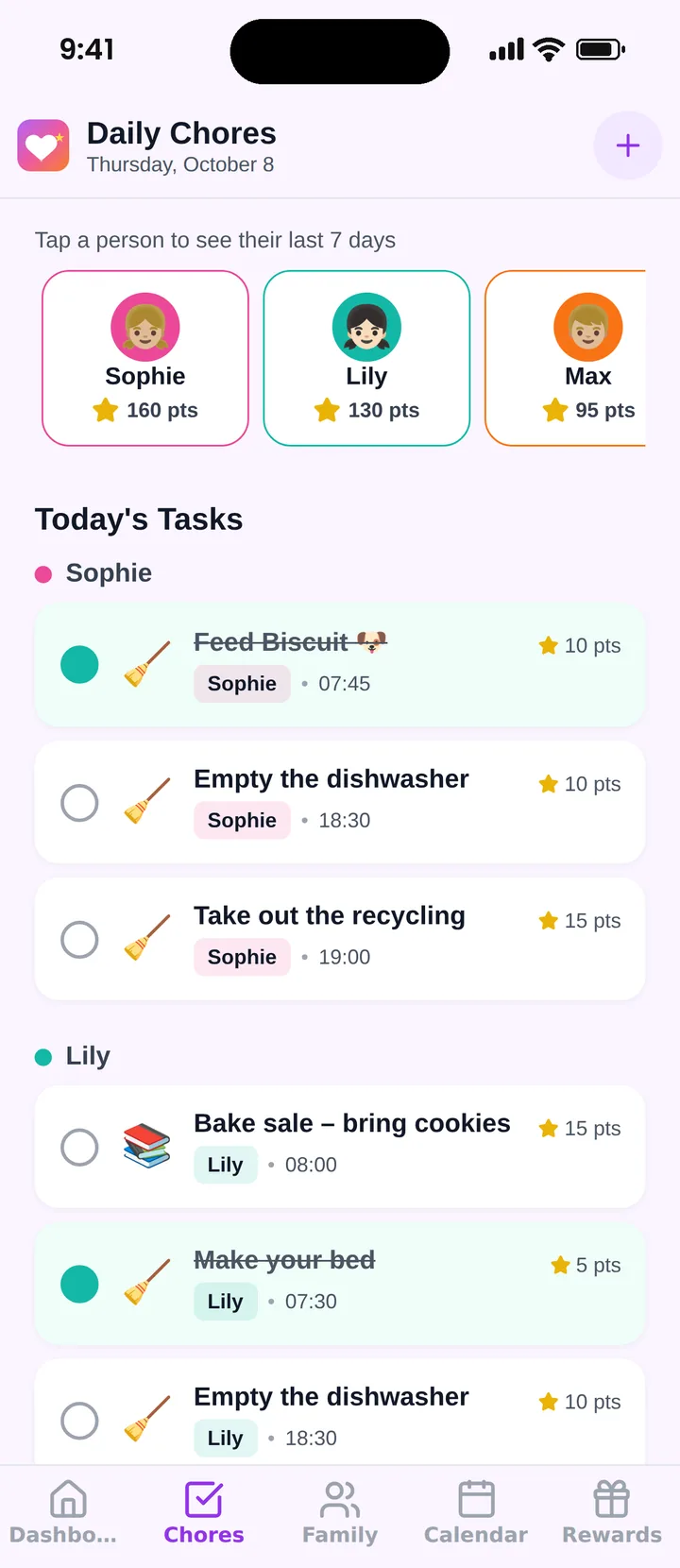
Famiyo is a free family app for iPhone and Android that combines a shared family calendar, chores with points and a rewards shop; kids join with a code, no email needed. It replaces the paper chart: set each of the four jobs to repeat daily, give each one its points, and your 7-year-old sees only their own list on their phone. They tick jobs off, or you approve them, whichever you prefer. You get a notification when a chore is done, and points go toward rewards you set up in the shop. Our list of the best chore chart apps compares the options.
Start with the four daily rows this weekend and see how the first Monday goes.
Frequently asked questions
How many chores should a 7 year old have on a chart?
Three to four daily jobs is plenty, which adds up to roughly 15 to 20 minutes a day. Add one small weekly extra on the weekend, such as sweeping the kitchen. If the chart starts causing nightly arguments, remove one job before you change anything else.
Can a 7 year old read their own chore chart?
Most second graders can read short, plain phrases like 'Feed the dog' or 'Pack my bag'. Keep each line under five words and add a small drawing beside it for any child who is still a slow reader. Avoid vague lines such as 'Be helpful'.
Should a 7 year old earn money or points for chores?
Points work well at this age because kids can see them add up. Many families give 5 points for a small job and 10 for a medium one, then let points buy small rewards. Keep daily family jobs unpaid in cash and pay only for extra jobs.
What if my 7 year old does the chores badly?
Expect uneven work at first. Check the job against a short written description of done, name one thing they did well, and show the missed spot once. Redoing it yourself while they watch tells them their effort did not count.
Try Famiyo With Your Family
Chores with points, a rewards shop for kids and one shared family calendar. Set it up in a couple of minutes.



Free to download • No credit card required • Available on iOS & Android