Chore Chart for Toddlers: Free Printable and Ideas
A simple chore chart for toddlers aged 2 to 3 with a free printable, 3 to 5 tiny jobs, sticker ideas and what to expect from kids this young.
By Famiyo Editorial Team4 min read
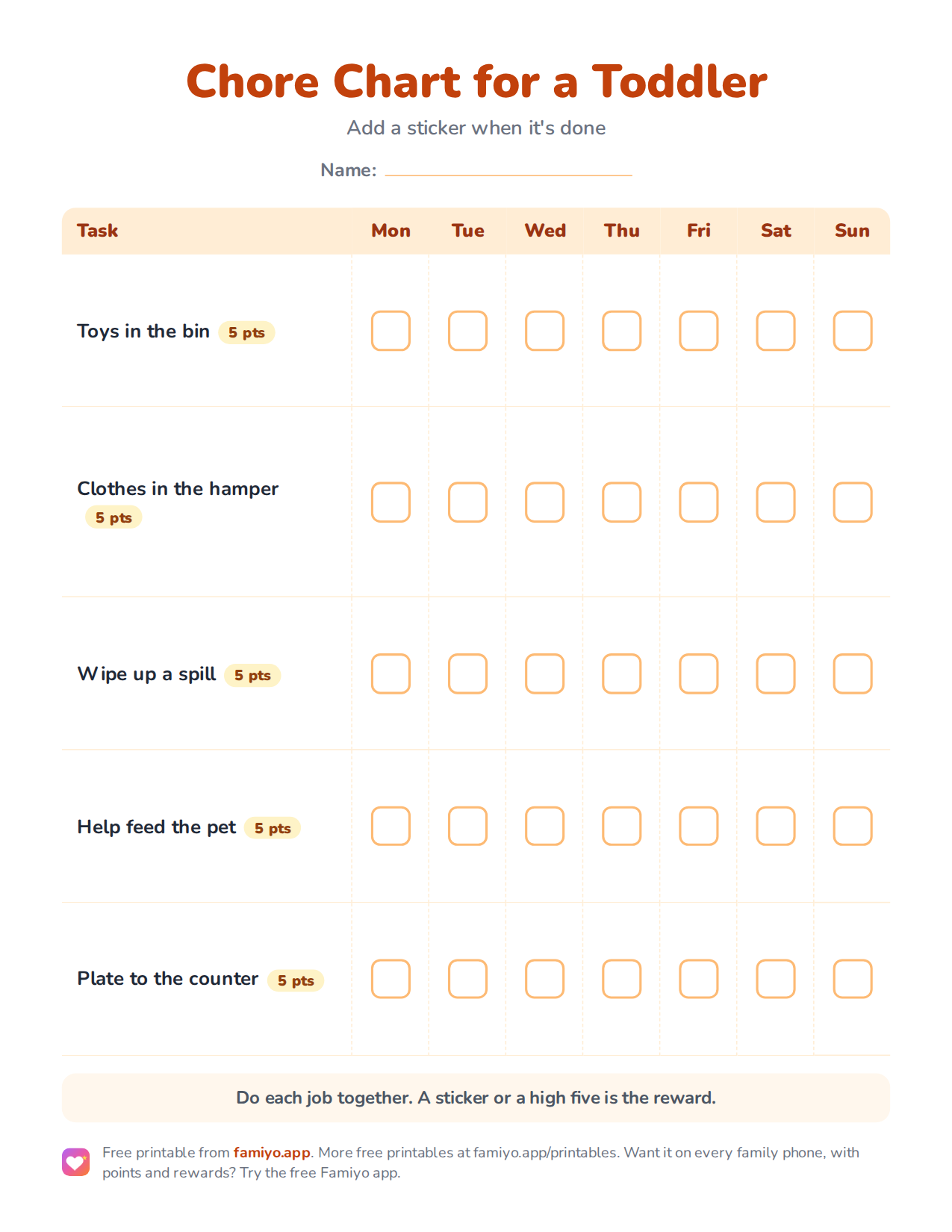
Free printable
Chore Chart for a Toddler
A weekly chart on one US Letter page. Download the PDF to print it, or save the image to use it on a tablet or in a document.
Free for home, classroom and nonprofit use, see the license. More free printables.
A toddler chore chart is not really a chart for the toddler. It's a visible plan for you, a few pictures on the fridge that remind you to include your two-year-old in the daily work instead of doing it all around them. Below is a simple setup, a free printable, a sample day and the points where most parents get it wrong.
What a toddler chart is for
Kids aged 2 to 3 don't understand responsibility, and they won't remember a chart without you. What they do understand is "we do this together" and "I did a thing." A chart helps by making those moments regular and visible.
Keep your aim modest. You want a child who enjoys putting things where they go and thinks of helping as normal. You do not want a clean house. If you measure success by the result, you'll quit in a week. For the simplest list of jobs this age can do, see our guide to age-appropriate chores for kids.
What to put on a chart for a 2 or 3-year-old
Start with two jobs and build to four. Each should be physical, short and obvious, with a clear picture. Typical chores for ages 2 to 3 include:
| Job | What "done" looks like | Time |
|---|---|---|
| Toys in the bin | Toys dropped in a bin, not sorted | 2 to 3 minutes |
| Clothes in the hamper | Dirty clothes land in or near the hamper | 1 minute |
| Wipe up a spill | A small cloth swipe, with your hand over theirs | 1 to 2 minutes |
| Help feed a pet | Scoop dry food into the bowl with you | 2 minutes |
| Plate to the counter | One plastic plate, carried carefully | 1 minute |
Together these take 5 to 10 minutes a day. That's the full ceiling, not a target. Two jobs a day is fine.
Pick photos or simple drawings. A photo of your own toy bin is better than clip art, because your child recognizes it. Place the chart at their eye level, around 2 to 3 feet off the floor.
A sample day
Tie each job to something that already happens, so you're not adding a separate routine.
- After breakfast: plate to the counter, then a sticker.
- Before the bath: clothes in the hamper.
- After the afternoon play: toys in the bin, with a cleanup song.
- Before dinner: help feed the pet, if you have one.
Using a song or a game helps. "Can you beat the song?" turns a task into a race. Toddlers love to feel clever.
Why stickers work and points don't (yet)
For children this young, the best reward is immediate and tiny. A sticker, a stamp or a high five when the job is done is enough. They don't need to save for a prize, and a promise about the end of the week means nothing to someone who can't hold on to Tuesday.
Around age 4 or 5, children begin to understand trading. Our guide to a reward chart for a 4-year-old covers the next step. Until then, praise what you see: "You put every block in the bin." Skip general lines like "good girl" and stay with the action.
Mistakes that make a toddler chart fall apart
Too many jobs. Six jobs make a 2-year-old's attention snap. Four is a hard maximum.
Expecting it to be done alone. A toddler can't clean up without you. Sit on the floor and put in two blocks yourself.
Fixing it right in front of them. If you move every toy after they finish, they learn that their work didn't count. Leave it, or fix it later.
Using the chart for behavior. A chore chart is about helping, not about stopping tantrums. If you need a plan for behavior, that's a different tool.
Yelling when it doesn't work. A toddler who ignores a request is usually busy, tired or hungry, not defiant. Our piece on how to get kids to do chores without yelling has calmer scripts.
Growing the chart as they grow
By age 4 or 5, you can add a written label next to each picture, a fifth job and a simple point count. By 6, the chart can include a morning routine. Teens use something quite different, and our chore chart for teens shows where the road ends up. Print a fresh version every few months so the chart matches what your child can now do.
Running the chart in Famiyo
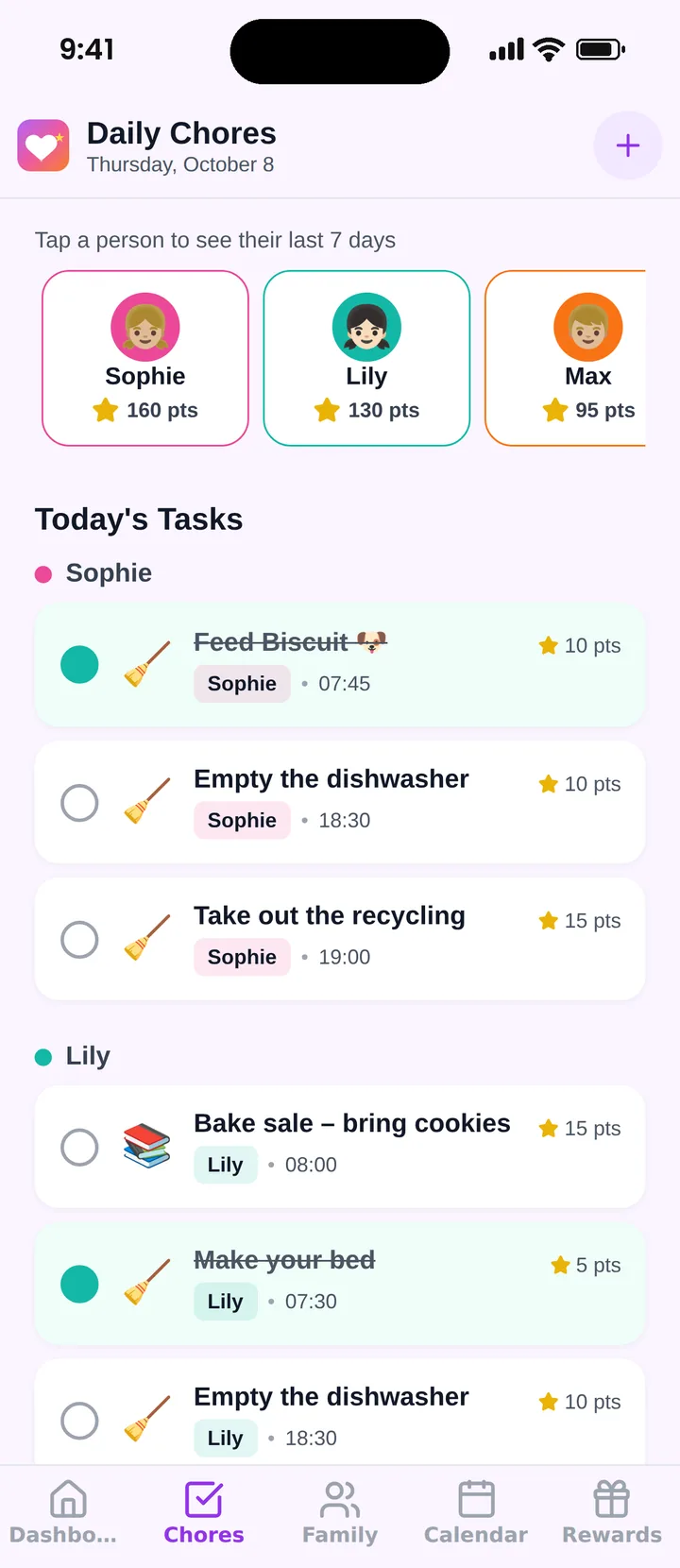
Famiyo is a free family app for iPhone and Android that combines a shared family calendar, chores with points and a rewards shop; kids join with a code, no email needed. A toddler won't use a phone alone, so you run the chart from yours. Add each tiny job once, set it to repeat daily, and give it a few points if you like. You can check jobs off yourself as you do them together, and the day's list is always on your phone. If a second parent or a grandparent helps, live sync keeps everyone current. Compare alternatives in our list of the best chore apps.
Choose two jobs, print the chart and hang it low. Do the first one together tomorrow morning.
Frequently asked questions
What chores can a 2-year-old do?
A 2-year-old can put toys in a bin, drop dirty clothes in the hamper, throw a napkin in the trash and help wipe a spill. Expect to do each task with them. At this age, joining in matters more than the result.
Are chore charts good for toddlers?
They can be, if kept very simple. A picture chart with 2 to 4 jobs and a sticker gives a toddler a sense of belonging and a daily rhythm. It shouldn't be a reward contract or a test.
Should toddlers get rewards for chores?
Toddlers don't need prizes. A sticker, a high five and your attention are rewards enough. Save points and bigger rewards for around age 4 or 5, when children can wait and understand a trade.
How long should a toddler chore chart take each day?
Five to ten minutes in total is plenty for children aged 2 and 3. Spread it across the day, and stop when their attention does. Short and happy beats long and finished.
Try Famiyo With Your Family
Chores with points, a rewards shop for kids and one shared family calendar. Set it up in a couple of minutes.



Free to download • No credit card required • Available on iOS & Android