How to Get Kids to Do Chores Without Yelling
Practical ways to get kids to do chores without yelling: what to say instead, how to set it up so you don't have to ask twice, and what to do when it fails.
By Famiyo Editorial Team5 min read
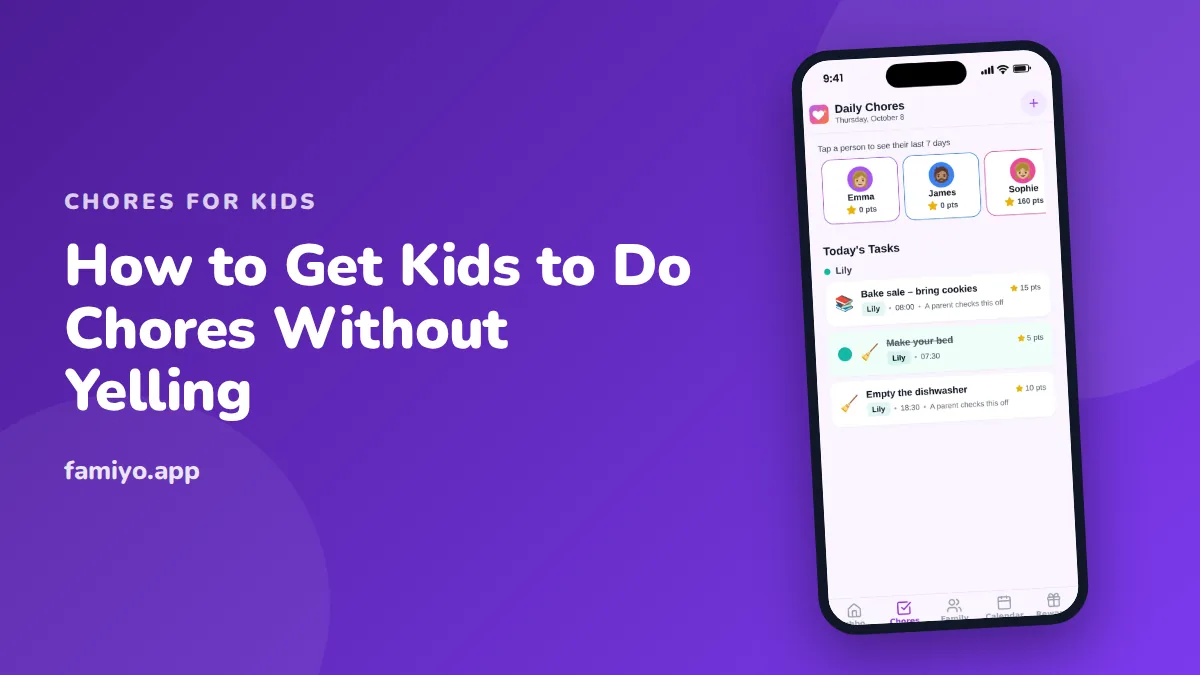
You said it nicely. Then you said it again. By the third time your voice was doing the thing, the kids looked at you like you'd suddenly turned into someone else, and the dishes got done in a cloud of resentment. Everyone feels bad afterward.
This is the honest version: yelling works in the short term, which is exactly why it's hard to quit. Below are the changes that make it unnecessary, a few scripts for the moment itself, and what to do on the days it falls apart anyway.
Why the yelling keeps happening
Look at it from the kid's side. If you ask three times and nothing happens, and the fourth ask comes loud, then the loud one is the signal. The calm ones are background noise. Kids aren't being sneaky. They're responding to the pattern you created.
Yelling also tends to arrive when you're tired, busy and out of patience, which is exactly when a vague request fails. "Clean up this mess" gives a kid nothing to do. "Put your shoes in the closet and your plate in the sink" does.
So the fix isn't a new tone of voice. It's removing the need for the reminder. A few changes make most of the difference.
Change the setup before you change your voice
Do these when nobody is mid-battle, ideally over a weekend breakfast.
- Write the jobs down. A list on the fridge or in an app answers "what am I supposed to do?" so you don't have to. If you're building one from scratch, our guide on age-appropriate chores for kids shows what's realistic.
- Set a time, not a mood. "Chores are done before dinner" is a deadline. "When you get a chance" is a wish.
- Agree on the consequence in advance. For example: screens come on after chores are done, not before. Say it once while everyone is calm.
- Cut the list. Three or four jobs a day for school-age kids, two or three for preschoolers. A long list guarantees a fight.
- Pick the same slot every day. After snack, before dinner, whatever fits. Routines reduce the number of times you have to ask.
Kids who hear the rules in advance don't feel ambushed when they're enforced, which lowers the temperature without any special skills from you.
What to say in the moment
Short, calm, specific. Here are lines that work, depending on the situation.
| Situation | Instead of yelling | Try saying |
|---|---|---|
| Kid is on a screen and ignoring you | "I've asked you FIVE times!" | "Pause it now, please. I'll wait here." |
| Chore is half done | "This is a disaster." | "The bin is out. Please add the recycling. I'll check at 6." |
| They say "in a minute" | "You always say that." | "Which minute? Tell me the time." |
| Sibling fight over who does what | "Stop it, both of you!" | "Look at the chart. Today is Leo's turn." |
| They refuse outright | "Fine, I'll do it myself!" | "That's your call. Screens stay off until it's done." |
Notice what's missing: a lecture, sarcasm, the word "always." If you need to say something, say it once, then stop talking and wait. The quiet is uncomfortable, and it works.
Let the consequence do the work
If the job isn't done by the deadline, the agreed consequence arrives. No yelling, no extra words. "Chores aren't done, so screens stay off. You can still do them now." Then walk away and don't argue.
This works best when the consequence is small, logical and consistent. Losing the tablet for a week after one missed chore backfires: it feels huge, you won't hold the line, and the child learns the rules are flexible.
A reward can do the same job from the other side. Points toward something your child wants, like extra screen time or a pick of the family movie, give the child a reason to start without prompting. If you want to go that way, see our guide on a reward system for chores.
When they push back anyway
Some days will go sideways. A kid melts down, you get tired, or the chart is ignored. That's normal. A few things help.
- Check the load. If your 8-year-old is skipping everything, the list might be too long or too hard. Cut it and try again.
- Check the timing. Asking right after school, when they're hungry and spent, is a setup for conflict. Move the slot.
- Ask what's hard. Sometimes the answer is surprising: "I don't know how to load the dishwasher so it doesn't fall over." Show them.
- Take a break. If you feel the yell coming, say "I need a minute," and step away. Come back and restate the plan.
For the deeper question of why kids resist in the first place, read why kids don't want to do chores.
If you yell anyway
You will. Everyone does. What matters is what happens next.
Wait until you've calmed down. Then say something plain, like: "I yelled earlier and I'm sorry. I got frustrated. The chore still needs doing, so let's figure out a better way." Kids learn how to handle frustration partly by watching you handle yours. A short, honest repair beats pretending it didn't happen.
Then fix the thing that led to the yell. Was it a vague request, a missing deadline, a morning with no time? Change that one thing tomorrow.
Letting an app do the reminding
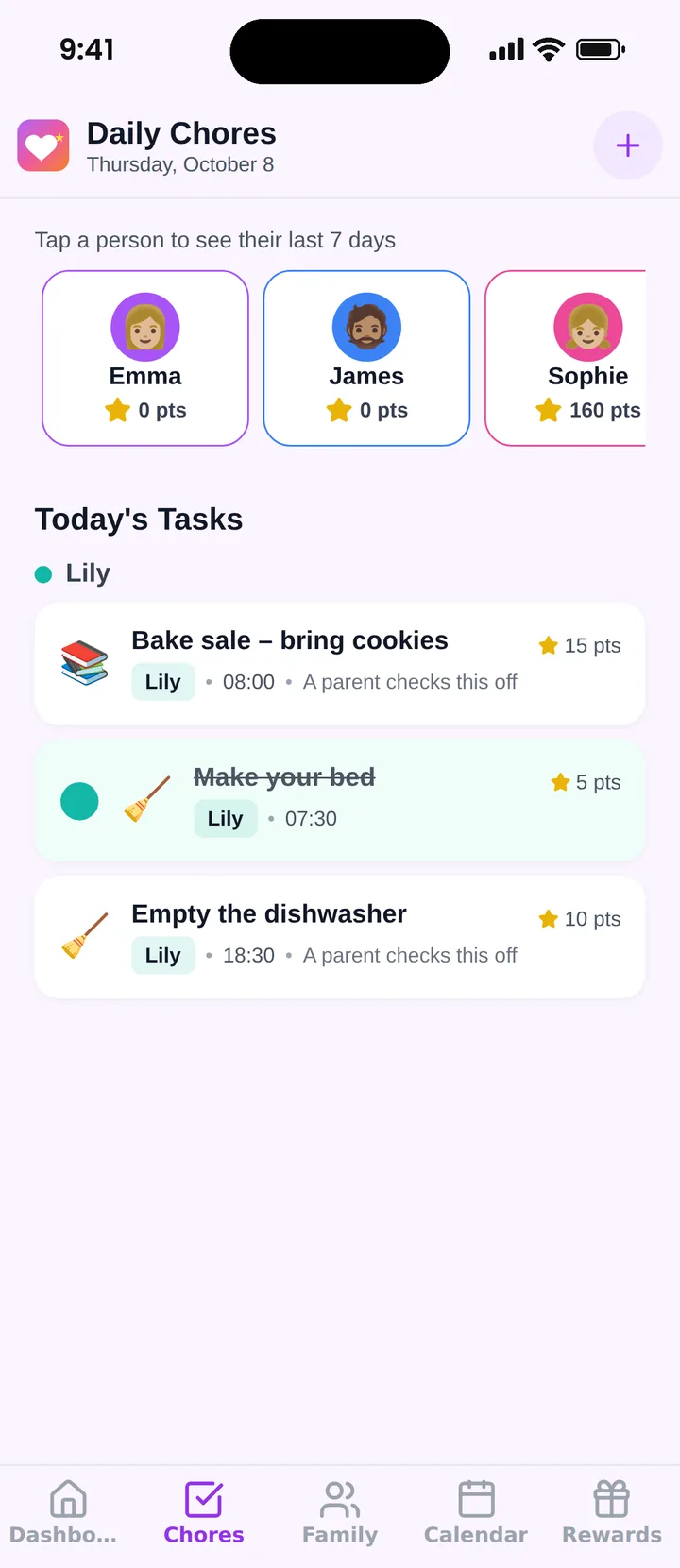
Famiyo is a free family app for iPhone and Android that combines a shared family calendar, chores with points and a rewards shop; kids join with a code, no email needed. Each child sees their own tasks and points on their own phone, and kids hear about new tasks by push notification, so the reminder comes from the app and not from you. You hear when a chore is done or a reward is redeemed, which means no more walking over to check. Points go toward rewards you set, so a child can see the payoff of finishing. If you want options, our list of the best chore apps for kids is a good place to start.
One thing to try tonight
Pick one chore and one deadline. Tell your child the rule once, calmly, over dinner. Tomorrow, say it one time and wait. If it isn't done, let the agreed consequence show up and keep your voice quiet.
Frequently asked questions
Why do my kids only listen when I yell?
Kids learn that the first three requests don't count and the real one comes at full volume. If a calm ask gets the same result every time, they stop waiting for the yell. Make the first ask the only ask, with a clear time limit and a consequence.
What can I say instead of yelling about chores?
Give the job and the time: 'Dishes need to be done before 6:30.' Or offer a choice: 'Do you want to do the dishes before or after your show?' Short, calm and specific beats loud and vague.
What if my child ignores a calm request?
Follow through without anger. Say it once, wait, then apply the consequence you agreed on earlier, such as no screen time until the job is done. The consequence does the work so your voice doesn't have to.
Is it okay if I lose my temper sometimes?
Yes. Every parent does. Afterward, calm down, say 'I yelled and I'm sorry,' and restate the rule you were trying to enforce. Repairing it teaches kids as much as the calm days do.
Try Famiyo With Your Family
Chores with points, a rewards shop for kids and one shared family calendar. Set it up in a couple of minutes.



Free to download • No credit card required • Available on iOS & Android