Chore Chart Ideas for Kids: 25 Formats to Try
25 chore chart ideas for kids, from a simple checklist to a chore wheel, magnet board and phone app, with who each format suits and when to switch.
By Famiyo Editorial Team4 min read

Every chore chart starts out loved. A few weeks later it's either ignored on the fridge or quietly missing. The format has a lot to do with that, so here are 25 chart styles grouped by how they work, with who each one suits and where it tends to break. Pick one that matches your child's age and how much effort you're willing to put in each week.
Simple paper charts
These cost almost nothing and take ten minutes to set up. They're the right place to start if you've never used a chart before.
- Daily checklist. A list of three or four tasks with a tick box per day. Ages 6 and up.
- Weekly grid. Tasks down the side, Monday to Sunday across the top, one box per day. The classic. Ages 5 to 12.
- Picture chart. Photos or drawings instead of words for each task, such as a toothbrush, a bed, a dog bowl. Ages 3 to 5.
- Morning and evening routine strip. Four to six steps in order from wake-up to leaving. Fits kids under 7 best.
- Whiteboard list. A dry-erase board by the door, wiped clean each night. Easy to change when the week changes.
- Sticker chart. One sticker per finished task, a small reward at a set number. Good for ages 3 to 7, and see our guide to making a kids reward chart for the setup.
- Clipboard chart. A printed sheet on a clipboard that kids carry with them. Useful for kids who like to hold things.
Chore chart ideas that move
Charts that kids physically touch hold attention longer, especially for younger children.
- Magnet board. Chore magnets move from a "to do" side to a "done" side of the fridge. Ages 3 to 8.
- Velcro board. Same idea, with velcro cards and a laminated board. Holds up to rough handling.
- Clothespin chart. Clip a clothespin on each chore when it's done. Low-prep and cheap.
- Chore jar. Chores on slips of paper, kids draw one or two a day. Works for variety.
- Chore wheel. A spinning or rotating wheel assigns jobs. Good for siblings, because the rotation feels fair.
- Pocket chart. Each child has a pocket for their cards, moved to a "finished" pocket when done.
- Chore cards. A deck of cards, one job each, dealt out weekly. Ages 7 and up.
Charts built around rewards
When motivation needs a boost, these tie effort to something visible.
- Points chart. Each task has a points value (5 for small, 10 for medium, 20 for big) and a prize menu at the bottom. Ages 6 and up.
- Coin or token chart. A jar fills with coins or poker chips, then buys a reward. Visual and satisfying.
- Progress path. A game-board path where each finished chore moves a marker one step closer to a prize. Younger kids love it.
- Bingo card. A 5-by-5 grid of tasks, a row earns a reward. Mixes daily and bonus jobs. Ages 7 to 12.
- Streak calendar. Mark each day all tasks are done, aim for seven in a row. Good for building a habit.
- Paid-chore list. Extra jobs with a cash value, kept separate from daily tasks. Ages 8 and up.
Charts for families and older kids
Older kids want less decoration and more ownership.
- Family board. One shared chart for everyone, parents included. Kids notice when adults are on it too.
- Spreadsheet chart. A shared sheet with each person's column, easy to edit. Our guide to a chore chart in Google Sheets shows the layout.
- Designed printable. A clean template built in a design tool, printed and laminated. See making a chore chart on Canva.
- Zone chart. Rooms or areas assigned to each child, such as kitchen, bathroom, yard, that stay theirs for a month.
- Phone app. A digital chart with repeating tasks, points and notifications, which suits kids who already live on their phone.
How to choose, and when to switch
Match the format to age first. Under 6, use pictures and things they can move. From 6 to 9, a weekly grid or points chart works. From 10 up, give them a list they own and a deadline, then step back. If you need a list of tasks to put on it, our master chore list for kids has more than you'll use.
Whatever you choose, keep three rules. Two or three daily tasks for small kids and three or four for school-age kids. Put the chart where the task happens, not in a hallway nobody uses. And review it every 4 to 8 weeks. A chart that has gone stale needs a new look or a rotation of jobs, not more pressure. When the format is the problem, change it before you change the child.
Letting an app replace the chart
Famiyo is a free family app for iPhone and Android that combines a shared family calendar, chores with points and a rewards shop; kids join with a code, no email needed. It replaces the paper chart for families who are tired of redrawing it.
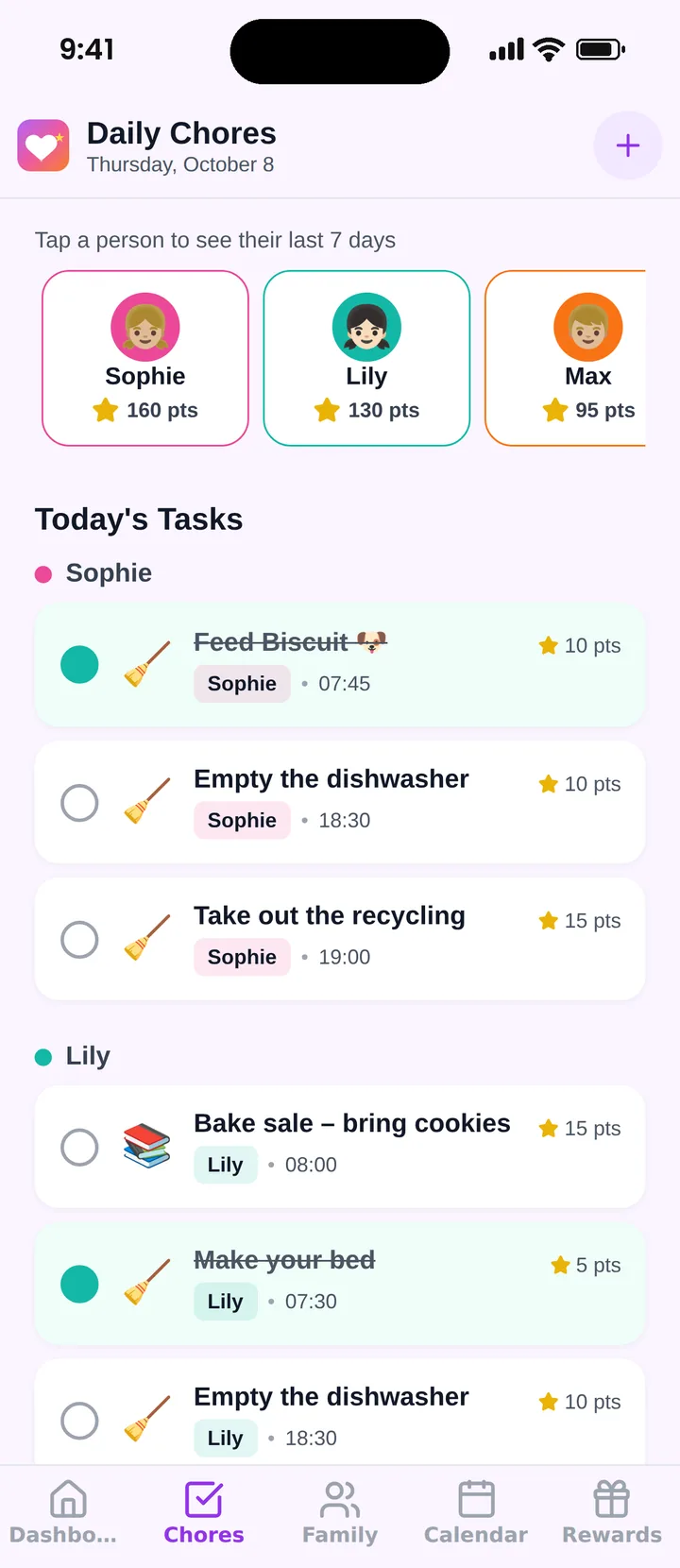
You add a chore once, set it to repeat daily or weekly, choose who does it and how many points it's worth. Kids get a notification when a task is theirs and check it off on their own phone, or you approve it, whichever you prefer. Everyone's phone stays in sync live. For a side-by-side look at tools, see our list of the best chore chart apps.
Frequently asked questions
What is the best chore chart for kids?
It depends on age. Picture charts and magnet boards suit ages 3 to 5, weekly checklists suit ages 6 to 9, and points or an app suit ages 10 and up. The best one is simply the one your child checks without being nagged.
How many chores should be on a chore chart?
Start with two or three daily tasks for preschoolers and three or four for school-age kids, then add one weekly bigger job from about age 8. A short chart that gets finished teaches more than a long one that gets ignored.
Should a chore chart include rewards?
It can. Stickers or points work for younger kids and help new habits start. Many families keep basic daily chores unpaid and unrewarded after a few weeks, and reserve rewards for extra jobs or streaks.
How often should I change the chore chart?
Review it every 4 to 8 weeks. If kids have stopped looking at it, change the format or rotate who does what before you add pressure. A new look can restart a chart that has gone stale.
Try Famiyo With Your Family
Chores with points, a rewards shop for kids and one shared family calendar. Set it up in a couple of minutes.



Free to download • No credit card required • Available on iOS & Android