Chores for 6-Year-Olds: 20 Jobs Kids Can Do on Their Own
20 chores a 6-year-old can do without help, what done looks like for each, how long they take, and how to teach them so first graders work on their own.
By Famiyo Editorial Team6 min read
Six is the age when chores can stop being "help Mom" and start being "my job." First graders can follow a three-step instruction, many can read a short checklist, and they care a lot about doing things by themselves. Below are 20 chores a 6-year-old can do without you hovering, what done looks like for each, and how to teach them so the independence actually sticks.
What a 6-year-old can handle on their own
The jump from 5 to 6 is less about strength and more about memory and attention. A typical 6-year-old can hold two or three steps in mind ("shoes in the basket, coat on the hook, bag by the door"), can stay on a task for several minutes, and has better hand control for things like pouring, wiping and folding small items. They're also starting to compare themselves with other kids, so being trusted with a real job feels good.
What they can't do yet is plan. A 6-year-old won't notice the trash is full or remember that Tuesday is watering day. That's your part: you pick the jobs, set the time and make the steps visible. Their part is doing the job itself, start to finish, without being walked through it every time.
Expect about 15 to 20 minutes of chores a day at this age, usually 3 or 4 small jobs. The results will be decent, not perfect. A bed with a lumpy blanket is a made bed.
20 chores for 6-year-olds
Each job here is something most 6-year-olds can do alone once you've taught it. The minutes are rough, and the points follow a simple scale: 5 for a small job of a few minutes, 10 for a medium job of 10 to 15 minutes.
| # | Chore | Done looks like | Minutes | Points |
|---|---|---|---|---|
| 1 | Make the bed | Blanket pulled up, pillow at the top | 2 | 5 |
| 2 | Get dressed and put pajamas away | Pajamas under the pillow or in the drawer | 5 | 5 |
| 3 | Put dirty clothes in the hamper | Floor clear of clothes | 2 | 5 |
| 4 | Pack the school bag the night before | Folder, lunchbox spot ready, bag by the door | 5 | 5 |
| 5 | Unpack the lunchbox after school | Containers in the sink, trash in the bin | 3 | 5 |
| 6 | Feed a pet | Food scooped, water bowl topped up | 3 | 5 |
| 7 | Set the table | Plates, cups, forks and napkins at each seat | 5 | 5 |
| 8 | Clear their own place | Plate and cup on the counter or in the sink | 2 | 5 |
| 9 | Wipe the table after meals | No crumbs or sticky spots | 3 | 5 |
| 10 | Empty plastic dishes from the dishwasher | Plastic plates, cups and cutlery (no knives) put away | 10 | 10 |
| 11 | Sort laundry by color | Lights and darks in two piles | 5 | 5 |
| 12 | Match and fold socks | Socks paired and in the drawer | 10 | 10 |
| 13 | Put away their own clean clothes | Folded items in the right drawers | 10 | 10 |
| 14 | Tidy their room | Toys in bins, books on the shelf, floor clear | 10 to 15 | 10 |
| 15 | Sweep a small area | Kitchen corner or entryway swept, crumbs in the dustpan | 10 | 10 |
| 16 | Water plants | Each plant watered with a small can, no puddles | 5 | 5 |
| 17 | Empty a small trash can into the big one | Bathroom or bedroom bin emptied | 3 | 5 |
| 18 | Unpack groceries onto low shelves | Cans, boxes and snacks put in their spots | 10 | 10 |
| 19 | Line up shoes by the door | Pairs together, out of the walkway | 2 | 5 |
| 20 | Wipe the bathroom sink | Toothpaste spots gone, using a damp cloth | 5 | 5 |
You don't need all 20. Pick three or four daily jobs from the top half and rotate one or two of the others in each week. The same list works for boys and girls: a 6-year-old who only ever sets the table misses out on sweeping, and the reverse is just as true.
Jobs to hold back for now
Some chores look easy but carry real risk or need judgment a 6-year-old doesn't have yet. Leave these for later or do them together:
- Anything with sharp knives, glass or the stove
- Cleaning sprays and bleach (a damp cloth or a baby-wipe is enough at this age)
- Walking the dog near traffic without an adult
- Carrying a full trash bag down stairs
- Loading the dishwasher, which takes more sorting and care than unloading it
Around 7, most kids are ready for a bit more, like wiping counters with a spray of water and soap or folding towels. Our chore chart ideas for 7-year-olds show how the list grows from here.
Fitting chores into a first grader's day
School days are long at 6, and kids are often tired by late afternoon. Chores go better when each one is tied to a moment that already happens, rather than announced at random. A simple day might look like this:
- Morning, before breakfast: make the bed and get dressed (10 points).
- After school: unpack the lunchbox and line up shoes (10 points).
- Dinner time: set the table, then clear their own place (10 points).
- Before bath: pack the school bag for tomorrow (5 points).
That's 35 points and roughly 20 minutes, spread out so no single block feels like work. Weekend days can swap in one medium job, like tidying the room or unpacking groceries. If you want help laying out a week, see our guide to a chore schedule for kids.
How to teach a 6-year-old to do chores alone
Kids this age often seem to "forget" a job they did fine yesterday. Usually they haven't forgotten. They just haven't learned it as a set of steps they can run on their own. Teaching it that way takes about a week per job.
- Show it once while saying the steps out loud: "Plate on the counter, cup next to it, napkin in the trash."
- Do it together the next day. Let them do the part they can, you do the rest.
- Let them do it while you stay in the room. Say nothing unless they're stuck.
- Make the steps visible. A card with three pictures or three short words, taped where the job happens, works better than a chart on the fridge.
- Check once, then step away. Comment on one specific thing: "You got every crumb off the table."
After that, your job is to stop doing it for them. If the bed is lumpy, it stays lumpy. Redoing a child's work tells them the job was never really theirs. When you're ready to move from reminding to not reminding at all, our article on how to get kids to do chores without asking covers the handoff.
Giving a 6-year-old their own chore list in Famiyo
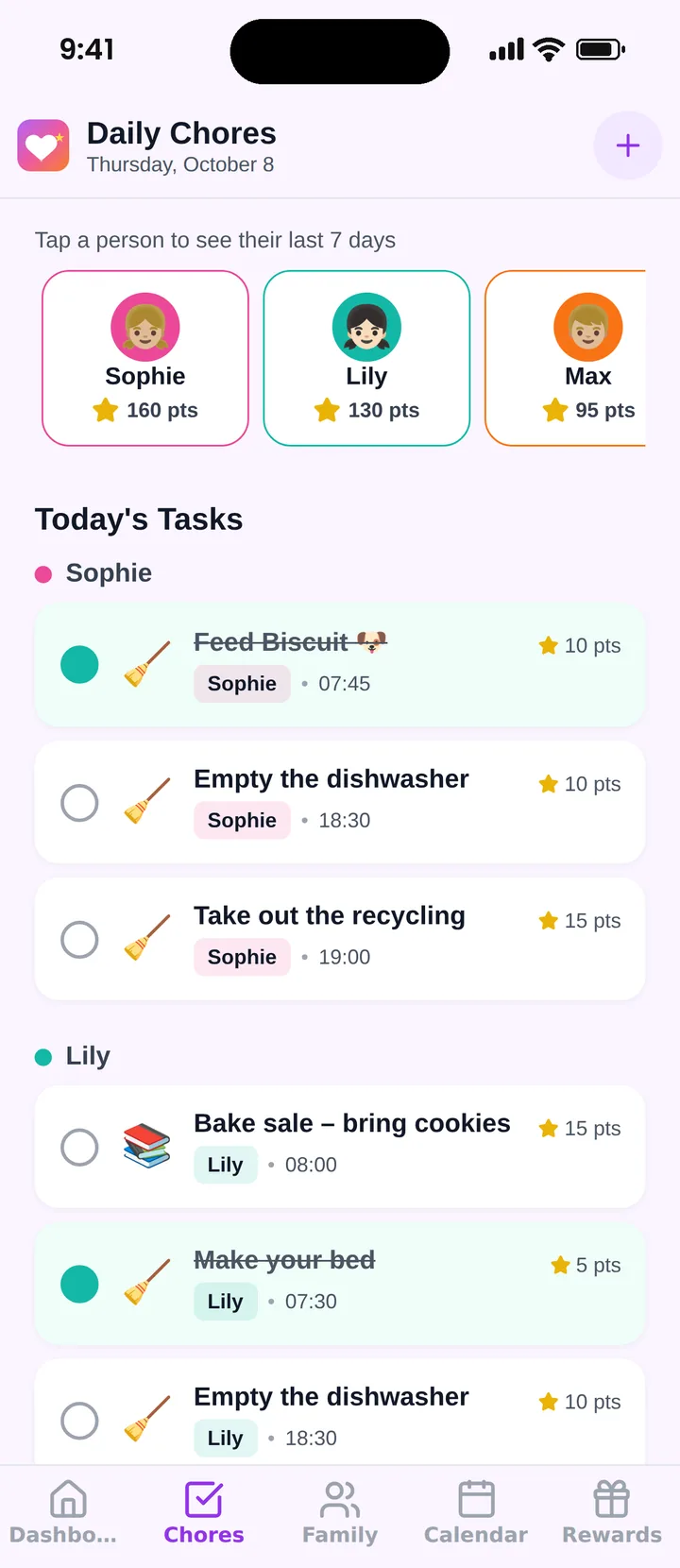
Famiyo is a free family app for iPhone and Android that combines a shared family calendar, chores with points and a rewards shop; kids join with a code, no email needed. For a 6-year-old, add three or four daily chores from the table above and give each one 5 or 10 points. Your child joins on a phone or iPad with a 6-character code and sees only their own jobs for the day. They tap a job when it's done, or you can set chores so a parent approves them first, which helps at this age while "done" is still being learned. You'll get a notification when a job is checked off, and the points add up toward rewards you set. For a broader look at options, see our list of the best chore apps for kids.
Start this week with just two jobs from the list, one in the morning and one at dinner. Add a third only when the first two happen without you.
Frequently asked questions
How many chores should a 6-year-old have?
Three or four short daily chores is plenty, adding up to about 15 to 20 minutes a day. Most families pick one morning job, one after school and one or two around dinner. Weekly jobs like watering plants or matching socks can be added on top once the daily ones run smoothly.
Should a 6-year-old get paid for chores?
Basic jobs like making the bed and clearing their plate work best as part of being in the family. Many parents use points or small rewards instead of cash at this age, or pay a little for extra jobs. Money makes more sense once a child can count it and save toward something.
What can a 6-year-old do in the kitchen?
Set the table, clear their own place, wipe the table with a damp cloth, empty plastic plates and cups from the dishwasher, put cutlery (no knives) in the drawer, unpack groceries onto low shelves and help make a cold snack like a sandwich or a bowl of cereal.
Are chores for 6-year-old girls and boys different?
No. Six-year-olds of any gender have the same abilities, and the same list works for both. Giving every child the same range of jobs, from sorting laundry to taking out a small trash can, means each one learns the full set of skills they'll need later.
Try Famiyo With Your Family
Chores with points, a rewards shop for kids and one shared family calendar. Set it up in a couple of minutes.



Free to download • No credit card required • Available on iOS & Android