How to Get Kids to Clean Up After Themselves
Get kids to clean up after themselves by giving every activity a clear last step, the words to prompt it, an easy setup and two short daily resets.
By Famiyo Editorial Team6 min read
The cereal bowl is on the couch. One shoe is in the hallway, the other is somewhere near the stairs, and the backpack has been lying open by the door since 3:40. Kids who walk away from their own mess aren't trying to drive you up the wall. In their heads, the activity ended when the fun part did. This guide shows you how to move that finish line: one rule, the exact words to use, a setup that makes the right thing easy and a realistic idea of what to expect.
Why kids walk away from their own mess
Cleaning up is the boring last bit of anything. The snack was great, the drawing was great, and now the next great thing is calling. A child's attention follows the fun, and putting the cap back on the marker isn't fun.
There's a second reason, and it's less comfortable. The mess usually disappears. Somebody (you) carries the bowl to the sink, hangs the towel and pushes the chair in. From a kid's point of view, cleanup is something that happens in the house, the way the lights come on. Why would they do it if it gets done anyway?
None of this means your child is lazy. Plenty of adults leave a mug on the desk for three days. It means the habit was never built, and habits can be built.
Give every activity a last step
Here's the one rule that does most of the work: an activity isn't over until its last step is done. Snack ends when the wrapper is in the trash. Bath ends when the towel is on the hook. Coming home ends when shoes are on the mat.
Say it in those words. Kids understand "the last step" much better than "clean up your mess," because it's small, specific and attached to something they just did. Start with the activities that create the most mess in your house, and pick only two or three for the first week.
| Activity | The last step | Realistic from age |
|---|---|---|
| Eating a snack | Wrapper in the trash, cup or bowl in the sink | 3 |
| Getting dressed | Pajamas in the hamper or under the pillow | 4 |
| Bath or shower | Towel on the hook, dirty clothes in the hamper | 4 |
| Meals | Plate scraped and in the sink or dishwasher, chair pushed in | 5 |
| Coming home | Shoes on the mat, coat on the hook, lunchbox emptied on the counter | 5 |
| Screen time | Tablet on the charger, controller back in its basket | 5 |
| Art or homework | Markers capped and in the box, papers in a folder, table wiped | 6 |
| Playing outside | Ball, bike and scooter back in the garage | 6 |
| Making their own snack | Food back in the fridge, crumbs off the counter | 8 |
The ages are rough. A careful 4-year-old can hang a towel, and a distracted 10-year-old can forget the same towel every single day. Start where your child is.
What to say instead of "clean up your mess"
Long reminders turn into background noise fast. Short ones that make the child think work better. These five cover most situations:
- "Snack's not over yet. What's the last step?" (They answer, they do it. You didn't have to tell them what.)
- "When the shoes are on the mat, then you can go play." (A when/then puts the next fun thing behind the last step, calmly.)
- "Towel." (One word, said once, after the habit is known. Point if you're across the room.)
- "I see a bowl on the couch. Where does it live?" (Describe what you see, then stop talking.)
- "Thanks for capping the markers without me asking." (Notice it when it goes right, specifically, so it happens again.)
What to stop doing: cleaning it up silently and then being annoyed about it later. Also, try to skip the speech about how you're not their maid. It feels good for about four seconds and changes nothing. If your cleanup reminders keep ending in raised voices, our guide on getting kids to do chores without yelling has a calmer script for the moment things heat up.
Make the right place easier than the wrong one
If the right place for something is two rooms away behind a closed door, the wrong place wins. Every time. Before you blame the kid, walk the route yourself.
A few changes do a lot. Put coat hooks at your child's shoulder height, not yours. Set a basket by the front door for shoes and a bin for each child's school stuff. Keep a small trash can in the room where snacks happen. Give kids a low drawer for their plates and cups so putting them away is possible. Put the tablet charger where the tablet usually gets dropped, not in your bedroom.
Fewer steps means more follow-through. A towel hook is one step. A towel bar that needs folding is three, and a 6-year-old will skip all three.
Run two short resets a day
Even with good habits, stuff piles up. A sock here, a library book there. Instead of chasing every item, run two 10-minute resets a day: one after school before screens go on, and one before bed. Everyone in the house does it at the same time, adults included, with a timer or a song playing.
The reset gives kids a set moment to catch what they missed, which means you don't have to catch it all day long. It also makes "clean up after yourself" feel less like a punishment and more like something the family does. If you want to see where a reset fits next to the other daily jobs, our list of chores kids should do every day is a good companion.
Fair warning: it will fall apart on some Wednesday. Practice runs late, someone has a meltdown, and the hallway looks like a shoe store after an earthquake. Do a five-minute version, or skip it, and start again tomorrow. One bad day doesn't undo the habit.
What progress actually looks like
In the first week you'll prompt almost every last step yourself. That's normal. By the second or third week, a one-word reminder should be enough most of the time. Give the new habit 2 to 3 weeks of steady practice before you decide it isn't working.
Expect different levels by age. A 4-year-old will still need a cue most days and will do the job loosely. A 7-year-old can handle the last step of snacks, meals and coming home with a quick reminder. Many 9- and 10-year-olds can do most of it without being told, though they'll still slip when they're tired or rushing.
Room cleanup is its own beast, because a messy room is a week of skipped last steps stacked on top of each other. For that, read our guide on how to get kids to clean their room.
Letting the app do the reminding
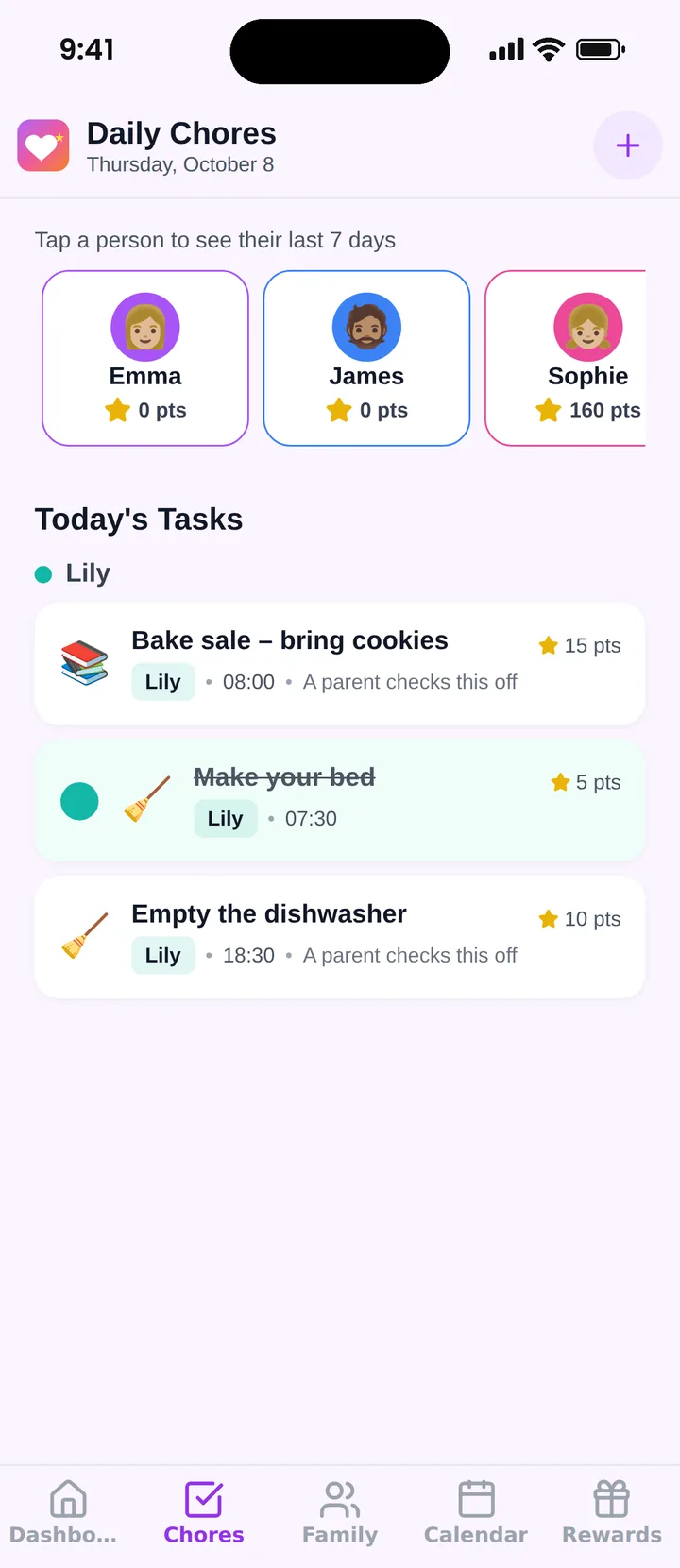
Famiyo is a free family app for iPhone and Android that combines a shared family calendar, chores with points and a rewards shop; kids join with a code, no email needed. Add the resets as chores, for example "After-school reset" and "Kitchen reset after dinner", worth 5 points each, and set one to repeat daily (the free plan includes one repeating task). Your child gets a notification when a new task lands, sees it on their own phone and checks it off, so the reminder comes from the list instead of from you. You get a notification when it's done. For other options, see our list of the best chore apps for kids.
Tonight, pick one activity, probably snacks, and name its last step out loud. Add the next one in a week.
Frequently asked questions
At what age should kids clean up after themselves?
Kids can start around age 2 or 3 with one step, like putting a cup on the counter or a toy in a bin. By 5 or 6 most can handle the last step of snacks, baths and coming home with a prompt, and by 8 or 9 most can do it without one most days.
Should I clean up my child's mess if they refuse?
Try not to clean it silently, because then the mess disappears on its own and nothing changes. Instead, pause the next thing they want until the last step is done: 'The bike can come out once the scooter is back in the garage.' Stay calm and let the wait do the work.
How do I stop nagging my kids to pick up after themselves?
Swap long reminders for one word or a question, like 'Towel' or 'What's the last step?' Then make the reminder come from something other than you: a hook right where the towel lands, a set reset time on the clock, or a chore list on their own phone that they check off.
Should kids get rewards for cleaning up after themselves?
Cleaning up your own mess is a basic family expectation, so many parents keep it unrewarded. A small number of points for the daily reset, or a bonus when it happens without a reminder, can help a new habit start. Once it sticks, you can fade the points out.
Try Famiyo With Your Family
Chores with points, a rewards shop for kids and one shared family calendar. Set it up in a couple of minutes.



Free to download • No credit card required • Available on iOS & Android