Chores for Toddlers: Easy Ways 1- to 3-Year-Olds Can Help
Chores for toddlers ages 1 to 3: 20 easy jobs by age, how long to expect them to last, how to teach each one and what to do when they lose interest.
By Famiyo Editorial Team5 min read
A toddler with a cloth in one hand is a surprisingly effective cleaner for about ninety seconds. Then they notice the dog. That is fine. This page lists 20 jobs that 1-, 2- and 3-year-olds can really do, with a note on what each one teaches, how long to expect it to last and what to do when they would rather not.
What chores mean at this age
For a toddler, a chore is a short job done next to a grown-up. It is closer to play than to work, and that is on purpose. Between 1 and 3 children are driven to copy what you do, to use their hands and to feel capable. Chores give that urge a good use.
Set your expectations to match. Typical chores for ages 2 to 3 are putting toys in a bin, putting clothes in the hamper, wiping up spills and helping feed a pet. The time is about 5 to 10 minutes a day. You will do most of the work, and the result will be off by a mile. Do not fix it in front of them, because that tells them the job did not count.
Chores for 1-year-olds
At one, children can't follow instructions with more than one step, but they can imitate. Treat these as games with a purpose.
- Drop a toy in a basket when you hold it out.
- Hand you a sock or a spoon from the laundry or dishwasher.
- Throw a used tissue or diaper in the trash with you.
- Put a book back on a low shelf.
- Swipe a cloth across the table next to you.
Don't expect any of these to happen on request. Narrate while you do them together: "Basket. In it goes." Words and repetition are doing the teaching.
Chores for 2-year-olds
Two-year-olds can follow a single instruction and want to say "me do it." This is the age to start a small routine.
- Put toys in a bin, with a picture label on the bin.
- Put dirty clothes in the hamper.
- Wipe up a spill with a small cloth you hand them.
- Carry an unbreakable cup or plastic plate to the counter after a meal.
- Help feed a pet by pouring dry food while your hand steadies the scoop.
- Match two socks, as a game.
- Throw trash in the can.
- Wipe their own hands and face with a washcloth.
For toy pickup specifically, see our guide to chores for 3-5-year-olds once yours gets older, and keep it simple until then.
Chores for 3-year-olds
By three, most children can follow two steps in a row and take pride in "their" jobs.
- Put all their toys in the bins before dinner.
- Put clothes in the hamper and bring in a few things from the laundry basket.
- Water a plant with a small watering can.
- Set napkins on the table.
- Wipe the table with a damp cloth.
- Feed a pet, with you measuring the food.
- Carry their own plate and cup to the counter.
For a longer view, our daily chores by age list shows how these grow into the 4- to 5-year-old jobs.
How to teach a toddler a chore
Teaching works better than asking. A toddler who has never seen the job done properly cannot guess it.
- Pick one job and do it the same way each time.
- Show them slowly, with a short narration ("cloth on the table, wipe, wipe").
- Do it together with your hand over theirs.
- Step back and let them do a piece alone, such as the last toy.
- Say what they did: "You put the blocks in the bin."
Repetition is the point. Give a new job two to three weeks before you decide it isn't working.
How long and how often
| Age | Jobs per day | Time | Your part |
|---|---|---|---|
| 1 | 1 game-like job | A minute or two | Do everything, they join in |
| 2 | 2 tiny jobs | 5 minutes | Hold, point, narrate |
| 3 | 2 to 3 jobs | 5 to 10 minutes | Remind once, finish what is left |
Fixed moments help more than clocks: after a meal, before a bath, right before a story. The sequence "toys, then book" makes pickup the doorway to the part they want.
A sample toddler day
This is a realistic day for a 2- to 3-year-old, not a schedule to follow to the minute.
- After breakfast: carry your own bowl to the counter.
- Before the morning outing: dirty pajamas in the hamper.
- Afternoon: help feed the pet.
- Before bath: toys in the bin, with a song.
That is four tiny jobs, and it totals only a few minutes. On a bad day, drop two and keep toys.
What to do when they lose interest
Interest comes and goes, and a two-year-old's "no" is a normal part of development. A few things help:
- Offer a choice: "Do you want the blue bin or the red bin?"
- Make it a race with a song, or a game of "who can find the blocks."
- Keep your tone flat and cheerful. A big reaction either way turns it into a power struggle.
- Skip a day when they are tired, sick or in a growth spurt of feelings. The routine survives a missed day.
- Praise the effort, not the result. "You worked hard on those cars."
Our article on reward charts for 3-year-olds covers how to use stickers without overdoing it.
Safety notes
Toddlers put things in their mouths and fall over. Keep chores to unbreakable, non-toxic items. Stay with them at all times near water, stairs and the oven. Keep cleaning sprays out of reach and use plain water on a cloth. Pet food should be given only in the amounts you set out.
Where an app helps at this age
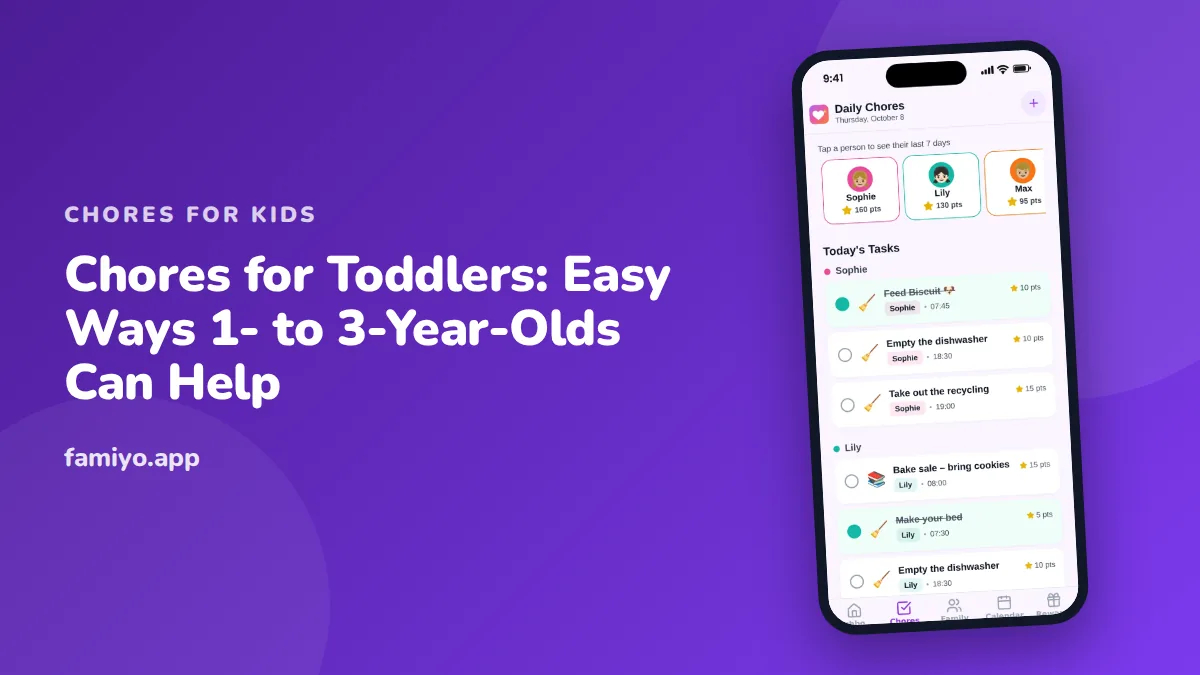
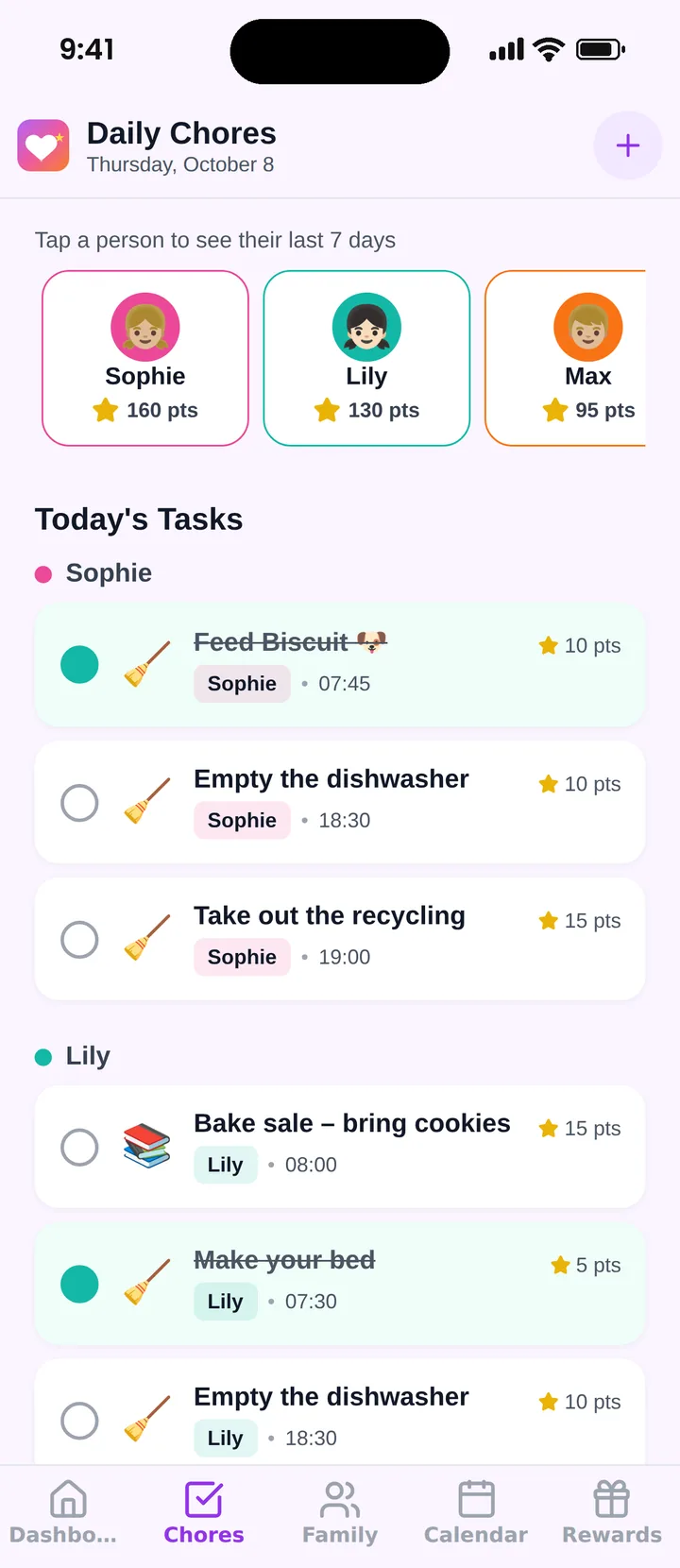
Famiyo is a free family app for iPhone and Android that combines a shared family calendar, chores with points and a rewards shop; kids join with a code, no email needed. Toddlers don't hold their own phones, so you are the one using it: add a few tiny chores such as "toys in the bin" with a small point value, and tap them done when your child finishes. As they grow, they can take over checking off their own tasks. For other tools, see our list of the best chore apps for kids.
Tonight, choose two jobs from this list and do them with your toddler, the same way, after dinner.
Frequently asked questions
What chores can a 2-year-old do?
A 2-year-old can put toys in a bin, drop dirty clothes in the hamper, wipe a spill with a cloth, carry an unbreakable cup to the counter and help pour pet food with your hand over theirs. Expect help and imperfect results.
At what age can toddlers start doing chores?
Many children start copying household tasks between 1 and 2, such as handing you a sock or dropping a toy in a basket. Treat that as practice, not a duty, and make real routines at about 2 to 3.
How many chores should a toddler have?
Two or three tiny jobs a day is plenty, taking 5 to 10 minutes in total at ages 2 to 3. Use the same ones every day so they become automatic, and add something new only after a few weeks.
Should toddlers get rewards for chores?
Praise and a high five do most of the work at this age. A sticker or a point they can see is fine, but save bigger rewards for later. A 2-year-old cannot wait days for a prize.
My toddler says no to everything. What should I do?
That is typical at 2 and not a sign of a problem. Offer two choices (the red bin or the blue bin), keep the job tiny, do it alongside them and skip it on tired days. The routine matters more than any single day.
Try Famiyo With Your Family
Chores with points, a rewards shop for kids and one shared family calendar. Set it up in a couple of minutes.



Free to download • No credit card required • Available on iOS & Android