Reward Chart for a 3-Year-Old: What to Track and What to Reward
A reward chart for a 3-year-old: which small jobs and routine steps to track, rewards that work at this age, how many stickers to ask for, plus a printable.
By Famiyo Editorial Team5 min read
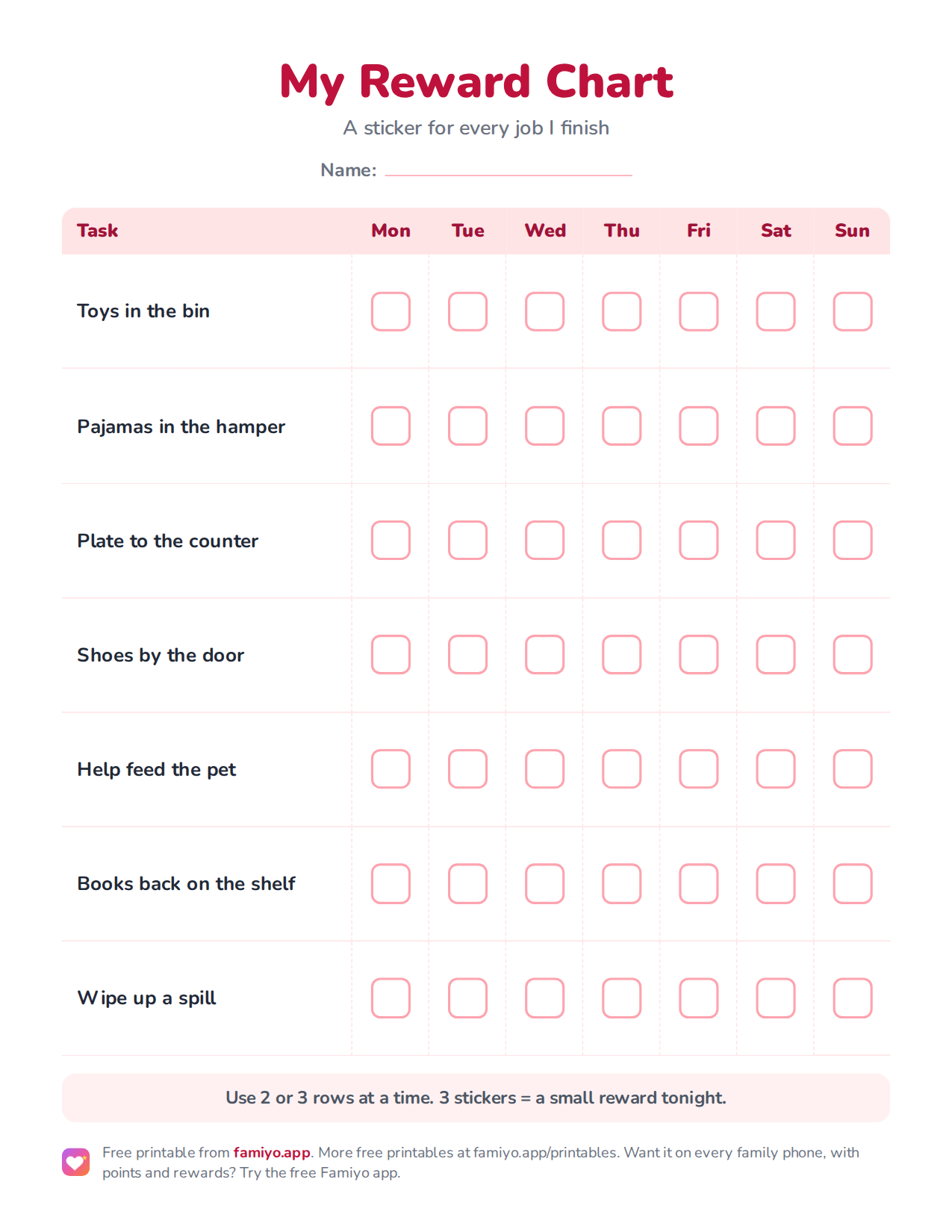
Free printable
My Reward Chart
A weekly chart on one US Letter page. Download the PDF to print it, or save the image to use it on a tablet or in a document.
Free for home, classroom and nonprofit use, see the license. More free printables.
Three-year-olds want to help with almost everything, right up until you ask them to. A reward chart can turn that eager-but-unreliable help into a few small habits, as long as it's built around what a 3-year-old can actually track: one job, one sticker, one reward before bed. Below you'll find which jobs to put on the chart, a reward menu sized for this age and a printable you can use this week.
What a 3-year-old understands about rewards
A 3-year-old lives in the present. "Do your jobs all week and you'll get a toy on Saturday" is close to meaningless, because Saturday is not something they can picture. What they do understand is quick cause and effect: I put the toys away, I got the sticker. Most can also follow a simple "first this, then that" and love seeing proof of their work stuck to the fridge.
They also can't yet judge quality. A "made" bed at three is a blanket roughly pulled toward the pillow. That's fine. The chart rewards finishing, not perfection, and it works best when the job has an obvious end your child can see.
So the chart needs short jobs (a few minutes each), a sticker within seconds of the job, and a reward the same day. Typical chores at this age add up to only 5 to 10 minutes a day, which means two or three rows is plenty.
What to track: jobs with a clear finish
Pick jobs that happen at the same point every day, so the cue is built in. Here are good candidates and exactly when each one earns a sticker.
| Job on the chart | When it happens | Earns a sticker when |
|---|---|---|
| Toys in the bin | Before bath | The floor is clear and the bin lid is on |
| Pajamas in the hamper | After getting dressed | Pajamas are in the hamper, not near it |
| Plate to the counter | After dinner | The plate reaches the counter without help |
| Shoes by the door | Coming home | Both shoes are on the mat |
| Help feed the pet | Breakfast | They scoop the food with you and pour it in |
| Books back on the shelf | Before nap or bed | Books are on the low shelf, any order |
| Wipe up a spill | Whenever it happens | They get the cloth and wipe, you finish |
Start with one job your child already does about half the time, plus one or two that are harder. The easy row guarantees a sticker on the first day, and that early win is what makes a 3-year-old care about the chart at all. For a longer list of jobs at this age, see our chore chart for a 3-year-old.
What to reward, and how often
At three, the reward should arrive the same evening. A good starting rule: three stickers means a small reward tonight. After two weeks of mostly good days, add one bigger reward that takes two days of stickers.
Rewards that tend to work at this age fall into three groups:
- Time with you: an extra bedtime story, a five-minute dance party, building a blanket fort, chase in the yard, a bath with bubbles.
- Choices: picking the bath toy, the breakfast cup, the song in the car, which pajamas to wear, which park to go to on the weekend.
- Small treats, used sparingly: a sticker sheet of their own, a cookie after dinner, a cheap bouncy ball.
Time with you is the strongest pick for most 3-year-olds, and it doesn't wear out the way new toys do. Keep the same two or three rewards for a few weeks so your child knows what they're working toward.
Running the chart day to day
- Put the chart at your child's eye level, with stickers nearby but out of reach.
- Introduce it at a calm moment: "These are your jobs. When you finish one, you pick a sticker and put it here."
- Do each job together the first few times, then let them try alone.
- Give the sticker right away and name what you saw: "Your pajamas are in the hamper. That's a sticker."
- At bedtime, count the stickers together and hand over the reward if they reached it.
- Start a fresh row the next morning, however the day went.
When a job doesn't happen, keep it short: "No sticker this time. You'll get another chance tomorrow." Never peel a sticker off once it's on. If you want to keep the chart cooperative rather than a bargaining tool, our piece on gentle parenting and chores has more on the tone that works.
Interest usually dips after a week or so. Change the stickers, let your child pick a new picture for a row, and keep the jobs the same. Give the chart 2 to 3 weeks before deciding whether it works. Once a job happens almost every day without a reminder, retire it with a little ceremony and add the next one.
Using the printable chart
The printable below has seven job rows with a box for each day from Monday to Sunday. Use two or three rows at a time and cross out the rest, or cut them off. It suits 3-year-olds and young 4-year-olds who are new to charts. Draw a small picture beside each job you keep, and print a fresh copy every Monday so the week starts clean.
A digital version with Famiyo
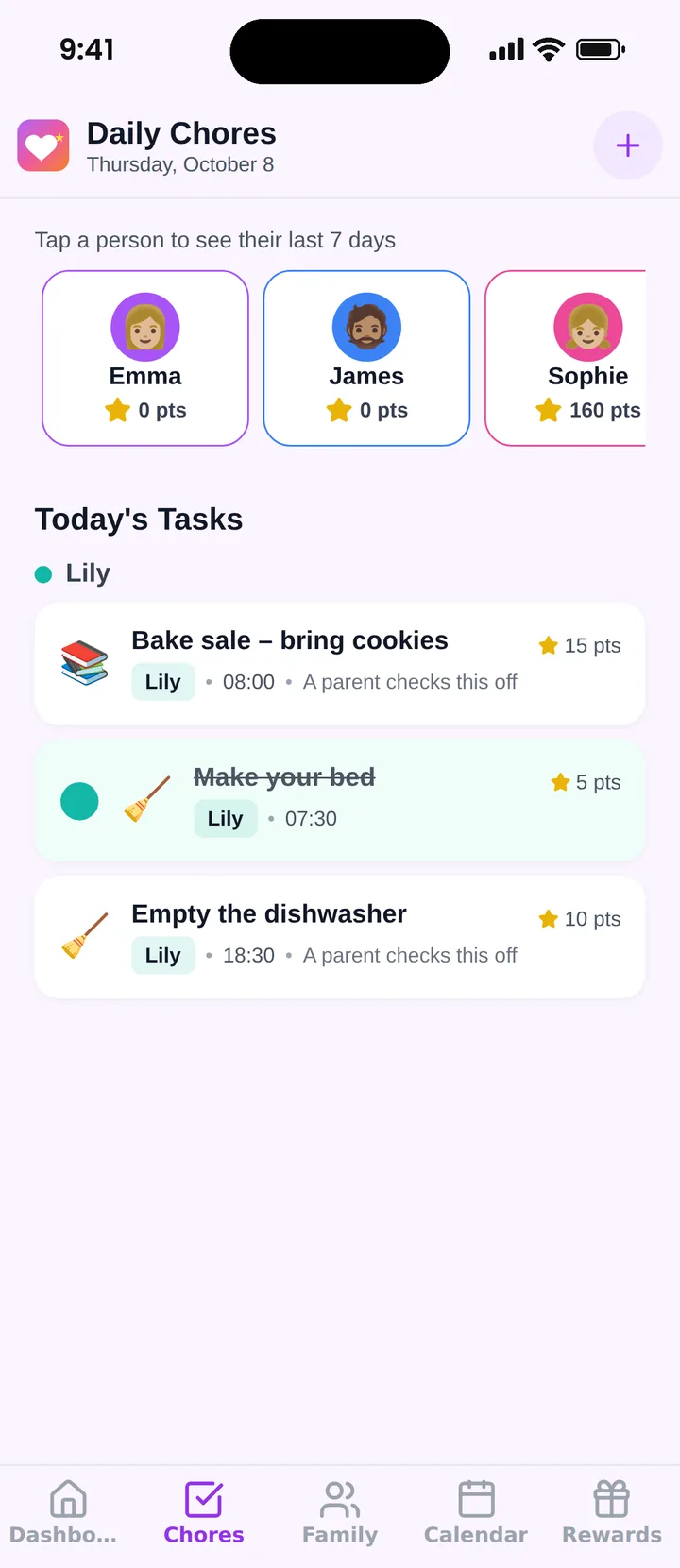
Famiyo is a free family app for iPhone and Android that combines a shared family calendar, chores with points and a rewards shop; kids join with a code, no email needed. For a 3-year-old, a parent runs it: add each job as a daily repeating chore worth 5 points, set it so a parent approves completed tasks, and add rewards like "extra bedtime story" to the rewards shop at a small price. Your child can watch their own list and points fill up on a family tablet. The free plan includes one repeating task, so a chart with two or three daily jobs needs Premium. For other options, see our list of the best chore chart apps.
Pick the easiest job and one harder one tonight, and give the first sticker tomorrow morning.
Frequently asked questions
What should I put on a reward chart for a 3-year-old?
Two or three short, visible jobs with a clear end, such as toys in the bin, pajamas in the hamper, or carrying a plate to the counter. Choose one your child already does fairly often so they win on day one, plus one or two that need a little more effort. Add a picture for each row.
What are good rewards for a 3-year-old?
The best rewards at three are small, quick and usually involve you: an extra bedtime story, choosing the bath toy, a dance party in the kitchen, five minutes of chase in the yard, or picking the breakfast cup. Toys and sweets work too, but keep them rare so the chart doesn't turn into a shopping trip.
How many stickers should a 3-year-old earn before a reward?
Two or three stickers for a same-day reward is a good start. Three-year-olds can't hold a goal in mind for a week, so the payoff has to come the same evening. After a couple of weeks of steady wins, you can add one bigger reward that takes two days of stickers.
Is a reward chart the same as a behavior chart?
Not quite. A reward chart for a 3-year-old usually tracks small jobs and routine steps, things with a clear start and finish. A behavior chart tracks conduct, like gentle hands or staying in bed. Jobs are easier to see and praise at this age, so many parents start with a reward chart.
Try Famiyo With Your Family
Chores with points, a rewards shop for kids and one shared family calendar. Set it up in a couple of minutes.



Free to download • No credit card required • Available on iOS & Android