How to Reward Kids for Good Grades Without Backfiring
Should you pay for A's? Research is mixed, so reward effort you can control, keep rewards small and plan to fade them. Here is a setup that works.
By Famiyo Editorial Team5 min read
Report cards come home, and so does the question: do you pay for the A's, buy dinner out, or say nothing because school is their job? There is no single right answer, and the research is messier than either side of the argument claims. This page lays out what is known, then gives you a way to reward school effort that is unlikely to backfire.
Does rewarding good grades work?
Sometimes, for a while. Studies of financial incentives in schools have found small effects at best when kids are paid for outcomes like test scores, and better results when they are paid for specific actions like reading a book or finishing assignments. The pattern makes sense. A child cannot decide to get an A, but a child can decide to sit down for 30 minutes of math.
There is also a long-standing concern from motivation research, sometimes called the overjustification effect. When someone gets rewarded for an activity they already enjoy, interest can fall once the reward disappears. A kid who likes science fiction may read less after the prizes stop. That does not mean rewards are harmful for every child. It means they work best for tasks that are not yet interesting, and they should be built to fade.
Two things to keep in mind. Kids differ, so what lifts one child may flatten another. And the stakes matter: a pizza night for a good report card is a different thing from $50 per A.
Reward effort and improvement, not just the letter
Grades mix together effort, ability, teaching quality and plain luck on test day. If you pay only for the result, you reward the child who finds school easy and quietly penalize the one who works twice as hard for a B. Kids notice this quickly, and some respond by giving up on the subject that is hardest for them.
Pick rewards tied to what your child controls.
| What to reward | Example | Why it works |
|---|---|---|
| Finishing homework | Done before dinner, 4 nights out of 5 | Fully in their hands |
| Study time | 20 minutes of test prep for 3 days before an exam | Builds the habit behind the grade |
| Turning work in on time | No missing assignments for 2 weeks | Fixes a common grade killer |
| Improvement | A math grade up one step from last term | Fair to kids who start behind |
| Asking for help | Emails the teacher about a confusing unit | Builds a skill they will use for life |
Notice that report card day is not the only moment. Small rewards for effort during the term keep the link between action and payoff short, which matters most for younger kids.
How big should the reward be?
Smaller than you think. A reward that dwarfs the task teaches the wrong lesson. As a rough scale, a regular school week of finished homework might earn a small prize like 15 extra minutes of screen time or choosing dessert. A strong term, or a clear improvement, might earn something bigger: a day out or a family movie pick.
If you use points, the default scale from the Famiyo team works well here: small rewards cost 30 to 50 points, medium ones about 100, big ones 300 to 500. Finishing homework might be worth 10 points a day, so a child needs a few good days for something small and a few good weeks for something big. Most kids do better when they can see a prize within a week or two, because a prize at the end of a semester feels too far away.
Cash is the most debated option. If you choose it, keep it modest, tie it to effort rather than letters, and keep it separate from chores and allowance. Our guide to how to reward kids for chores explains why mixing those pots gets messy.
What to say to your child
Kids take rewards better when they hear the plan before the grades arrive, not after. A short script works for most ages:
- Start with what you care about: "I want you to feel good about the work you put in this term."
- Name the actions: "Homework done before dinner, and 20 minutes of study before every test."
- Name the reward: "Every week you hit that, you pick Friday's dinner. If your grades go up by next report card, we'll do the trampoline park."
- Set an end date: "We'll try this until winter break and then see how it's going."
- Ask for their input: "What would you actually want?"
That last step matters more than it sounds. A reward chosen by the child lands better than one you guessed.
What to do when the grade is bad
Do not take the reward away as punishment, and do not skip the conversation. Sit down with the report card and ask what happened before assuming. Was it too little study, a hard teacher, a missing assignment, something going on with friends? If a pattern shows up across several subjects and effort seems high, talk to the teacher or the school counselor. The American Academy of Pediatrics notes that learning difficulties, vision or hearing problems, sleep and anxiety can all affect school performance, so a pediatrician is a reasonable stop if something seems off.
Then reward the next small step: "Let's aim for every math assignment turned in for two weeks." You are keeping the child on the field.
Fading rewards over time
Plan the exit from day one. Rewards for grades should be scaffolding, not the building.
- Weeks 1 to 4: frequent small rewards for homework and study habits.
- Weeks 5 to 8: space them out, mix in more praise that names specifics ("You started the essay early and it shows").
- After a term: swap items for privileges or autonomy, like choosing their own study spot or a later weekend bedtime.
- Teens: talk about what they want from school and what you can help with. Our piece on how to motivate a teenager to study goes deeper on this stage.
If your child is also building a reading habit, the same logic applies. See how to reward kids for reading. For behavior goals outside school, how to reward kids for good behavior covers it.
Setting up school rewards in Famiyo
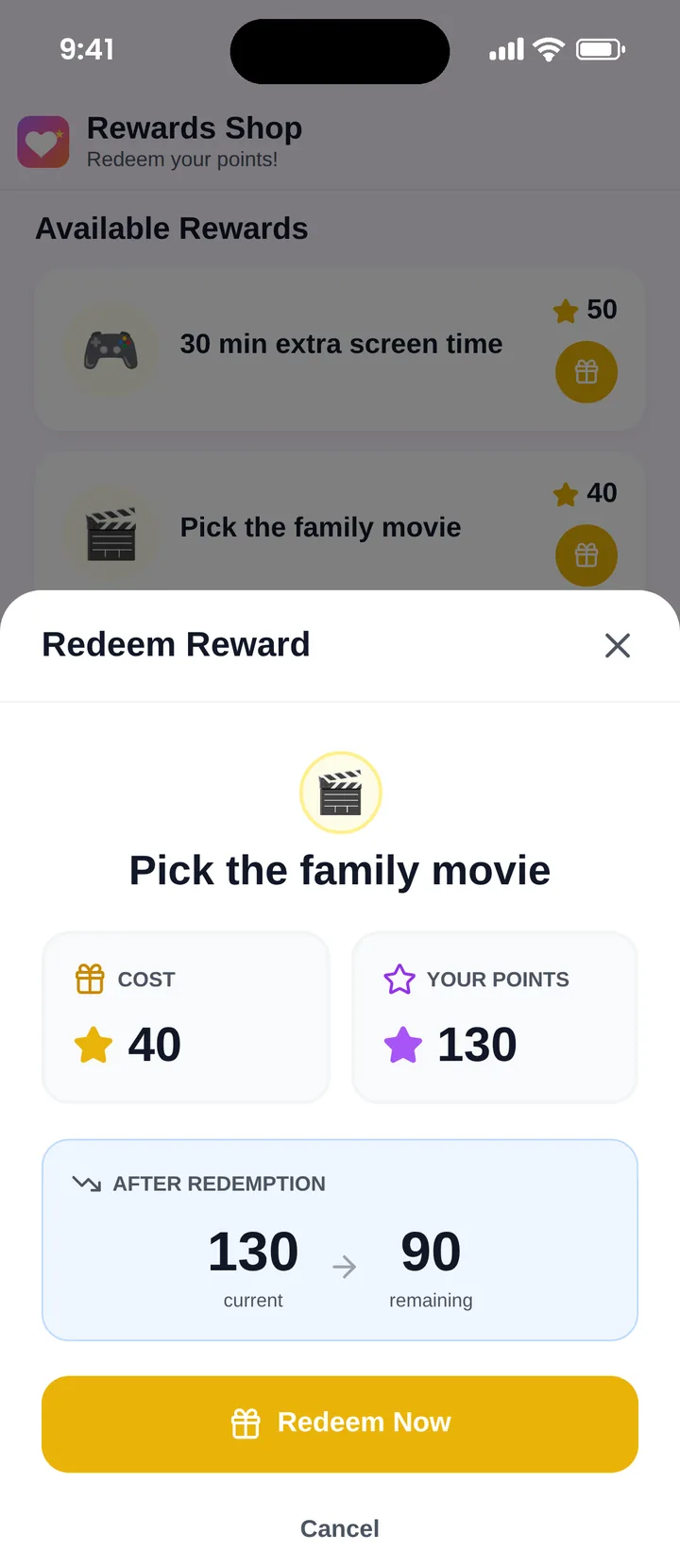
Famiyo is a free family app for iPhone and Android that combines a shared family calendar, chores with points and a rewards shop; kids join with a code, no email needed. For grades, add "Homework done" or "Study for the math test" as a task worth points, then stock the rewards shop with things your child picked: a movie night, a later bedtime on Friday, a day out. You set the price in points, how many are available and when, so a big reward can be offered once per term. Your child redeems from their own phone and sees how many points they will have left, and you get a notification. For a comparison of tools, see our list of the best reward chart apps for kids.
A simple plan for this term
Choose two effort goals, such as homework done before dinner and 20 minutes of study before tests. Agree on one small weekly reward and one bigger reward for improvement at the next report card. Write it down, put an end date on it, and review in four weeks.
Frequently asked questions
Should you pay kids for good grades?
Research is mixed, and many experts lean against cash for grades because it can shift attention from learning to payment. If you do pay, tie it to effort such as homework and study time, keep amounts modest, and set an end date so it does not become the only reason your child studies.
What is a good reward for a good report card?
Experiences work better than cash or big gadgets: a favorite dinner, a day trip, choosing the family movie or a friend sleepover. They mark the achievement, cost little and do not teach your child that school is a job you get paid for.
What if my child works hard but still gets a low grade?
Reward the effort and the improvement, not the letter. A child who studied for a week and moved from a D to a C earned more recognition than one who coasted to an A. Looking only at the grade punishes kids for whom the subject is hard.
Can rewards for grades hurt motivation?
They can. When a reward becomes the main reason for doing something, interest in the task itself may drop once the reward stops. Small rewards, a clear end date and plenty of praise for specific effort lower that risk.
At what age should I stop rewarding grades?
Start fading rewards once the habit is steady, often after one or two grading periods. Move from items to praise, then to privileges like a later weekend curfew. By middle school most kids respond better to autonomy and respect than to prizes.
Try Famiyo With Your Family
Chores with points, a rewards shop for kids and one shared family calendar. Set it up in a couple of minutes.



Free to download • No credit card required • Available on iOS & Android