Intrinsic Motivation Examples for Kids: 15 Real-Life Signs
Intrinsic motivation examples for kids at home and school: 15 everyday signs, what each looks like, and how to protect it instead of crowding it out.
By Famiyo Editorial Team5 min read
You can't see motivation, only what it produces. That's why parents often describe it vaguely ("she's just self-driven") and then panic when a reward chart seems to dampen it. This list gives you 15 concrete, observable examples of intrinsic motivation across ages, so you can recognize it when it shows up, plus the habits that tend to protect it.
What intrinsic motivation actually is
Psychologists use the term for doing something because the activity itself is satisfying. The best-known framework, self-determination theory, says three needs drive it: autonomy (I chose this), competence (I'm getting better at this) and relatedness (this connects me to people I care about). When those needs are met, kids keep going without anyone watching.
It isn't a personality trait that some children have and others lack. It shows up in specific activities, for specific kids, at specific times. A child can be fully absorbed in minecraft redstone and need three reminders to find their shoes.
15 examples of intrinsic motivation in kids
These are grouped by the need they satisfy. Ages are rough, since the same pattern appears at several stages.
Curiosity and interest
- A toddler empties and refills a bucket of sand for twenty minutes straight.
- A 5-year-old asks "why" about the moon until you run out of answers, then asks for a book about it.
- An 8-year-old watches the same video on how bridges are built, then builds one from cardboard.
- A 12-year-old reads past lights-out because they have to know what happens next.
Mastery and getting better
- A 6-year-old keeps retying their shoes until the bow stays, and refuses help.
- A 9-year-old repeats a skateboard or scooter trick fifty times and celebrates a landing nobody saw.
- A 10-year-old rewrites a level in a game they designed because it "isn't fun enough yet."
- A 14-year-old practices a guitar riff slowly, then faster, with no recital in sight.
Ownership and choice
- A 4-year-old insists on picking their own outfit, even when it clashes.
- A 7-year-old sets the table before dinner because they decided they are the "table person."
- An 11-year-old designs their own study schedule and sticks to it for a week.
Connection and meaning
- A 5-year-old makes a card for a grandparent with no occasion.
- An 8-year-old teaches a younger sibling to ride a bike and is prouder than the sibling.
- A 13-year-old volunteers to walk a neighbor's dog because they like being useful.
- A 15-year-old stays after practice to help set up cones, with no coach asking.
Notice what's missing: no sticker, no payment, no deadline. That's the test. Ask, "Would they keep doing it if I stopped noticing?"
Do rewards kill it?
This is the part most parents worry about. The honest answer is that it depends on the task and the child.
Studies on this topic, often grouped under the name "overjustification effect," suggest that paying kids for something they already enjoy can make them value it less. The activity starts to feel like work done for pay. On the other hand, for tasks a child finds boring or has no natural interest in, such as emptying the dishwasher, reward systems usually don't damage anything because there was no intrinsic motivation to damage.
A practical split:
| Type of task | Use rewards? | Why |
|---|---|---|
| Something the child loves already (drawing, reading, a sport) | Mostly no | Praise for effort is enough; paying can shift the reason from enjoyment to payment |
| A boring but necessary job (chores, packing the school bag) | Yes, modestly | The task has no built-in appeal, so an external boost does little harm |
| A new skill they're hesitant about | Short-term, small | A little extra push to start; remove it once they enjoy it |
Our guides to free rewards for kids and how to reward your child without spoiling them give practical options that keep the focus on the activity.
Habits that protect intrinsic motivation
The American Academy of Pediatrics emphasizes warm, responsive parenting and offering kids age-appropriate choices, and those two habits line up with the three needs above.
- Offer two acceptable options instead of an order. "Homework before or after snack?"
- Describe the effort, not the person. "You kept trying different ways to fix that" beats "You're so smart."
- Pick the difficulty just past comfortable. Too easy is dull, too hard is discouraging.
- Ask before you praise. "What part of that are you proudest of?" lets the child own the answer.
- Resist turning every hobby into a metric. A drawing doesn't need a score.
- Let them be bored sometimes. Self-directed play is where a lot of interest begins.
For delayed rewards and the patience that goes with them, see our ideas for delayed gratification activities for kids.
Using a rewards shop without crowding it out
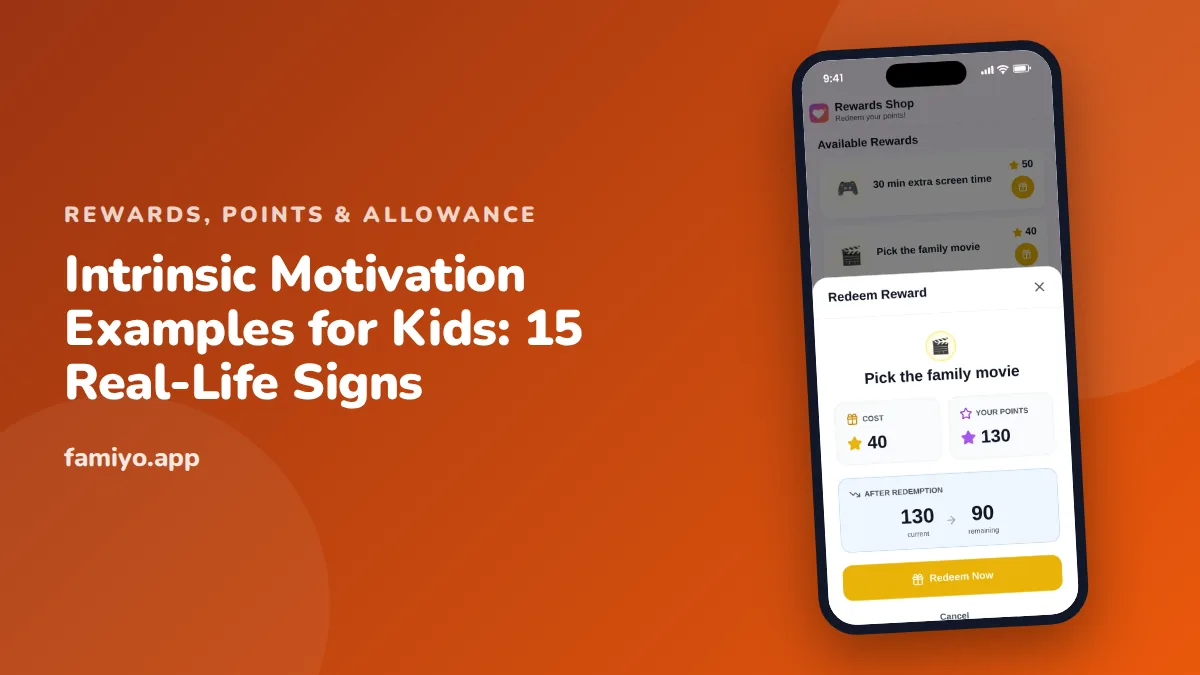
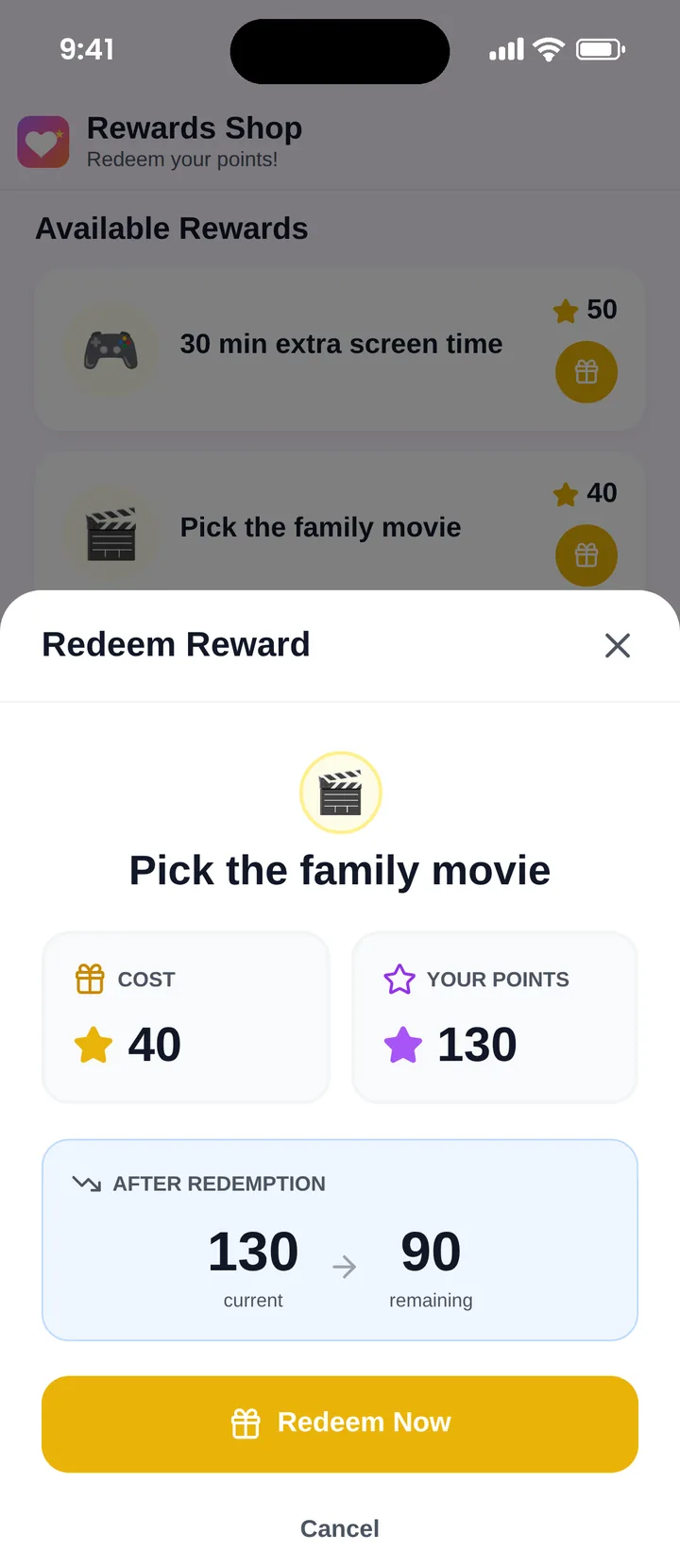
The rules above suggest a clean division at home: points for routine jobs, no points for passions. Famiyo is a free family app for iPhone and Android that combines a shared family calendar, chores with points and a rewards shop; kids join with a code, no email needed. In the rewards shop you set the price in points, how many are available and when, so you can keep prizes tied to chores and leave a child's reading or drawing out of it. Kids redeem from their own phone and see how many points they'll have left, which also makes saving up a choice they own. Compare options in our list of the best reward chart apps for kids.
A simple weekly check
It also helps to remember that motivation moves around. A child who loved piano at 7 may drop it at 10 and take up coding, and that isn't a failure of parenting or of the child. Follow the interest for a while before deciding it's gone.
If you do add rewards to the mix, tell your child why. "This job is boring for everyone, so we use points to make it fair" is honest, and it keeps the points separate from the things they love.
Once a week, ask yourself one question: where did my child choose to spend free time, and did I add a reward to it? If you did, quietly remove it. Protecting one activity they love does more for long-term motivation than any chart.
Frequently asked questions
What is an example of intrinsic motivation in a child?
A child who keeps drawing after the art project is over, reads a book series without being asked, or practices free throws in the driveway for fun. Nobody is handing out a prize. The activity itself, the challenge, the curiosity or the feeling of getting better, is the reason they keep going.
Do rewards ruin intrinsic motivation?
Research on motivation suggests that rewards can reduce interest when a child already loves an activity and then gets paid for it. Rewards tend to do little harm for tasks a child finds dull, like chores. It depends on the child and the task, so reserve rewards for the boring jobs and leave the loved ones alone.
How can I build intrinsic motivation in my child?
Give real choices, set challenges that are slightly hard but doable, and describe effort instead of grading it, for example 'you kept going on that puzzle.' Let them own part of the decision. Autonomy, a feeling of competence and a sense of connection are the three ingredients most often named.
What is the difference between intrinsic and extrinsic motivation?
Intrinsic motivation comes from the activity itself: curiosity, enjoyment, pride in doing it well. Extrinsic motivation comes from outside: a sticker, money, screen time or avoiding a consequence. Kids use both every day, and most families do best with a mix, leaning on extrinsic rewards for routine jobs.
Try Famiyo With Your Family
Chores with points, a rewards shop for kids and one shared family calendar. Set it up in a couple of minutes.



Free to download • No credit card required • Available on iOS & Android