Delayed Gratification Activities for Kids: 12 Ideas by Age
Twelve simple activities that teach kids to wait for a bigger reward, from toddlers to teens, with how to run each one and what the research does and does not say.
By Famiyo Editorial Team5 min read

Waiting is a skill, and like most skills it gets better with small, regular practice, not with lectures about patience. The ideas below give a child a clear reason to wait, a way to see how long is left, and a payoff that shows up when you said it would. They are sorted roughly by age, and each one takes little preparation.
What the research does and does not say
The famous marshmallow experiments of the 1970s followed preschoolers who could wait for a second treat. Early reports linked longer waiting to better outcomes later in life. Later studies with larger and more varied groups found the link was much weaker once family circumstances were accounted for. Children also wait longer when they have reason to trust the adult will deliver.
That second point is the useful one. Kids are not weak-willed when they grab the treat now. They are making a reasonable guess about whether the later reward will really arrive. So the main job for a parent is to be reliable. The American Academy of Pediatrics describes self-control as something children build with predictable routines and calm adult support, not something they either have or lack.
Quick wins for ages 2 to 5
At this age the wait should be measured in minutes and always visible.
- Sand timer snack. Hand over the timer and say what happens when it runs out. Start with one minute and add a minute each week.
- The "first, then" board. Draw two squares: first tidy the blocks, then bubbles outside. The picture keeps the promise in front of them.
- Grow something. A cress seed on a damp paper towel or a bean in a clear cup shows sprouts within days. The daily check is the lesson.
- Wait-and-sing. For short waits in a line or a car, sing a song together and promise the thing when it ends.
If you want one of these to stick, pick it and use it every day for two weeks. Rotating activities too fast stops kids from noticing the pattern.
Ideas for ages 6 to 9
School-age kids can wait days and can handle a goal they chose themselves.
- The saving jar with a picture. Tape a photo of the goal to a clear jar so the progress is visible. Pair it with our notes on how to teach kids financial responsibility for next steps.
- A countdown calendar. Mark a family outing or a small event on the wall calendar. Cross off a day each night.
- The two-day rule. For a non-essential want, say "Ask me again in two days." If they still want it, talk about how to earn or save for it. Many wants fade by themselves.
- Chore jar jobs. Extra jobs go into a jar, and each finished one earns a token toward a prize. See our chore jar ideas for kids for setups that work.
Ideas for ages 10 to 17
Older kids need real stakes and real choices. The activity is the same, but the goals get bigger and the timeline longer.
- A savings goal with a match. Offer to add a share of what they save toward something they want, such as 25 cents for every dollar. Choose a ratio you can afford and keep it consistent.
- A planned purchase. Before a big buy, have them research three options and write down the price of each. A week of research is a waiting exercise by itself.
- Long projects with milestones. Learning a skill, training for a race or building a model all deliver the reward gradually. Mark the milestones and celebrate each one.
- A points goal. Points that build up toward a bigger reward turn effort into a number they can watch. Our guide to how to reward your child without spoiling them covers how to price those rewards.
Setting the right size of wait
A wait that is too long will fail, and one that is too short teaches nothing. A rough guide for matching the wait to the age:
| Age | Reasonable wait | Example |
|---|---|---|
| 2-3 | 1 to 2 minutes | Sand timer before a snack |
| 4-5 | 5 to 10 minutes, or one day | Sprouting seeds, a first-then board |
| 6-9 | 2 to 7 days | Countdown calendar, small saving goal |
| 10-12 | 2 to 4 weeks | Saving jar for a $20 item |
| 13+ | A month or more | Planned purchase, long project |
Move up a step only when the current one is easy. If a child gives up on a goal midway, shorten the next one, and do not frame it as failure.
How to make waiting feel worth it
Three things make the difference, in this order.
First, make the progress visible. A jar, a chart, a calendar or a points total lets a child see how close they are, which is far more motivating than "someday". Second, keep the promise exactly as stated. If you said Saturday, it is Saturday. Third, let the child pick at least some of the goals, because they will wait harder for something they asked for.
Avoid using a wait as a test of character, and avoid hiding the reward to see if they will cheat. Both teach kids that waiting is a game you can lose.
Waiting for rewards in Famiyo
Famiyo is a free family app for iPhone and Android that combines a shared family calendar, chores with points and a rewards shop; kids join with a code, no email needed.
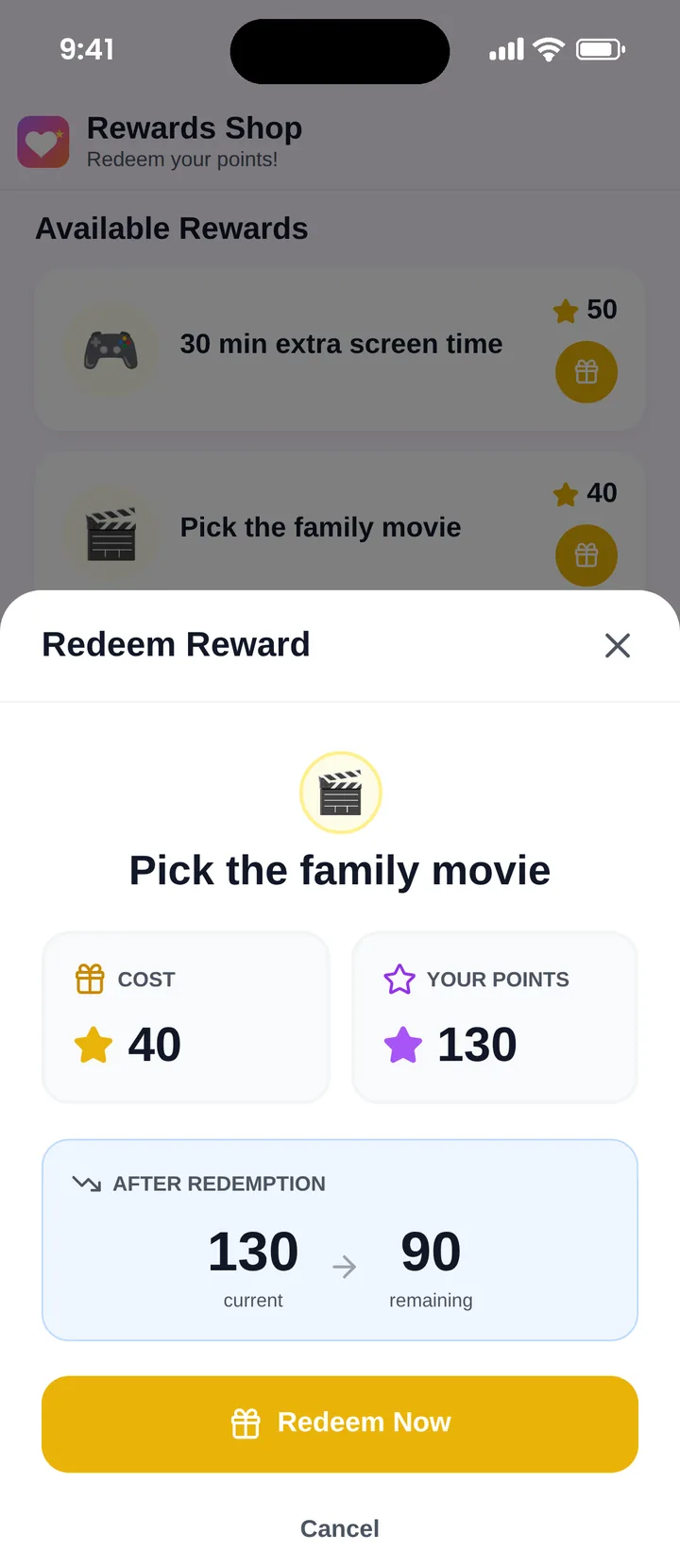
The rewards shop is built for exactly this practice. You create a reward, give it a price in points, and set how many are available and when. Kids see the price, check what they will have left after buying, and redeem it from their own phone. A reward at 300 points takes a few weeks to reach, which is a gentle lesson in saving. See our list of the best reward chart apps for kids to compare options.
Start with one
Pick a single activity from the age group that fits, run it for two weeks and notice whether your child's waiting stretches a little. Add a second one only after the first feels easy.
Frequently asked questions
At what age can kids learn delayed gratification?
Simple waiting starts around age 2 or 3, with waits of a minute or two and a visible cue like a timer. Real planning, such as saving for something for weeks, usually clicks around ages 7 to 9. The skill keeps developing through the teen years.
What is a good delayed gratification activity for a toddler?
A sand timer or a song is the easiest. Say, 'When the sand runs out, you get the snack,' and let them watch it fall. Keep the wait to a minute or two at first, and always follow through right when the timer ends.
Does the marshmallow test prove kids should wait?
Not exactly. Later research suggests family background, trust and the child's situation shape how long kids wait, so the original result is not simple proof of willpower. Treat it as a reason to practice waiting in safe, predictable ways, not as a prediction about your child.
How do I teach delayed gratification without being harsh?
Make the wait short, visible and rewarded. Never use it to trick a child, and keep your promises, because kids stop waiting when waiting does not pay off. Praise the effort of waiting, and let them choose some of the goals themselves.
Try Famiyo With Your Family
Chores with points, a rewards shop for kids and one shared family calendar. Set it up in a couple of minutes.



Free to download • No credit card required • Available on iOS & Android