How Much Allowance for a 15-Year-Old? Typical Amounts
How much allowance for a 15-year-old: most families pay $15 to $25 a week. See monthly amounts, what to cover and how to handle digital spending.
By Famiyo Editorial Team3 min read
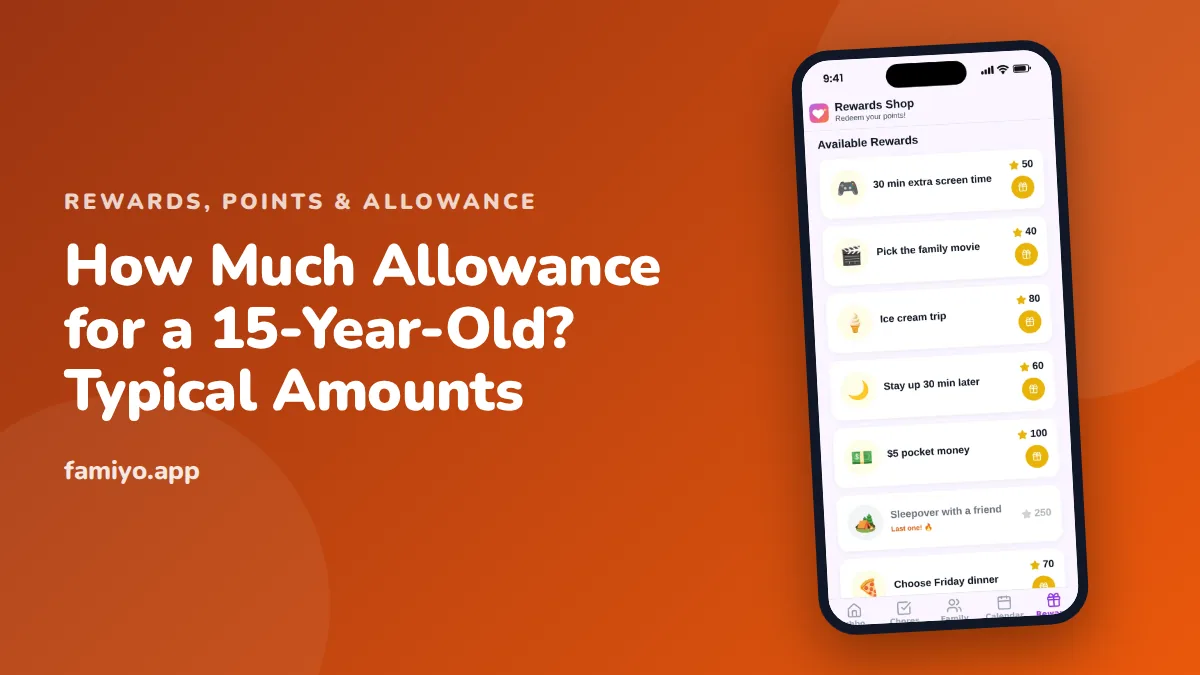
A 15-year-old's money looks very different from a 9-year-old's. Instead of a few dollars for candy, it goes on food with friends, game credits, music subscriptions, clothes and sometimes a share of the phone plan. So the number matters less than what you decide it covers.
What most families pay a 15-year-old
Typical weekly allowance for ages 14 and up is $15 to $25. The common rule of $1 per week for each year of age gives $15 for a 15-year-old, but that is a starting point, not a standard.
| Weekly amount | Roughly per month | What it usually means |
|---|---|---|
| $15 | $65 | Fun money only: snacks, games, outings |
| $20 | $87 | Fun money plus a few small purchases such as apps or accessories |
| $25 | $108 | Fun money plus a share of clothes, subscriptions or gas |
(Monthly figures are weekly amounts times 52, divided by 12, rounded.)
These figures hold for boys and girls alike. Sex does not change the amount, and splitting it by gender is a habit worth avoiding. Chores and responsibilities should match too, and our piece on how much allowance for a 16-year-old shows how the number shifts a year later.
How to decide on your number
Use four questions.
- What will the allowance cover? List the expenses you expect your teen to pay for, then price them. A coffee with friends twice a week, one game purchase a month and a streaming add-on add up quickly.
- What does it cost where you live? Prices for a movie ticket or a fast food meal vary a lot between cities.
- What can the family budget handle every single week? A smaller amount you never miss beats a bigger one you resent.
- What do their friends get? It is worth listening to, but it should not set the number. Families differ.
Write the answers down and agree on them together. Most allowance arguments come from unclear coverage rather than from the amount.
Weekly or monthly?
A 13-year-old does best with weekly pay. By 15, a monthly or twice-monthly payment is a better practice for a paycheck. It forces planning: if the concert is on the 25th, the money has to last until then. Announce the change a few weeks ahead and begin at the start of a month. If your teen runs out of money in the first week, let them. A short stretch of boredom teaches more than a rescue.
Digital spending rules that work
Most of a 15-year-old's money is digital, so decide how it moves.
- Pay on a fixed day, ideally by automatic transfer into a teen account you can both see.
- Set a monthly limit for in-app purchases and ask for a conversation before subscriptions.
- Turn on purchase approval on shared devices so a surprise charge is not on your card.
- Let your teen track what they spend. Seeing a month of purchases is a quick lesson.
If your teen already has a job, you may reduce the allowance rather than cut it off. Our guide on how to motivate a teenager to get a job covers how to make that shift.
Allowance or earned pay?
Many families split the money into two parts. A base amount, for example $15, is given regardless of chores as practice with managing money. Extra jobs beyond the normal list earn more: $2 to $5 for a big job like washing the car or cleaning the garage. Everyday chores, like keeping their room clean and doing their own laundry, stay unpaid and expected.
If you want to tie screen time to the same system, see our earn screen time with chores system.
Doing this with Famiyo
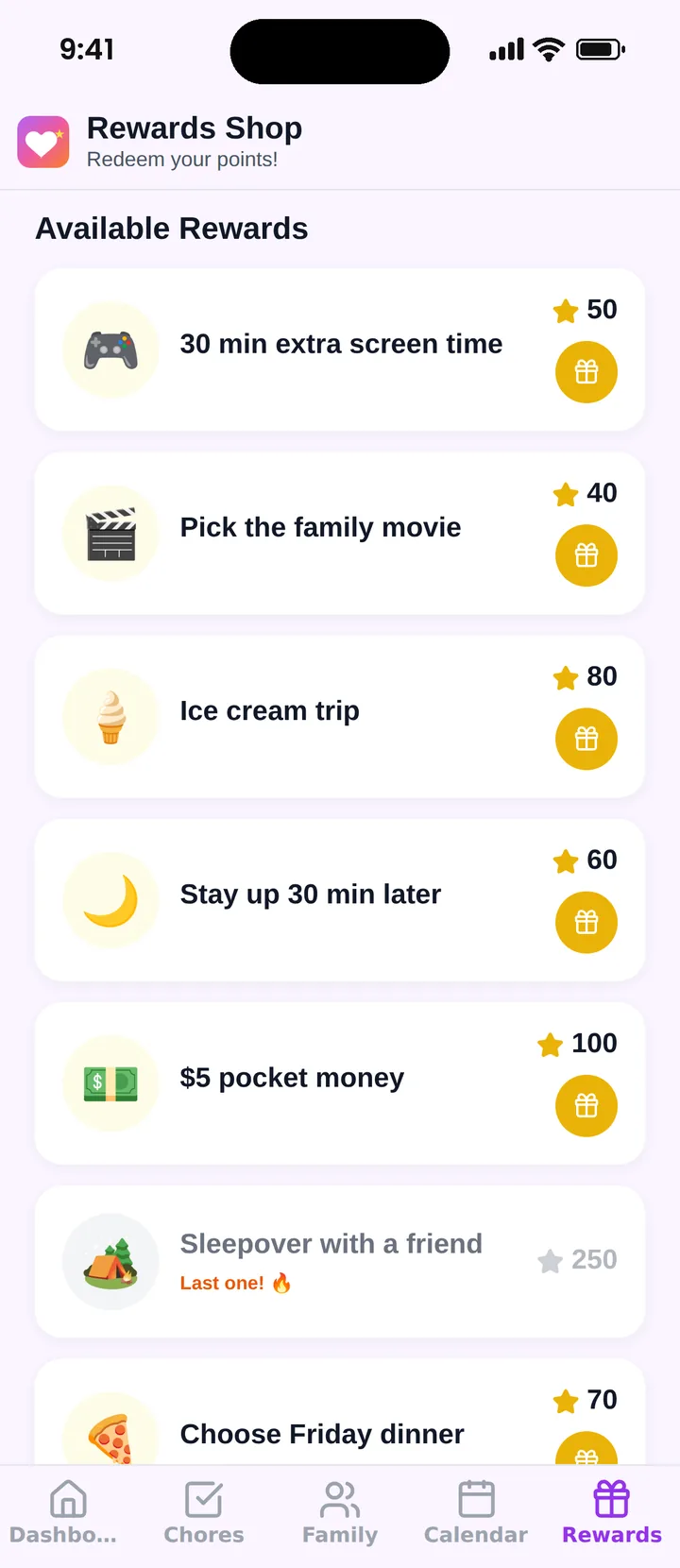
Famiyo is a free family app for iPhone and Android that combines a shared family calendar, chores with points and a rewards shop; kids join with a code, no email needed. Instead of paying per chore, give each task points, then let your teen exchange them for rewards you set up, including pocket money. A common conversion is 100 points for $1. The money itself changes hands outside the app. Your teen sees what each reward costs and how many points they will have left.
For a wider comparison, see our list of the best allowance apps for kids.
Pick a number, write down what it covers, and review it in six months.
Frequently asked questions
Is $20 a week too much for a 15-year-old?
No. It sits in the middle of the typical $15 to $25 range for ages 14 and up. Whether it fits your family depends on what it covers. If the teen buys their own snacks, apps and outings from it, $20 is reasonable.
Should a 15-year-old get a weekly or monthly allowance?
At 15, many families move to every two weeks or monthly because it practices budgeting. Weekly is fine if your teen runs out early. Pay on the same day every time, and tell them about any change a few weeks ahead.
Should allowance depend on chores?
Keep basic family chores unpaid, since everyone in the household helps. Many families pay a base allowance for money practice and add pay for bigger extra jobs, usually $2 to $5 for a big one.
Should a 15-year-old pay for their own phone apps and games?
Often yes, from their allowance, within limits you agree on. Set a monthly cap for in-app purchases and subscriptions. Paying with their own money makes the real cost visible and teaches them to compare before buying.
Try Famiyo With Your Family
Chores with points, a rewards shop for kids and one shared family calendar. Set it up in a couple of minutes.



Free to download • No credit card required • Available on iOS & Android