Reward Chart for Potty Training: Free Printable and Steps
A reward chart for potty training that works: what to track, how big the rewards should be, when to fade the chart out, plus a free printable for toddlers.
By Famiyo Editorial Team4 min read
Free printable
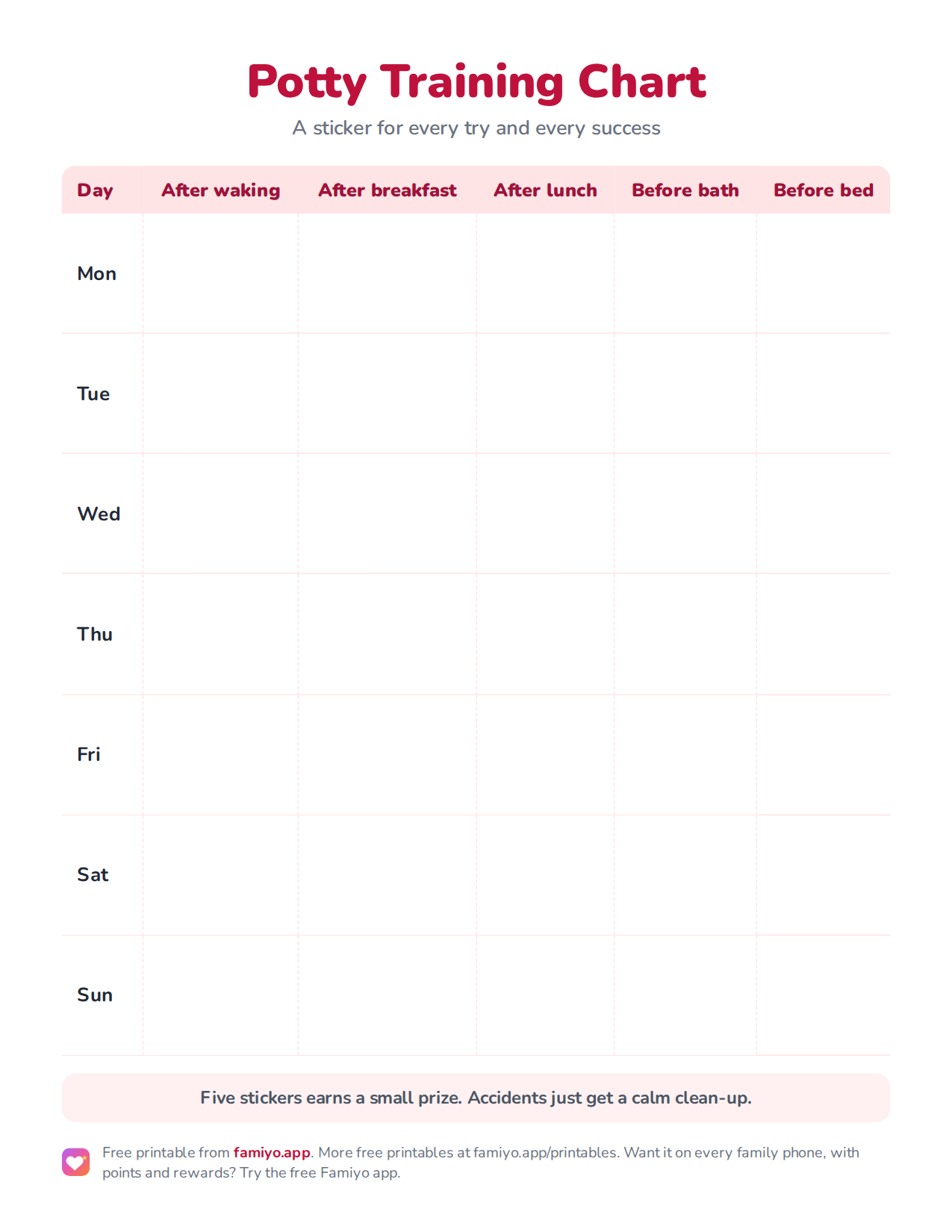
Potty Training Chart
A planner on one US Letter page. Download the PDF to print it, or save the image to use it on a tablet or in a document.
Free for home, classroom and nonprofit use, see the license. More free printables.
Potty training is one of the few places where a toddler's chart is really about learning a new skill, not about chores or behavior. A good chart is small, visual and forgiving, and you'll probably use it for only a few weeks. Below is a setup that works for most children, a sample reward ladder, and a free printable with seven days of boxes.
Is your child ready for a chart?
A chart doesn't create readiness. It supports a child who is already starting to notice their body. Look for a few of these: staying dry for around two hours, showing interest in the bathroom, telling you they have a wet or dirty diaper, or being able to pull pants up and down. Many children reach this stage between 18 months and 3 years, and there's a lot of normal variation. If you're not sure, ask your pediatrician.
A chart should feel like a game. The moment it feels like a test, put it away for a week.
What to put on the chart
The simplest design has one row per day and a few boxes for the day's toilet tries. Here's how to decide what counts.
| What happens | Counts as | Reward |
|---|---|---|
| Sits on the potty at a planned time (after waking, after meals, before bed) | A try | A sticker or stamp |
| Pee or poop in the potty | A success | A sticker plus a cheer |
| Washes hands afterward | Finishing the routine | A star on the hand-washing box |
| Tells you before they need to go | Big step | A bonus sticker |
| Accident | Nothing, no penalty | A calm "that's okay, next time" and a quick clean-up |
Rewarding tries matters. A child who gets a sticker only for success can feel they failed after a long, empty sit. A child who gets one for trying learns that the bathroom is a place where good things happen.
A reward ladder that stays small
Keep it short enough for a toddler to understand and long enough to build a habit.
- Every try or success: a sticker on the chart, right away. Timing matters more than size.
- Five stickers: a tiny prize such as an extra bedtime story or choosing a snack.
- One full day of stickers: a special song or dance in the bathroom.
- A full week of mostly successes: a bigger treat, like a new picture book, a trip to the park or a bath toy.
Avoid trading toys or sweets for every success. After a few weeks the prizes are all you'll be discussing.
How to introduce the chart in five steps
- Put it low on the bathroom wall or the fridge, where your child can reach it.
- Show the stickers and say what they're for: "When you sit on the potty, you get a sticker."
- Stick the first one together, even for just sitting.
- Take your child to the potty at the same times each day, such as after breakfast and before bath.
- Add the sticker within seconds of the success. Toddlers don't link a reward given an hour later to what they did.
When to fade the chart out
Once your child has gone a week or two with only the occasional accident, stop giving a sticker for every success. Switch to every second or third one, then only for a new step like a dry night. Replace the stickers with words: "You remembered all by yourself." If the chart is still running after several months, it probably stopped helping a while ago.
Night dryness and daytime control often happen on different timelines, and a chart for daytime success shouldn't be used to pressure a child about night-time accidents. If you're worried, your pediatrician can help.
The printable
The printable below has seven days with boxes for the main potty moments, so your child can place a sticker for each try. It suits toddlers and young preschoolers, and you can write in your own times. When your child is done with potty training and starts helping with tiny jobs, our guide to chores for 4-year-olds is the natural next step.
Using a phone instead of paper
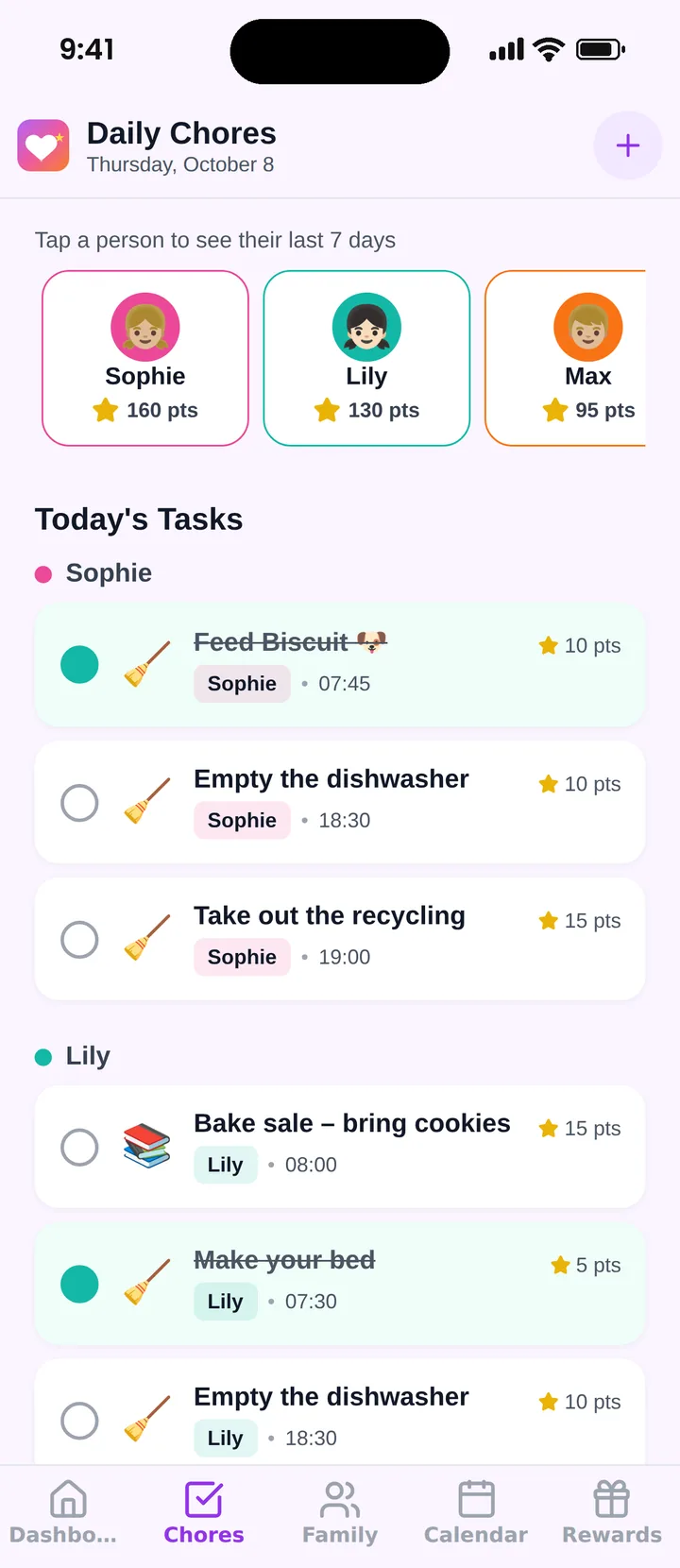
For potty training itself, paper stickers are better, because your toddler gets to press them on. An app starts to matter when the chart turns into a daily routine. Famiyo is a free family app for iPhone and Android that combines a shared family calendar, chores with points and a rewards shop; kids join with a code, no email needed. You can add a repeating task like "wash hands after the potty" with points, and when a caregiver marks it as done, every phone in the family syncs right away, so a grandparent or a partner can see how the day is going. The free plan includes one repeating task. See our list of the best chore chart apps, and keep the paper chart for the stickers.
What to do on a bad day
Some days everything goes wrong. A new babysitter, a cold, a trip. Go back to basics for a day or two: more frequent tries, quick stickers, no commentary about accidents. If a whole week goes badly, it's fine to put the chart away and try again in a month. For daily routines that go beyond the potty, see our printable chore chart for kids.
Frequently asked questions
When should I start a potty training reward chart?
Start when your child shows readiness, such as staying dry for a couple of hours, telling you they need to go, or being interested in the bathroom. Many children are ready somewhere between 18 months and 3 years. A chart helps once they understand what the potty is for, not before.
What should the rewards on a potty chart be?
Keep them small and immediate: a sticker, a stamp, a high five, a favorite song or one small treat. Save a slightly bigger prize, like a new book or an outing, for a full row of stickers. Avoid big gifts, which make accidents feel like failures.
Should I reward accidents or only successes?
Never punish accidents. Stay neutral, help your child clean up and move on. Reward effort as well as results: sitting on the potty counts, even if nothing happens. A child who feels safe trying is more likely to succeed than one who fears losing a sticker.
How long should I use a potty training chart?
Most families use it for a few weeks. Once your child goes regularly and accidents are rare, move to rewarding only some successes, then stop. Talk about being proud instead of handing out prizes. If the chart becomes a daily negotiation, it has done its job and can retire.
Try Famiyo With Your Family
Chores with points, a rewards shop for kids and one shared family calendar. Set it up in a couple of minutes.



Free to download • No credit card required • Available on iOS & Android