Sticker Chart for Toddlers: What to Track and Free Printable
How to set up a sticker chart for a toddler aged 2 to 3: three pictures, a sticker within seconds, a small prize after 5 stickers, plus a free printable.
By Famiyo Editorial Team4 min read
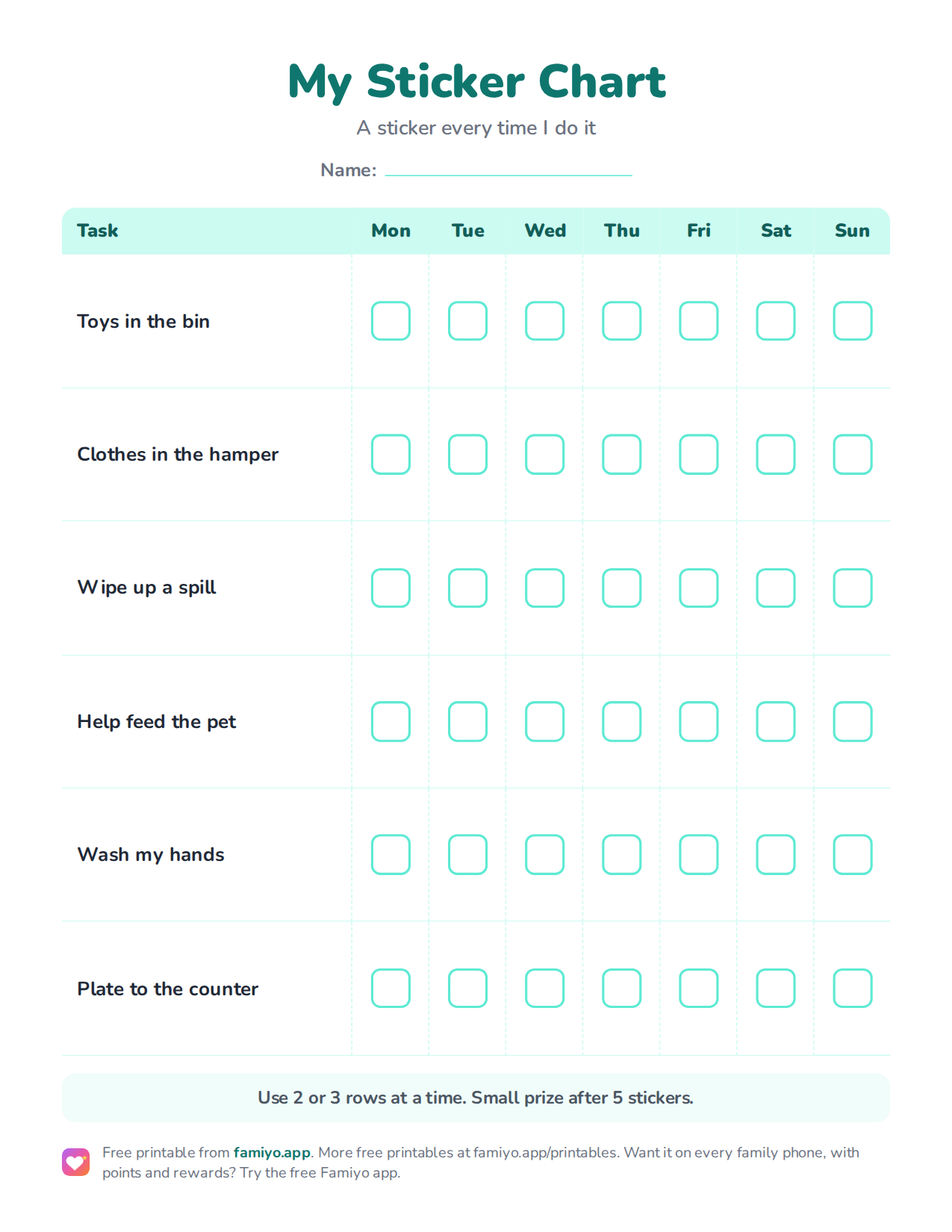
Free printable
My Sticker Chart
A weekly chart on one US Letter page. Download the PDF to print it, or save the image to use it on a tablet or in a document.
Free for home, classroom and nonprofit use, see the license. More free printables.
Your two-year-old will happily carry a spoon to the sink, then lie on the kitchen floor because the spoon was the wrong spoon. A sticker chart can turn those small bursts of helpfulness into a habit, if it's built for someone who is still learning what "later" means. This page covers what to put on a toddler chart, how to run it day to day, the words to use, and a printable you can tape up tonight.
Is a toddler ready for a sticker chart?
Usually yes, from about 2 to 2.5 years. The test is simple: can your child follow a one-step request ("Put the ball in the box") and enjoy getting a sticker? If so, the chart will make sense to them. If they ignore stickers completely or eat them, wait a few weeks and keep praising out loud.
A toddler lives in the present. They won't connect a sticker today with a prize on Saturday. What they do get is the quick loop of "I did it, I got a sticker, grown-ups are happy." Everything below is built around keeping that loop short.
What to put on a toddler sticker chart
Pick jobs that have an obvious finish line and take under two minutes. The chores-by-age guidance for ages 2 to 3 includes putting toys in a bin, putting clothes in the hamper, wiping up spills and helping feed a pet, and those are the best candidates. Add routine items such as washing hands if that's a battle in your house.
Start with two rows, three at most. Draw or print a picture for each, because a toddler can't read "tidy up" but will recognize a toy bin. Write each row as something to do, not something to avoid: "Clothes in the hamper" works, "No throwing clothes on the floor" doesn't.
The printable below has six picture-friendly jobs to choose from. It suits ages 2 to 3, and you only need to use two or three of the rows at a time.
How to run the chart each day
Put the chart at your child's eye level, on a low spot on the fridge or on a bedroom door. Keep the stickers nearby but out of reach, so the chart stays a shared activity.
Here's a routine that works for most toddlers:
- Do the job together the first few days. Hand over the last step: "You put the last block in."
- The moment it's done, point at the picture and say what they did: "You put your clothes in the hamper!"
- Let them choose a sticker and stick it on, or stick it for them if the peeling gets frustrating.
- Count the stickers out loud together. "One, two, three!" Counting is half the fun at this age.
- When the row is full, hand over the prize right away.
The timing matters more than anything else. A sticker handed over five minutes late is just a sticker. A sticker handed over within seconds is a reward for the thing they just did.
How many stickers for a prize?
Keep the wait short, because a toddler can't hold a long one in mind. This is a sensible starting plan:
| Stage | Stickers needed | Example prize |
|---|---|---|
| Week 1 | 3 | Extra bedtime story, a bubble bath with toys |
| Weeks 2 to 3 | 4 or 5 (one row) | A trip to the playground, pick the pancake shape |
| After a month | 5, with one bigger prize for 3 full rows | A small book or a new bath toy |
Prizes don't need to cost anything. Time with you wins at this age. If your child asks for a treat every day, keep food out of it and offer an activity instead, so the chart doesn't turn into a snack machine. Our guide to the reward chart for toddlers goes deeper on prize ideas.
What to say (and what not to)
Describe the action rather than the child: "You carried your plate all by yourself" beats "Good boy." When a day goes badly, say nothing about the chart. Stickers already earned stay put, always. If your goal is to change a specific behavior like hitting, our sticker chart for behavior covers how to set it up. And if the chart is for potty training, see the reward chart for potty training, which uses a faster sticker rhythm.
Common wobbles are normal. If your toddler loses interest after a week, swap the stickers for a new kind, change one row, or take a short break. After two to three weeks of daily use, retire a job that now happens without a sticker and add a new one.
Keeping the chart in Famiyo
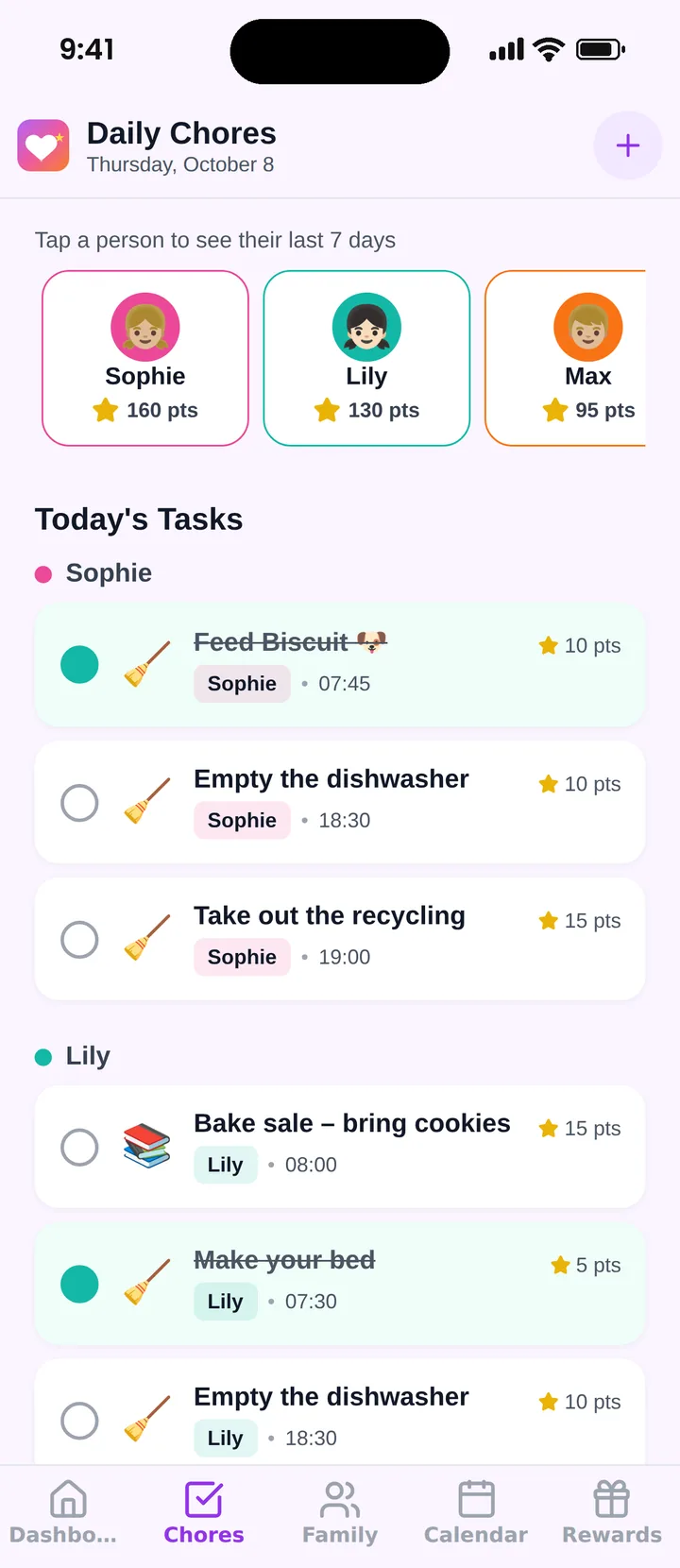
Famiyo is a free family app for iPhone and Android that combines a shared family calendar, chores with points and a rewards shop; kids join with a code, no email needed. A toddler won't use a phone, so you stay in charge: add each job as a chore, set it to repeat daily, and give it a small point value such as 5. Tap it done when your child finishes and the points add up on their own. A second parent can check things off from their own phone, and everything syncs live. Our list of the best chore chart apps compares the options.
Start tonight with just two rows and a prize you can hand over before bath time.
Frequently asked questions
At what age can a toddler use a sticker chart?
Most children are ready around 2 to 2.5 years, once they understand 'do this, then get a sticker' and can follow a one-step request. Before that, praise and a high five do the same job. Peeling the sticker themselves is a bonus skill, not a requirement.
How many stickers should a toddler need for a prize?
Three to five. A toddler cannot hold a long wait in mind, so the first prize should come the same day or the next. As the habit settles, you can stretch to a full row of five, but not much further before age 4.
What should a toddler sticker chart track?
Small, concrete jobs with a clear finish: toys in the bin, dirty clothes in the hamper, wiping a spill, helping feed a pet, hands washed. Two or three rows is plenty. Skip vague goals like 'be good', which a 2 year old cannot judge.
Should I take stickers away for bad behavior?
No. A sticker already earned stays on the chart. Taking it back confuses a toddler and can make them avoid the chart. Deal with the behavior in the moment with a calm, short response and let the chart stay a place for wins only.
Try Famiyo With Your Family
Chores with points, a rewards shop for kids and one shared family calendar. Set it up in a couple of minutes.



Free to download • No credit card required • Available on iOS & Android