What Life Skills Should a 5 Year Old Have?
What life skills a 5 year old should have: dressing, self-care, tidying, simple help in the kitchen, safety and feelings, with easy ways to practice each.
By Famiyo Editorial Team6 min read
At five, a child is part toddler and part school kid. They want to do everything by themselves, and they also cannot find their shoes. That mix is exactly why this is such a good age to teach practical skills: they care, and the stakes are low. This guide covers what a 5 year old can usually manage in dressing, self-care, tidying, the kitchen, safety and feelings, and how to practice each one in a few minutes a day.
What can a typical 5 year old do?
Think of five as the start of "doing it with a reminder." Your child can follow two or three steps in order and loves a real job, but they still need you to say what done looks like. The table shows the typical skills and what to expect. Ages are a range, so a 5 year old who is a bit ahead or behind is not unusual.
| Area | What a 5 year old can usually do | What still needs help |
|---|---|---|
| Dressing | Put on clothes, shoes and a coat | Buttons, zips on tricky coats, tying laces |
| Self-care | Use the toilet, wash hands, brush teeth | Wiping thoroughly, getting every tooth |
| Tidying | Put toys in a bin, clothes in a hamper | Knowing when a room is done |
| Eating | Use a fork and spoon, pour from a small jug, set a place | Cutting with a sharp knife, hot foods |
| Helping | Feed a pet, water plants, match socks | Remembering without a prompt |
| Safety | Say name, parent names, stay near an adult | Crossing roads alone |
| Feelings | Name basic emotions, wait a short time | Calming down by themselves |
Chores at this age match the guideline of 10 to 15 minutes a day: make the bed (roughly), set and clear their own place, match socks, water plants and feed a pet.
Dressing and taking care of their body
Most 5 year olds can dress themselves, but "can" and "will in the morning rush" are different things. Lay out the clothes the night before, or let them pick from two options. Put shoes and a coat by the door where they can see them. Give a little extra time: it takes much longer when they are in charge.
For self-care, aim for a routine you can name in four steps: pee, wash hands, brush teeth, put on pajamas. A picture chart with 4 to 6 steps works best at this age. Teeth need a parent to finish, because a 5 year old does not reach all the surfaces. Sing a short song for two minutes while they brush.
Teach hand washing with a specific rhyme or a count to 20, and tie it to times that never change: after the toilet, before meals, when coming in from outside. Covering a cough in the elbow is another quick win.
Helping around the house
A 5 year old loves being useful. This is the sweet spot for real jobs, and none of them needs to be perfect. Try these:
- Make the bed: pull the blanket up and place the pillow, lumps and all.
- Set the table: their own place first, then everyone's, with a drawing of the layout as a guide.
- Clear their plate and cup to the counter after meals.
- Feed a pet, with a scoop that holds the right amount.
- Water plants with a small watering can.
- Match clean socks and carry them to a drawer.
Expect to teach each one a few times. Show it, do it together, let them do it while you are nearby, and then check kindly. If you are starting with a toddler sibling too, see our list of chores for 2-year-olds for the easier versions, and for a ready-made schedule, our chore chart for a 5-year-old shows how to lay out a week.
Praise what they did, not what they are. "You put every fork in the right spot" lands better than "good girl." Two to three jobs a day is plenty, and keep them the same so the habit forms.
Eating, the kitchen and simple tasks
A 5 year old can help with real food. Let them wash vegetables, tear lettuce, stir a bowl, crack an egg into a separate cup, spread butter with a blunt knife, and pour water from a small pitcher. Keep them away from the stove and sharp knives. A step stool at counter height makes a big difference.
Also teach table habits: sit while eating, use a napkin, say "may I be excused", and bring a plate to the sink. These are skills too, and they take months to settle in.
Do not worry about spills. A child who learns to pour needs to spill a few times. Keep a small cloth within reach and teach them to wipe it up. That one lesson covers a lot.
Safety and knowing who to tell
Five is old enough to learn safety words and short routines. Practice these in the car or at the table:
- Their full name, and parents' names
- A parent's phone number, with a rhyme or tune to help it stick
- "Stop, look, listen" at a curb, always holding a hand
- What to do if they get lost: stay where they are, find a helper such as a store clerk or a mom with kids, and say their name
- Who they may go with, and a family word an adult must know if someone else picks them up
Say it simply and rehearse a few times a month. Do not scare them. A matter-of-fact tone works better than a lecture.
Feelings, patience and sharing
Many 5 year olds can say "I'm mad" or "I'm sad", but only if someone has shown them how. Name emotions as they happen: "You look frustrated that the block tower fell." Offer a few choices for what to do next, like a deep breath, a hug or a break in a quiet corner.
Waiting is a skill, too. Practice with short stretches: "Wait until I finish my sentence," or "You can have it when the timer rings." Games with turns, like a card game or a board game, build it naturally. Kids this age also practice sharing, apologizing and noticing others, and they do it better when you model it.
Teaching skills without nagging
The trick at this age is routine and repetition. Pick a time that happens every day, like right after dinner, and a job that goes with it. Pictures work better than words, because many 5 year olds cannot read yet. A simple chart with drawings of each task and a sticker for each day is enough to start.
If your child ignores a request, try changing how you ask. A song, a race against a timer, or "can you show me how you do it?" often works better than a third reminder. For more ideas on this, read how to get kids to do chores without asking. When your child is a little older, our page on life skills for a 7-year-old picks up where this one ends.
Doing it with Famiyo
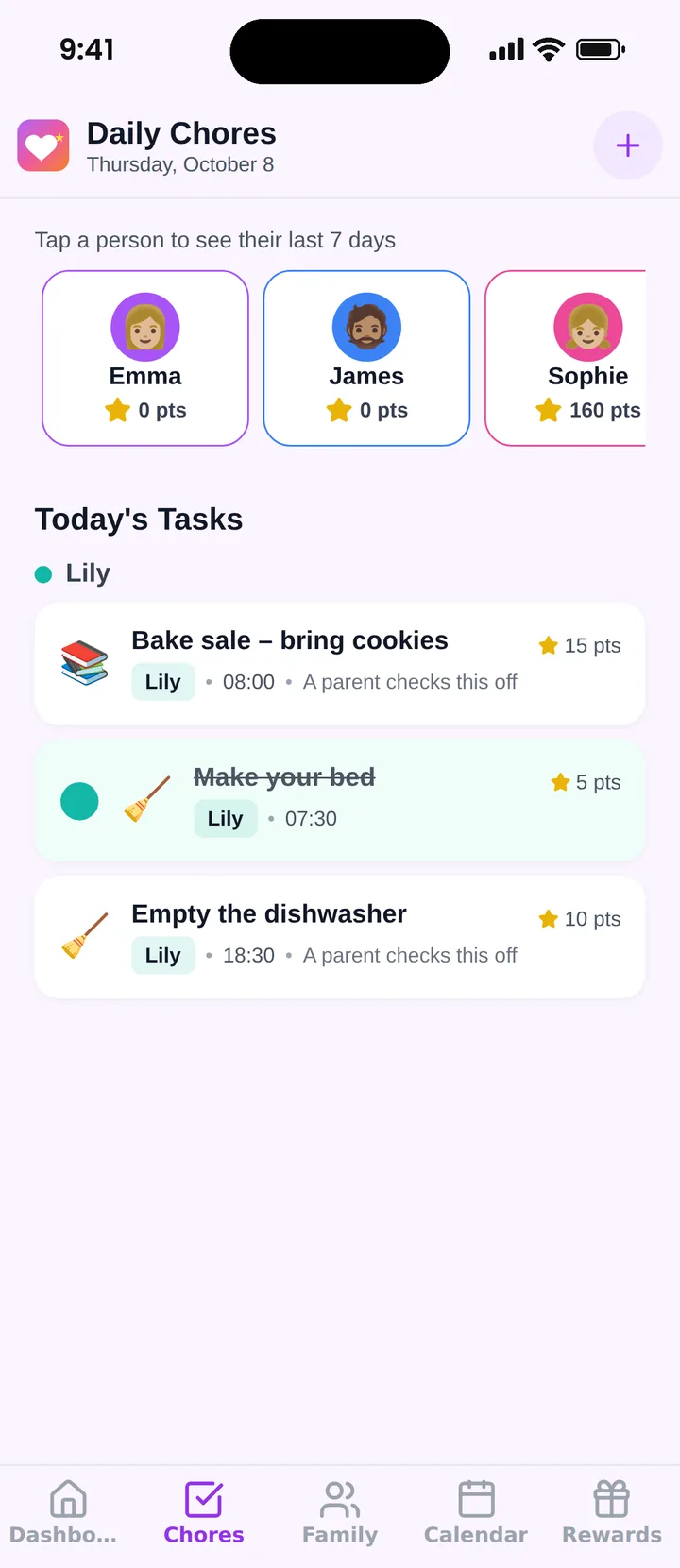
Famiyo is a free family app for iPhone and Android that combines a shared family calendar, chores with points and a rewards shop; kids join with a code, no email needed. For a 5 year old, a parent can set up a few repeating chores, such as "Make the bed" and "Feed the cat", with a small number of points each, and pick whether a parent approves them or the child checks them off. A child can see their own tasks and points, and cash points in for a small reward like choosing the bedtime story.
If you are comparing tools, our list of the best chore apps for kids is a good place to look.
Pick two skills from the table that would make mornings easier, and practice them for a week.
Frequently asked questions
What should a 5 year old be able to do independently?
Dress, use the toilet, wash hands, brush teeth with a check, put on shoes (maybe not tie them), pack a simple bag, tidy toys and eat with a fork and spoon. Expect reminders. Doing it alone sometimes counts.
Should a 5 year old be able to tie shoes?
Many cannot yet, and that is normal. Velcro or slip-on shoes are fine while the skill develops. Practice tying on a big shoe or a cardboard model, a few minutes at a time, and expect it to click sometime between 5 and 7.
How many chores should a 5 year old have?
Two or three small ones a day, taking 10 to 15 minutes in all. Good picks are making the bed roughly, setting and clearing their own place and feeding a pet. Keep them the same every day so the habit forms.
Does a 5 year old need to know their address and phone number?
It helps if they can say their full name and a parent's name, and many can learn a phone number with a rhyme or song. Practice for a minute at a time. Do not worry if the address is not solid until 6 or 7.
What if my 5 year old is behind other kids?
Children grow at different speeds, and 5 is a wide range. Pick one skill, teach it in small steps, and cheer small wins. If you are worried about speech, movement or behavior, mention it to your pediatrician.
Try Famiyo With Your Family
Chores with points, a rewards shop for kids and one shared family calendar. Set it up in a couple of minutes.



Free to download • No credit card required • Available on iOS & Android