How Much Allowance for a 17-Year-Old? Typical Amounts and How to Decide
A 17-year-old usually gets $15 to $25 a week, or $60 to $100 a month. See what to include, when a job changes things, and how to set a number that fits.
By Famiyo Editorial Team4 min read
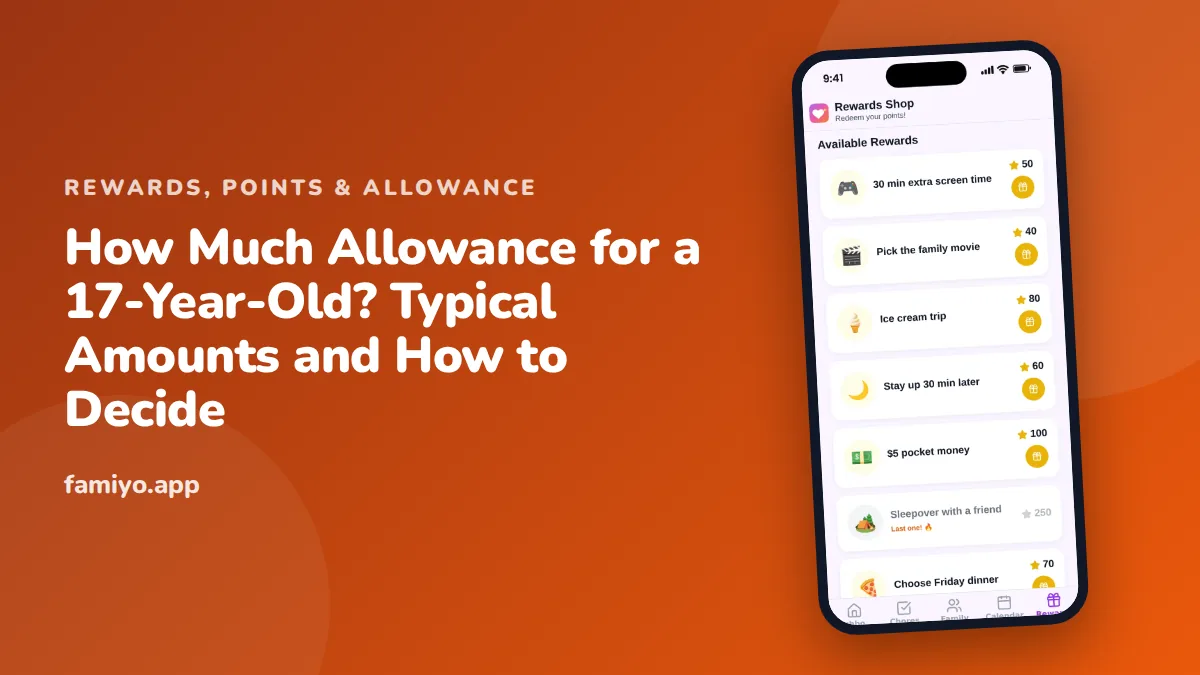
Seventeen is the last allowance year for many families, and it comes with new costs: a driver's license, a job, college tours, prom and a phone that never stops asking for another subscription. The goal is no longer pocket money. It is a dress rehearsal for managing a real budget. Here are the usual amounts, a way to choose one that fits, and how a job should change the picture.
What is a typical allowance for a 17-year-old?
The usual range for teens 14 and up is $15 to $25 a week, which comes to roughly $60 to $100 a month. The old shortcut of $1 per week for each year of age would give $17, which sits comfortably inside that range. These are starting points, and neither boys nor girls get a different number. What changes the figure is the list of things the teen pays for.
| Situation | Suggested monthly amount | What it covers |
|---|---|---|
| No job, parents pay most costs | $60 to $80 | Snacks, outings, apps, small gifts |
| No job, teen covers more | $80 to $100 | The above plus a phone add-on or some clothes |
| Part-time job, small allowance | $20 to $40 | Items you still choose to fund; the job pays for the rest |
| Part-time job, no allowance | $0 | The paycheck covers fun spending; you cover essentials |
How to choose the number
Start from costs, not from what the neighbors give. A number copied from another family may be half of what your teen actually needs or twice what your budget can handle.
- List what your teen asks you to pay for in a normal month.
- Decide which of those items they will own from now on.
- Add up the last two or three months of those items.
- Round to a clean monthly sum and write down the scope: "This covers food out, entertainment and your phone add-on."
- Decide on a review date, ideally 2 to 3 months out.
A useful test: if the allowance does not replace anything you used to pay for, it is only a gift. Real budgeting starts when the teen has to choose between two things they want.
Monthly, weekly or twice a month?
At 17, monthly is the best fit. Paychecks, rent and subscriptions arrive monthly, and a teen who can last four weeks on one deposit is ready for the next stage. If your teen has never handled a month at a time, split it in two for the first couple of months, with half on the 1st and half on the 15th, then move to a single payment.
Whatever you choose, pick a fixed date and stick to it. Late payments teach teens that the rules are flexible.
How a job changes the allowance
A first job is the best budgeting lesson on offer, and it should reshape the allowance, not sit on top of it. The usual approaches:
- The paycheck replaces the allowance. The teen pays for fun, you keep funding essentials. This is simplest and the most common.
- A reduced allowance for things you still want to cover, such as a phone plan share or school lunches.
- A match: you add something to every dollar they save toward a goal such as a car or college.
If your teen has not started working yet, compare how much allowance a 16-year-old gets, which covers the step before this one.
What a 17-year-old's allowance should cover
Write the scope down, because vague coverage is where most fights begin.
- Usually included: food out, entertainment, in-app purchases, gifts for friends, a share of a phone plan add-on.
- Often included at this age: gas, if they drive, and some clothing beyond the basics.
- Not usually included: school fees, required supplies, medical costs and car insurance, unless you have deliberately handed those over.
Once the list is set, hold the line. When a teen asks for a one-time bailout in week three, the lesson is in saying no kindly. "That sounds frustrating. The budget is $80, and it will reset on the first" is enough.
Chores, money and the 17-year-old
Everyday help in the house is part of being in the family and stays unpaid. Real extras such as washing the car, mowing the lawn or clearing out the garage can be paid separately, roughly $2 to $5 for a big job. This keeps the allowance a budget, not a wage. If arguments over money are constant, a calmer structure such as a reward system for teenagers can take the tension out.
Handling the money digitally
A 17-year-old probably spends from a phone, not from a wallet. Paying the allowance into a bank account or teen debit account lets them see the balance and learn to read a statement. It also gives you a clean record of what was paid and when. Keep any points or privileges separate from the real money, so the two systems do not blur.
Pocket money and rewards in Famiyo
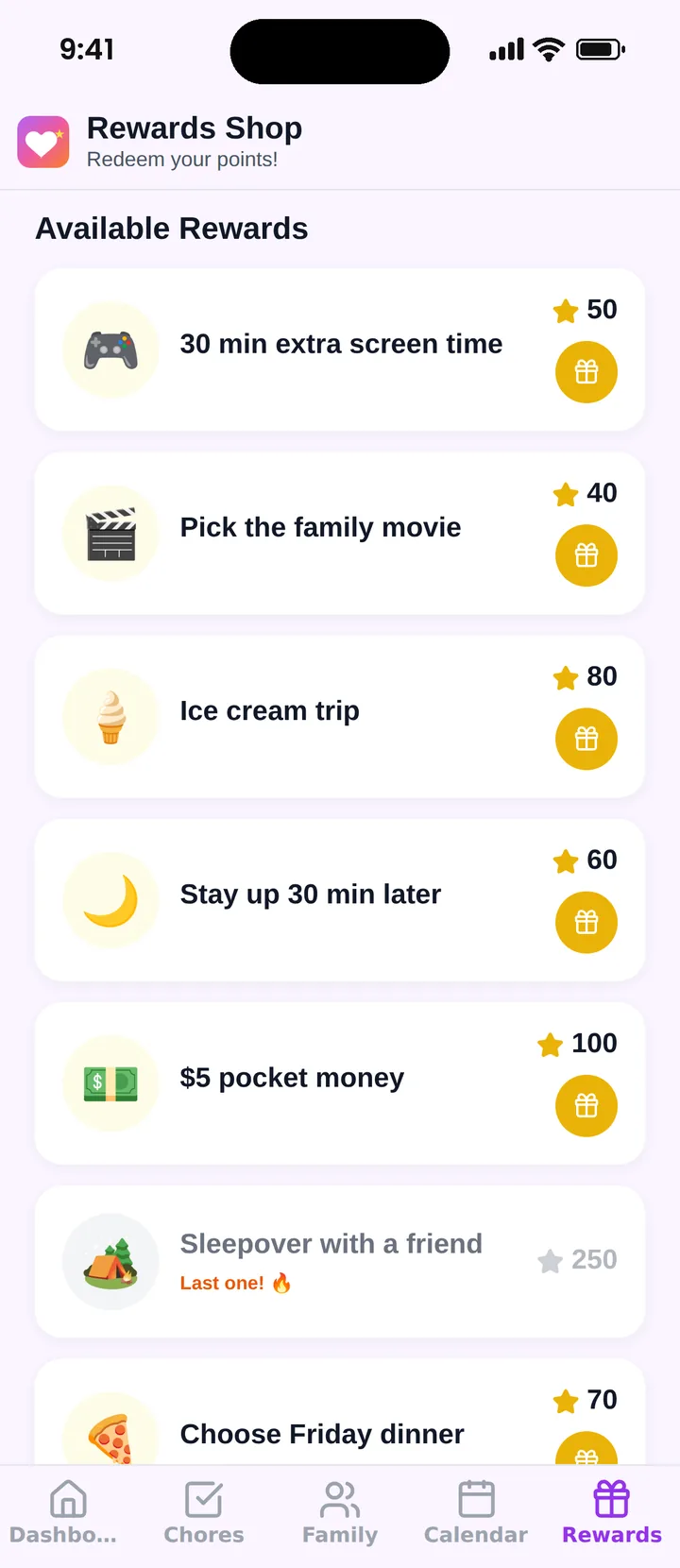
Famiyo is a free family app for iPhone and Android that combines a shared family calendar, chores with points and a rewards shop; kids join with a code, no email needed.
Famiyo does not hold or move money, but it fits the edges of an allowance. You can add a reward such as "$10 extra pocket money" to the rewards shop with a price in points, and your teen redeems it from their own phone. They see how many points they will have left. The cash itself is handed over outside the app. For other tools that track pocket money, see our list of the best allowance apps for kids.
Planning for 18
An allowance at 17 should shrink the gap between your house and their first apartment. As the birthday gets close, move more costs to them in steps: first the phone, then gas, then clothes. If they can run a $90 month cleanly, they have practiced the skill that matters.
Frequently asked questions
Should a 17-year-old girl get a different allowance than a boy?
No. Base the amount on age, what the money covers, your budget and the teen's responsibilities, not gender. If one teen has more expenses, such as a longer commute or a sport with fees, adjust for those costs openly and apply the same logic to every child.
How much allowance should a 17-year-old with a job get?
Usually less, or none. A paycheck often takes over fun spending, and many parents keep a smaller sum, such as $20 to $40 a month, for items they still cover. Agree the new split in writing and revisit it after a couple of months.
Is it too late to start an allowance at 17?
Not at all. A first allowance at 17 works well as a trial run for adult budgeting. Start with a monthly amount, a clear list of what it covers, and a rule that you will not top it up. A year of practice before college or work still helps.
Should a 17-year-old pay for their own phone or car costs?
Many families shift some of these to the teen at this age, ideally paired with a raise or a job. Gas, insurance and phone add-ons are good candidates. Decide the split up front so the teen knows what they own before the bill arrives.
Try Famiyo With Your Family
Chores with points, a rewards shop for kids and one shared family calendar. Set it up in a couple of minutes.



Free to download • No credit card required • Available on iOS & Android