How Much Allowance for an 18 Year Old Living at Home?
At 18 an allowance is a budget conversation. See what to pay, what your adult child should cover, and when to stop paying a flat weekly amount.
By Famiyo Editorial Team3 min read
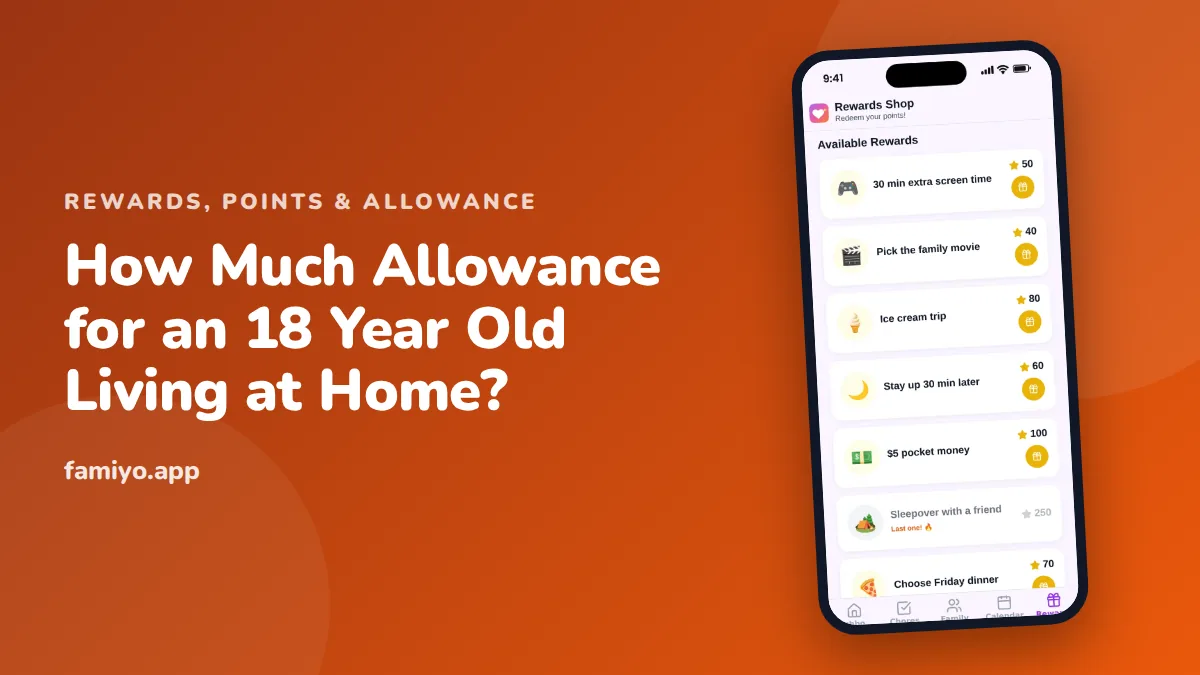
An 18-year-old is legally an adult and still eating your groceries. That makes "allowance" a slightly odd word, and the odd word is the clue: the arrangement should look less like pocket money and more like a budget. This page gives a range, a way to decide, and how to shift from a weekly handout to a monthly plan.
What is a typical allowance for an 18-year-old?
No source sets a standard here. The weekly range for ages 14 and up runs from $15 to $25, and the old rule of $1 per year of age would give $18. For an 18-year-old that is a sensible low end. Because many 18-year-olds have jobs, cars or college costs, families often swap the weekly number for a monthly one.
| Situation | Reasonable approach |
|---|---|
| In high school, no job | $20 to $25 a week, covering outings and personal spending |
| Working part time | Little or none, with the teen paying for their own wants |
| Full-time student, no job | Monthly budget for named costs such as phone, transit and food out |
| Working full time and living at home | No allowance; discuss a contribution to household costs |
What should an 18-year-old pay for themselves?
The aim at this age is practice. Moving expenses over, one at a time, is better than flipping a switch on the 19th birthday. A good order:
- Phone plan share or data, and the apps and subscriptions they choose.
- Entertainment, eating out and gifts.
- Clothing beyond basics.
- Gas and car upkeep, if they drive.
- Their own savings goal, such as a deposit or a laptop.
Write the list so nothing is a surprise. Our reward system for teenagers explains why teens accept a deal they helped design far more readily than one handed down.
Should an 18-year-old do chores for money?
Do two separate things. Basic household work, such as laundry, cooking one dinner a week and cleaning their bathroom, is part of living in a shared home, and nobody gets paid for that. Bigger paid jobs can sit outside the deal: painting a fence, helping a grandparent move, doing a larger yard project, at rates you would pay an outside helper.
If your 18-year-old is also a student, you might link part of the money to goals they set themselves. Our guide on how to reward kids for good grades covers the pros and cons of paying for results. For an adult, that works best when the target is theirs, not yours.
How do you move to a monthly budget?
- Sit down together and list every cost your teen should cover from now on.
- Estimate each one, and add them up.
- Pay that amount on the first of the month, by transfer.
- If it runs out, do not top up. Review the numbers together at three months.
- Add a share for saving, so the plan includes a goal.
It also builds the habit behind delayed gratification for kids, which matters more at 18 than at 8: a bigger purchase only happens if you hold back on small ones. Tie the budget to a date, such as an agreed review in January, so it does not drift.
Doing this with points in Famiyo
Famiyo is a free family app for iPhone and Android that combines a shared family calendar, chores with points and a rewards shop; kids join with a code, no email needed. For a household with an adult child, it can handle the extra jobs. Chores such as a Saturday yard job earn points, and the rewards shop lists what the points buy, including pocket money (100 points = $1, paid by you outside the app). Your teen redeems from their own phone and sees how many points they will have left.
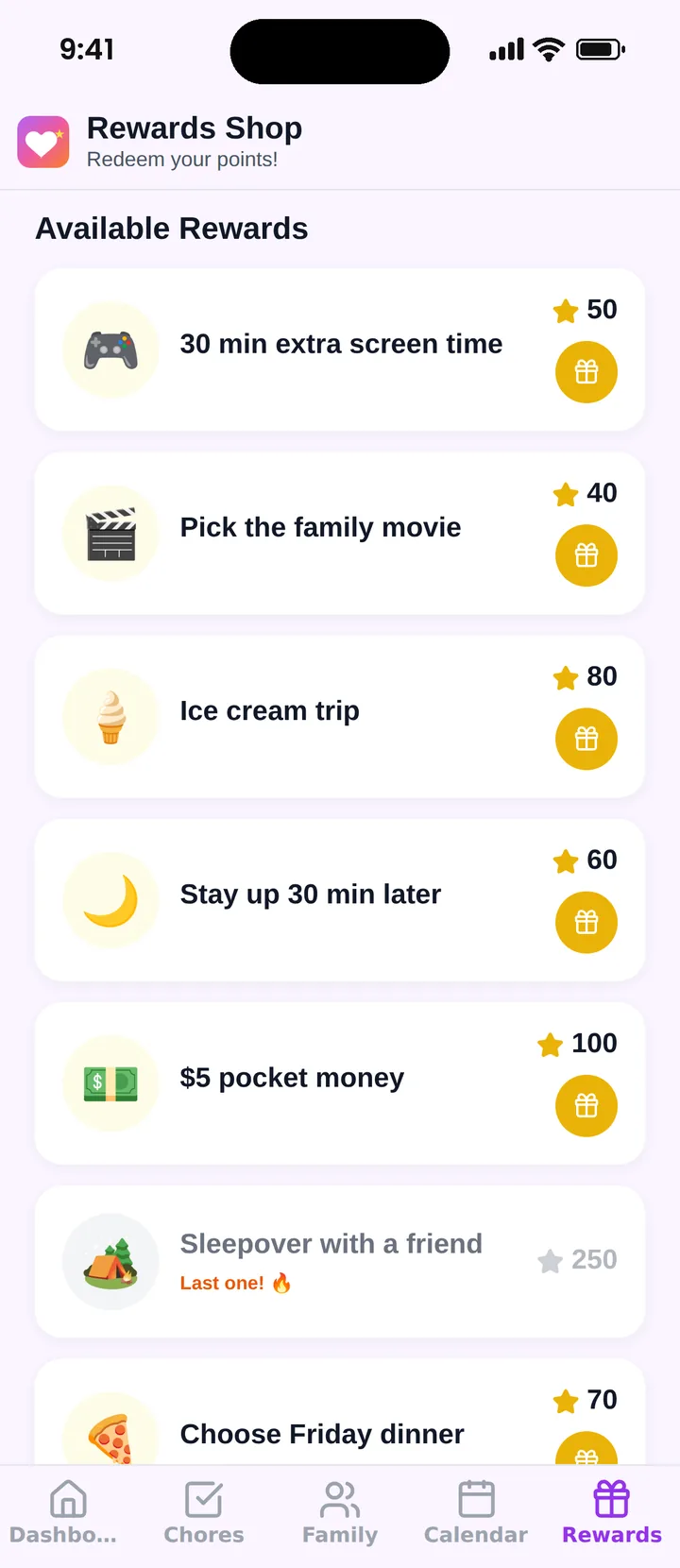
Our list of the best allowance apps for kids compares other tools. The base budget still belongs in a conversation, not an app.
One conversation to schedule
Pick a time this week and say: "You're an adult now, so let's work out what you pay for and what we do." Bring the list from above. Write down what you agree, and set a date to review it.
Frequently asked questions
Should an 18-year-old still get an allowance?
It depends on their income and school or work plans. If your 18-year-old has a job, a small or no allowance makes sense. If they are in school full time, a monthly budget for named expenses teaches more than weekly pocket money.
How much should an 18-year-old pay if they live at home and work?
There is no rule. Some families ask for nothing, some ask for a modest contribution that the parents quietly save for later. Pick something your child can afford without giving up saving, and agree on it in writing.
Is weekly or monthly better at 18?
Monthly. A larger lump sum forces planning across a whole month, which is how adult bills work. Start with one month, review after three, and adjust the amount for real costs.
What if my 18-year-old does not do any chores?
Treat it as a household question, not an allowance question. Adults living at home share the work. Agree on specific jobs and a day, and keep the money conversation separate from the chore conversation.
Try Famiyo With Your Family
Chores with points, a rewards shop for kids and one shared family calendar. Set it up in a couple of minutes.



Free to download • No credit card required • Available on iOS & Android