How Much Allowance for a 4 Year Old?
Most 4-year-olds do not need a real allowance yet. If you want one, $1 to $2 a week in coins is plenty. Here is how to start without the pressure.
By Famiyo Editorial Team3 min read
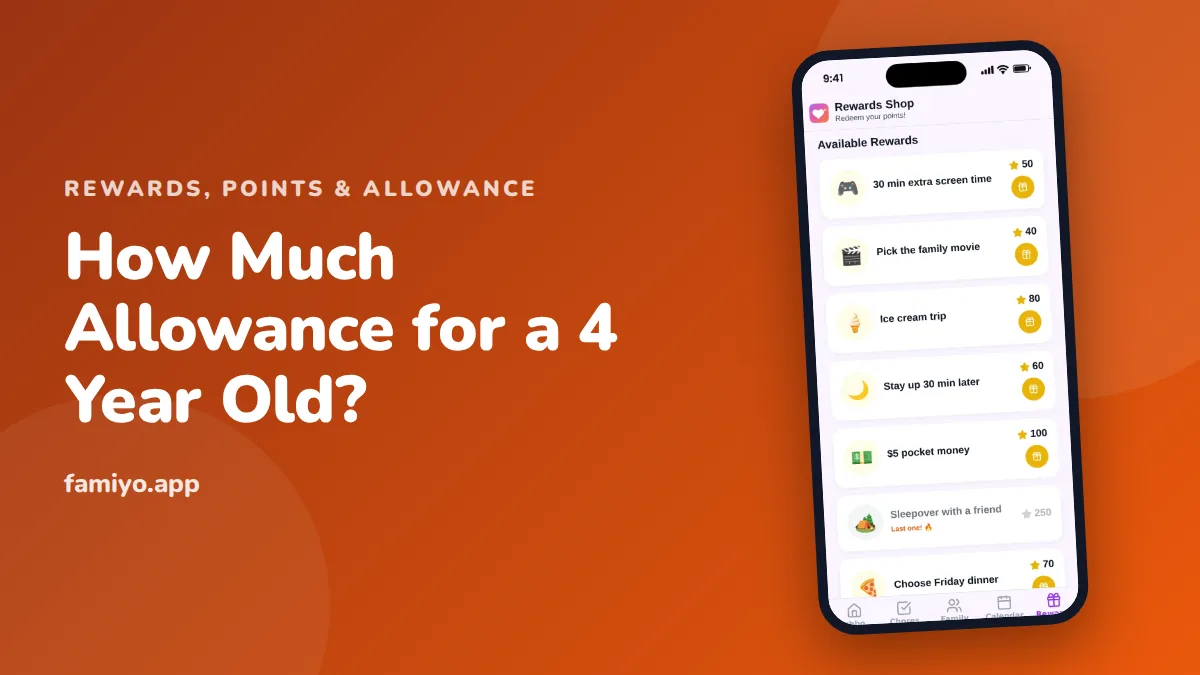
The honest answer: at four, no allowance is needed. Typical weekly amounts start at 5, and a preschooler will manage fine without one. But if your 4-year-old is fascinated by your wallet and keeps asking for "money", you can give a small amount in a way that teaches without turning into a chore battle. Here is how much, and how to do it.
What is a good allowance for a 4-year-old?
If you start, keep it to $1 to $2 a week. The old rule of $1 per year of age would say $4, but at this age that is too much to count and too much to lose. The usual ranges begin at age 5, with $3 to $7 for ages 5 to 7.
| Option | What it looks like |
|---|---|
| No allowance | Normal. Use stickers and praise for effort. |
| $1 in coins | Four quarters, handed over on Saturday. |
| $2 in coins | Eight quarters, enough for one small choice. |
Coins beat bills for a child this young. Four quarters is a pile your child can count, stack and drop in a clear jar.
How do you handle a 4-year-old's allowance?
Keep it a game, and keep it short.
- Choose the same day each week and give the coins by hand.
- Count them together, out loud, up to ten.
- Let your child drop some into a clear jar. That is the whole saving lesson.
- If they want to spend, go to a store once and let them hand over the coins for one small item.
Do not expect budgeting. At 4, a child will happily spend all of it, save all of it, or lose interest by week three. All of those are fine. For ideas of what to give instead of cash, our list of prizes for kids that aren't junk has options that suit preschoolers.
Should chores earn the money?
No. Four-year-olds can put toys away, make the bed (roughly), set and clear their own place, water plants and feed a pet, usually for 10 to 15 minutes a day in total. These are family jobs. If you attach money to them now, you may create a child who asks "what do I get?" before every task.
A better bridge is a positive reinforcement chart for kids, where stickers mark each job and a small reward waits at the end of the week. It gives the same feeling of progress without any cash involved.
Our look at intrinsic motivation examples for kids explains why that matters: children who help because it feels good keep helping longer.
What if a 4-year-old asks for more?
It will happen, usually in the checkout line. Stay friendly and consistent: "Your coins are for Saturday. You can use them then, or wait until you have enough." Do not hand over extra money to end a scene. A calm repeat of the same sentence teaches that the amount is fixed, which is one of the most useful money rules a child can learn early.
When should you move to a real allowance?
Around age 5 or 6, most children can count to 20, understand that a dollar buys more than a quarter, and wait a few days for something. That is when a weekly allowance of $3 to $5 starts to make sense. Until then, your 4-year-old's money lessons come from small moments: paying at the checkout, putting a coin in a donation box, waiting for a toy they asked for.
Doing this with points in Famiyo
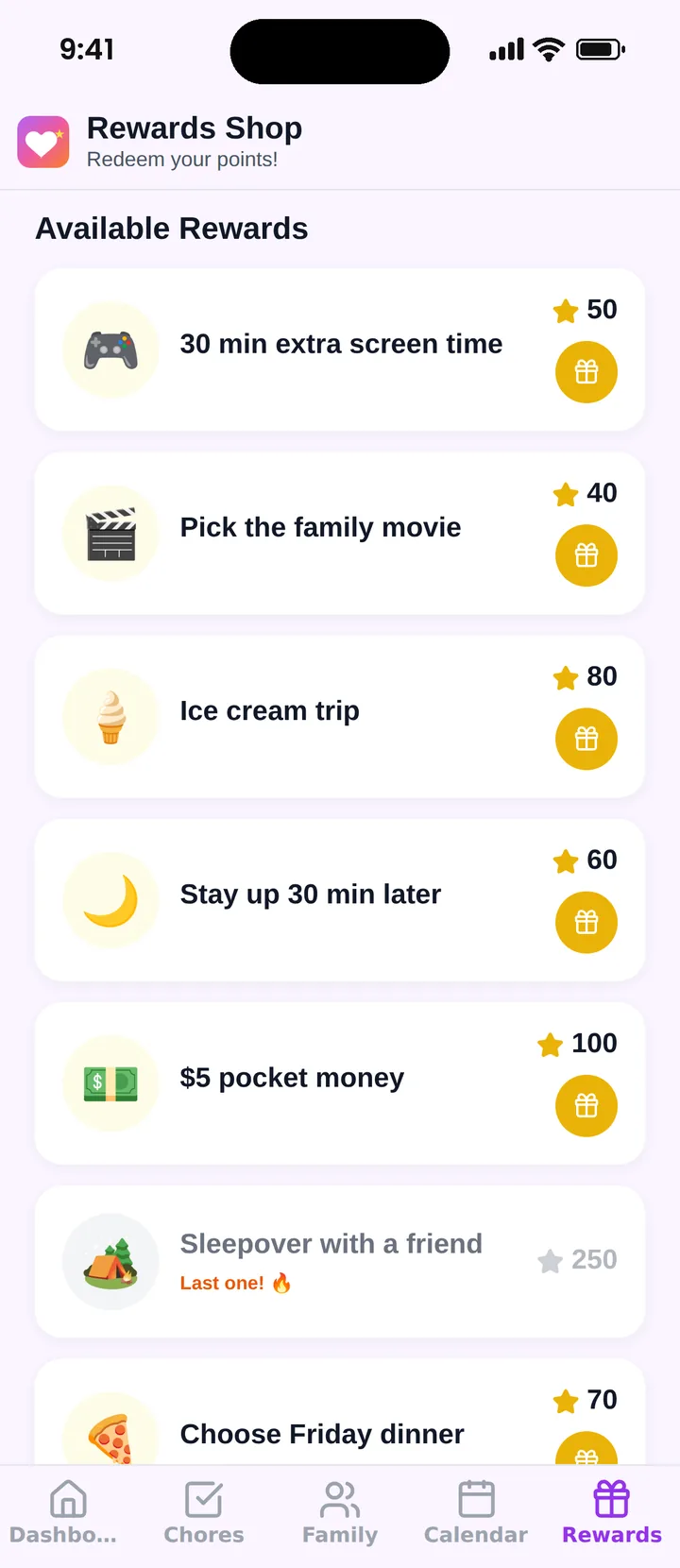
Famiyo is a free family app for iPhone and Android that combines a shared family calendar, chores with points and a rewards shop; kids join with a code, no email needed. For a 4-year-old, the parent runs the app. Tasks like feeding the cat earn points, and you set a few rewards in the rewards shop, such as a sticker, choosing a bedtime story or a small amount of coins as pocket money (100 points = $1, and you hand over the coins yourself). Your child sees what they can pick from, and redeems with you next to them.
If you are comparing tools, our list of the best allowance apps for kids is a good place to look. A year from now, see how much to give a 5-year-old.
Frequently asked questions
Should a 4-year-old get an allowance?
It is optional. Most guidance starts weekly amounts at age 5. A 4-year-old can enjoy coins, but only as a game of counting and choosing. If it brings pressure or tantrums, wait a year.
How much money should I give a 4-year-old?
$1 to $2 a week in coins is enough. Four-year-olds count small numbers and cannot compare big sums. Coins feel like treasure, and a few of them are easy to hold, count and drop into a jar.
Should I pay a 4-year-old to do chores?
No. Jobs like putting toys away, making the bed roughly and feeding a pet are part of family life at this age. Praise and a sticker work better than cash at four.
What can a 4-year-old learn from having money?
Simple ideas: coins can be traded for things, saving means waiting, and spending means it is gone. That is plenty. Budgeting and splitting money come later, around 6 to 8.
Try Famiyo With Your Family
Chores with points, a rewards shop for kids and one shared family calendar. Set it up in a couple of minutes.



Free to download • No credit card required • Available on iOS & Android