How Much Allowance for a 5 Year Old?
Most 5-year-olds get $3 to $5 a week, or less. See how to start small, make it visible with coins and points, and avoid the usual mistakes.
By Famiyo Editorial Team3 min read
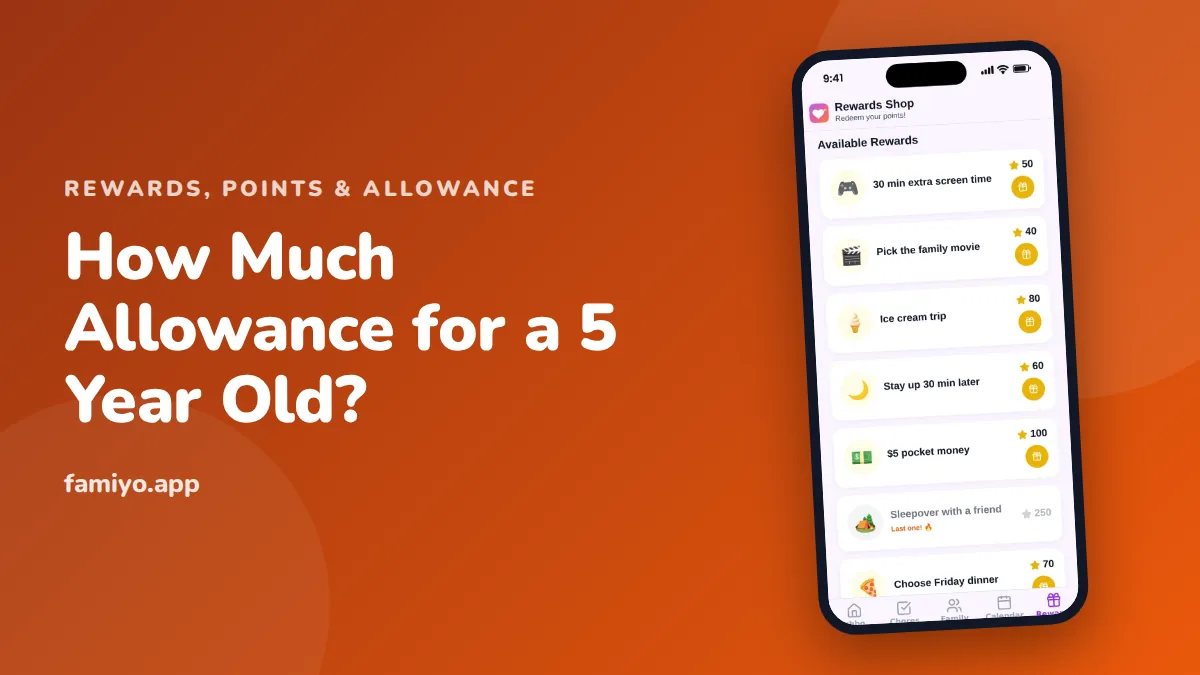
At five, money is still mostly magic. A child this age knows that a grown-up hands something over and gets a thing back, but not why a dollar is worth more than a quarter. A 5-year-old's allowance is a counting and waiting exercise first. Here is a reasonable amount, what to do with it and what to skip.
What is a normal allowance for a 5-year-old?
The usual range is $3 to $5 a week. By the $1-per-year rule, 5 means $5, but that is a ceiling for most households, not a target. If you would rather start smaller, $1 or $2 in coins is fine, and quarters are a good choice because a pile of them feels like a lot.
| Amount | Good for |
|---|---|
| $1 to $2 | A first allowance, paid in coins, mostly for counting |
| $3 | A standard start for most 5-year-olds |
| $5 | Families who want a save goal to take only a few weeks |
For a pre-K or kindergarten child, how it is given matters more than how much.
How should a 5-year-old handle the money?
Keep it concrete and quick. A 5-year-old's sense of time is short, so a goal that takes more than two or three weeks will fade.
- Hand over the money on the same day each week, in coins and small bills.
- Let your child count it out loud.
- Put one coin or bill in a clear jar for saving and the rest in a jar for spending.
- Take one trip to a store within the first couple of weeks so they can buy something small with their own money.
When they make a poor choice, say nothing cutting. "You spent it, so it's gone until Saturday" is enough. Our guide to point systems for kids covers other ways to make waiting visible for this age.
Should chores earn the money?
Basics stay unpaid. A 5-year-old can make the bed (roughly), set and clear their own place, match socks, water plants and feed a pet, and those jobs belong to the family. This age usually handles 10 to 15 minutes a day.
If you want a link between work and money, use a rare extra. Washing the car windows with a parent might earn 25 cents. Keep it special, and do not make it a daily trade.
What if siblings get different amounts?
They will notice. Explain that the amount goes up with age, and that a 7-year-old gets more because they also have more to manage and more to pay for. A 5-year-old rarely minds if the rule is the same for everyone and stated once. If you have a 5-year-old and an 8-year-old, tell both the schedule up front: this much now, a little more each birthday.
Why start with points instead of money?
For some 5-year-olds, a number on a chart makes more sense than a coin. A star or a point is quicker to give, easier to see, and does not get lost down the sofa. You can convert it later. If 100 points equal $1, a 5-point chore is worth a nickel, and a child who earns 100 points in a week has something real to spend.
This is also the age to try a small family rewards store at home, where the child picks the prize and the price is clear.
Doing this with points in Famiyo
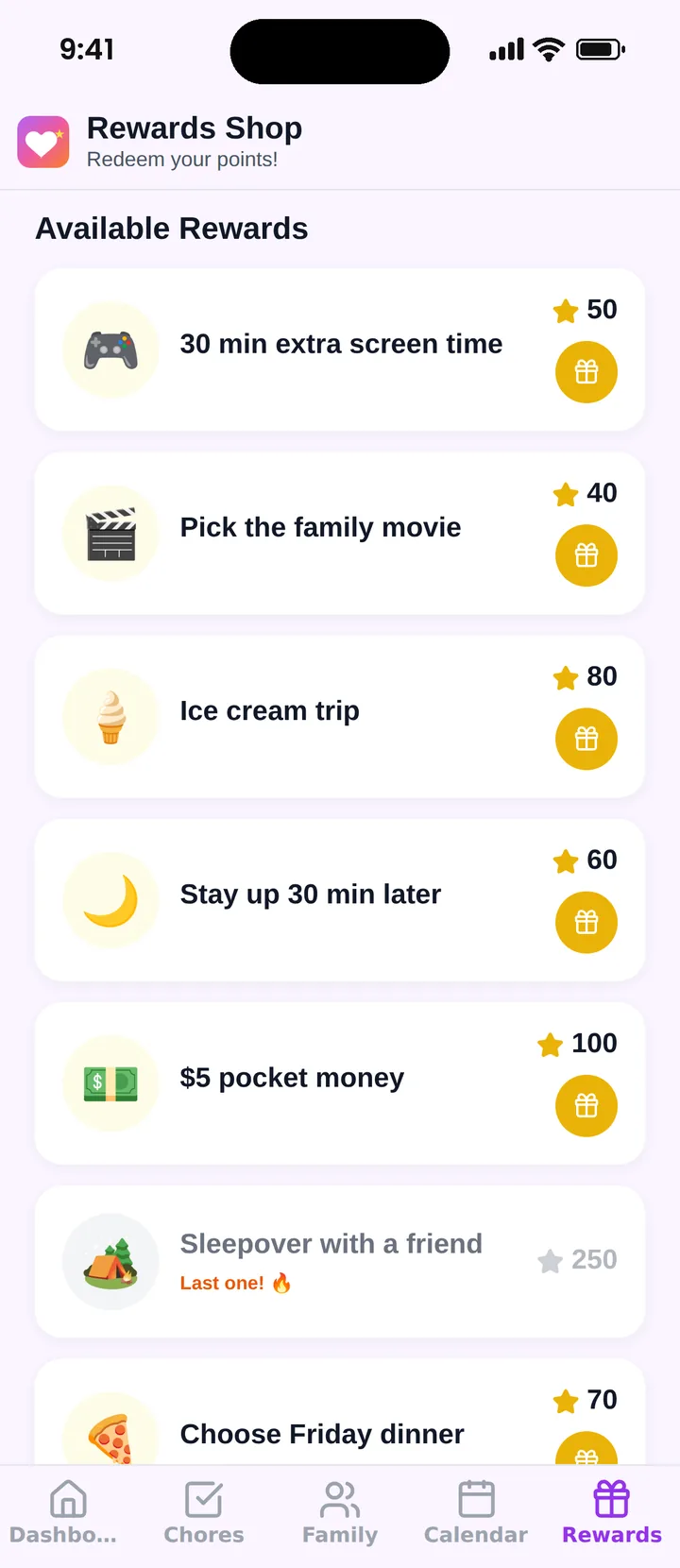
Famiyo is a free family app for iPhone and Android that combines a shared family calendar, chores with points and a rewards shop; kids join with a code, no email needed. For a 5-year-old, a parent sets up the chores and the rewards. Chores the child checks off earn points. In the rewards shop, you add prizes with a price in points and how many are available each week, and you can include pocket money as one reward (100 points = $1, paid by you outside the app). Your child picks from their own phone and sees how many points they will have left.
If you are comparing tools, see our best allowance apps for kids.
Next step
Start with $2 in coins this Saturday and a clear jar. If the habit sticks for a month, move up to $3. When your child turns 6, our page on allowance for a 6-year-old picks up from here.
Frequently asked questions
Is 5 too young for an allowance?
No, but keep it small and physical. A 5-year-old can understand that coins are traded for things. The aim is to practice counting and waiting, not to teach budgeting. Start with a few dollars or less.
Should a 5-year-old get paid for chores?
Not for basics like making the bed roughly, setting their place or feeding a pet, which are part of family life. A small payment of 25 cents for a special extra job is fine, as long as it stays occasional.
How many dollars is too many for a 5-year-old?
More than about $5 a week is usually more than a kindergartner can keep track of. A smaller amount paid in coins feels like more money and is easier to handle.
What can a 5-year-old buy with allowance?
Small things that cost a few dollars: a sticker sheet, a small toy, a treat. The point is a real choice. Save the bigger purchases for a goal your child works toward over a few weeks.
Try Famiyo With Your Family
Chores with points, a rewards shop for kids and one shared family calendar. Set it up in a couple of minutes.



Free to download • No credit card required • Available on iOS & Android