How to Motivate a Teenager to Get a Job
Find out why teens put off getting a job and what actually moves them: a real want, a low-risk first step, and a parent who steps back. Includes a 4-week plan.
By Famiyo Editorial Team5 min read
Your 16-year-old has money needs that keep growing, a phone full of friends who already work, and zero applications sent. You have said "you should get a job" so often it has turned into background noise. This page explains why teens stall and walks through a plan that shifts the motivation to them.
Why teens put off getting a job
Most teens who avoid job hunting are not lazy. They are protecting themselves. Applying means being judged by strangers, and a lot of 15 and 16-year-olds have never had an interview. Add school, practice, a bad sleep schedule and a ride problem, and "later" feels like the safe answer.
Motivation research (self-determination theory is the best-known framework) points to three things that make people act on their own: a sense of choice, a feeling of being able to do the thing, and a reason that matters to them. A lecture supplies none of the three. It adds pressure, which usually makes a teen dig in.
So the job is not to push harder. It is to build those three conditions around the decision.
Find the want before you talk about work
A vague goal like "learn responsibility" will not move a teen. A specific want will. Before you bring up jobs, find out what they would buy if money were not an issue. It could be a car share, concert tickets, a better phone, gas money, a trip with friends, or the freedom to stop asking you for $20.
Then be clear, calmly and without a speech, about what your family covers. Needs like food, school supplies, basic clothes and a reasonable phone plan stay yours. Extras above that are theirs to fund. This is not a punishment. It is a boundary that makes the want and the earning connect.
A script that works for many families: "I'm happy to pay for [the basics]. For [the extra thing], that will need to come from you. What do you want to do about it?" Then stop talking. The silence is the point.
Make the first step small and easy
Teens freeze when the task is "get a job." They move when the task is "send two messages today." Break the process into steps that take less than an hour each.
- Pick three places they could realistically reach (walking, biking, bus or a ride you agree to).
- Check the age rules in your state for those employers.
- Write a short list of what they have already done: babysitting, mowing, helping at a school event, tutoring, pet care.
- Draft a simple one-page résumé together, then let them take over the edits.
- Do one practice interview at the kitchen table. Ask three questions: why do you want to work here, tell me about a time you were reliable, what hours can you work?
- Apply to two places, in person or online, in the same week.
Offer help with the step, never the decision. "Want me to read it over?" beats "Did you send it yet?" If your teen has a lot of worry around new situations, our guide on how to motivate a teenager with anxiety covers lower-pressure ways to start.
A four-week plan to get them moving
| Week | Goal | What the teen does | What you do |
|---|---|---|---|
| 1 | Name the want | Writes down one thing they want to fund and its price | Explains what the family covers, then stays quiet |
| 2 | Prepare | Builds a short résumé and picks three places | Reads it over if asked, checks work-permit rules |
| 3 | Try | Sends two applications and does one practice interview | Drives them if needed, no hovering |
| 4 | Review | Follows up once, applies to two more if no reply | Asks "what did you learn?" not "why no answer?" |
Rejection is part of it. Most first applications go unanswered, and a teen who knows that in advance will take it less personally. If nothing lands after a month, widen the net: smaller employers, seasonal work, or odd jobs to build a track record. Our list of ways for kids to make money in the neighborhood has paying work that needs no application at all.
What to avoid saying and doing
A few habits work against you even when your heart is in the right place.
- Comparing them to a sibling or a friend who already works. It tells them they are behind, which is exactly the fear they are already carrying.
- Fixing their résumé without asking. It becomes yours.
- Offering a big reward for getting hired. External pay for a choice that should be theirs can crowd out the real reason. Keep rewards for home tasks.
- Rescuing them every time money runs out. If you always cover the gap, the want never turns into motivation.
- Tying the job to grades or sleep. School and rest come first, so a job that costs either one needs a conversation, not a pep talk.
What if they still say no
Some teens genuinely cannot add a job right now. A heavy course load, a sport season, a health issue or a long commute are all real. In that case, offer a smaller version. Paid extra jobs at home are a good bridge, as long as basic family chores stay unpaid. Our pay scale for kids' chores lists fair rates, usually a few dollars for a big job.
It also helps to agree on a date to revisit. "Let's talk again when school ends" is a plan. "You'll never change" is not.
Using a rewards shop to build the earning habit
Earning and spending feel more real when the teen sees the link themselves. Home tasks can work as a practice run before a real paycheck.
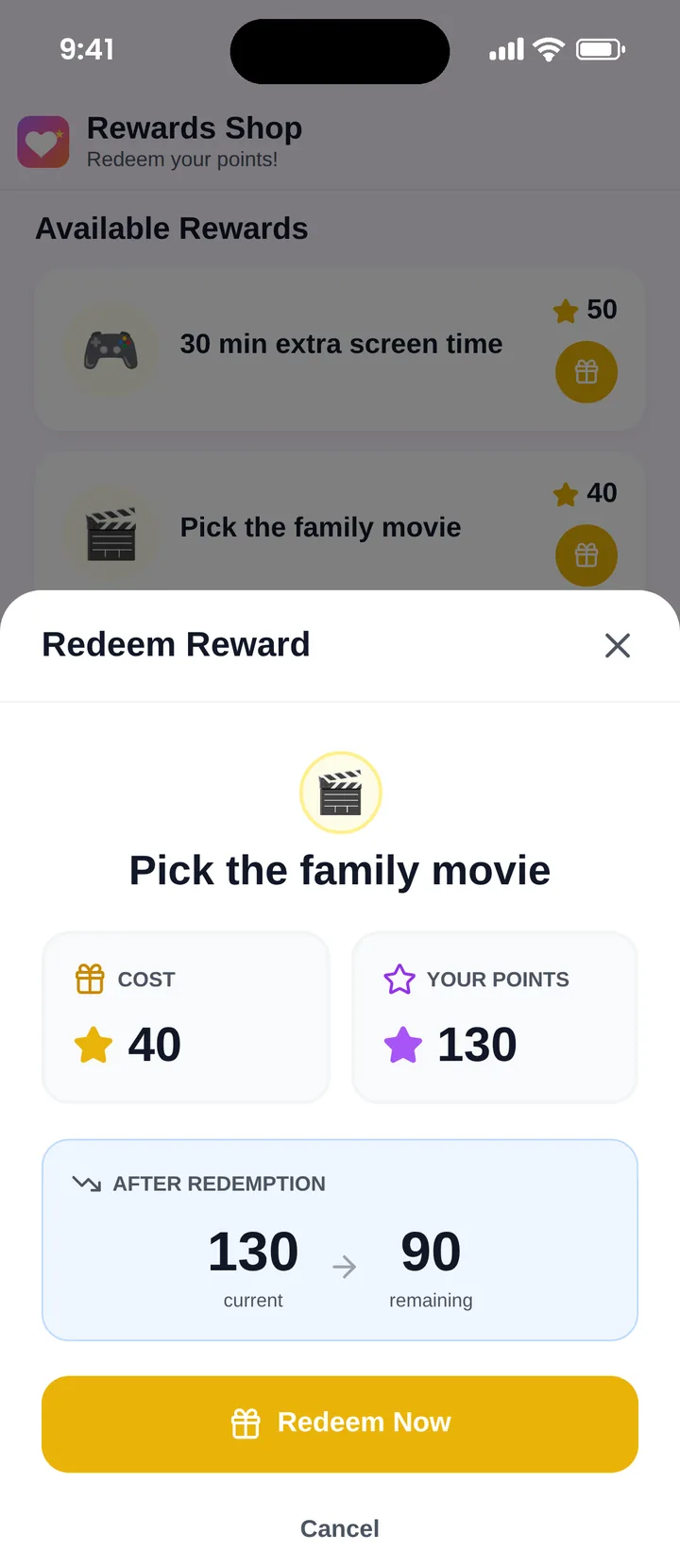
Famiyo is a free family app for iPhone and Android that combines a shared family calendar, chores with points and a rewards shop; kids join with a code, no email needed. Parents set up rewards with a price in points, how many are available and when. A teen can see the cost and the points they will have left before they redeem from their own phone. A reward such as a ride to a concert or extra gaming time then has a real price they have to earn.
If you are comparing tools, see our list of the best reward chart apps for kids.
Start with one conversation this week
Pick a calm moment, not right after a fight over the phone. Ask what they would like to buy that you will not be paying for, and listen. If you do nothing else this week, that one question does more than a month of reminders.
Frequently asked questions
Why won't my teenager get a job?
Usually it is fear, not laziness. Teens worry about rejection, awkward interviews, scheduling around school and sports, or simply not knowing how to start. Ask what feels hardest about it, then shrink that one piece.
Should I force my teen to get a job?
Forcing tends to produce a job done badly or quit quickly. A better route is a clear family rule about what you cover and what they fund themselves, which lets the need come from them. You can still require a first step, such as filling out two applications.
At what age should a teenager get a job?
Many teens start around 15 or 16, when more employers can legally hire them, though rules vary by state and job. Younger teens can earn through babysitting, yard work and pet care. Check your state labor rules before applying anywhere.
What if my teen is too busy with school and sports?
Treat their load as real. A few hours on weekends or a summer job may fit better than weeknight shifts. Grades and sleep come first, and a job that costs either one is the wrong job, not a failed teen.
Can I pay my teen to get them motivated?
Paying for chores is fine, but paying a teen to apply for work rarely sticks. Keep home pay for home jobs and let outside pay come from an employer, so the habit of earning feels like theirs.
Try Famiyo With Your Family
Chores with points, a rewards shop for kids and one shared family calendar. Set it up in a couple of minutes.



Free to download • No credit card required • Available on iOS & Android