Ways for Kids to Make Money in the Neighborhood
Neighborhood money ideas for kids by age, from lemonade stands to pet sitting, with safety rules, how to price jobs and how to handle the cash.
By Famiyo Editorial Team4 min read
Every kid has a moment when they find out that a pack of trading cards, a game or a new bike costs more than they have. The neighborhood is the best place to start earning, because customers are nearby, you know who they are and the jobs are small. Below you'll find the ideas that work, what to charge, the safety rules that matter and a few ways to keep the money side tidy when most money lives on a screen.
Which jobs fit which age?
The table groups ideas by the age where kids can usually manage them. Younger children should work with a parent in sight. By the early teens, many can run a small business on their own. Local rules vary, so check your state before anything beyond casual jobs.
| Age | Ideas | Parent's role |
|---|---|---|
| 6-8 | Lemonade stand, selling drawings or crafts, watering a neighbor's plants | Present, helps with money |
| 9-10 | Bringing in mail and bins, washing cars, raking leaves, small garage sale help | Nearby, knows every customer |
| 11-12 | Dog walking (nearby, short routes), pet feeding, shoveling a driveway, yard weeding | Approves each customer, checks in |
| 13-14 | Mowing lawns, regular pet sitting, tutoring younger kids, helping a neighbor with tech | Sets ground rules, available by phone |
| 15+ | Babysitting, house sitting for people the family knows, regular yard care, a small service business | Backup, handles bigger issues |
For more ideas by age, see our list of jobs for kids under 13 and jobs for 14-year-olds.
The best neighborhood jobs, explained
Some jobs pay better than others for the effort, and a few work well all year.
Pet sitting and dog walking. Neighbors who work or travel need help, and animals are easy to love. Agree on a schedule and write down feeding or medicine instructions before the first visit. Dogs bigger than the child are a no.
Snow shoveling and leaf raking. These are seasonal, but they sell themselves. A flyer in the mailbox before the first storm does the marketing. Kids should know their limits, since shoveling is heavy work.
Car washing. A bucket, a sponge and a hose are all you need. Teens can add vacuuming for a higher price.
Plant watering and mail pickup. Great for kids too young to leave the block. Neighbors on vacation often prefer a child they know over a stranger.
Lemonade stands and craft sales. The earning is modest, but the lesson isn't: cost, price, profit. A child who buys lemons for $4 and sells $12 of lemonade just learned more than a worksheet could teach. Check local rules about selling on public property.
Tech help. Older kids who can set up a printer or a streaming device are surprisingly useful to neighbors. Keep it to what they actually know.
Tutoring younger kids. A strong middle schooler can help an elementary child with reading or math. This one pays in reputation too.
How to price a job
Skip the hourly math for younger kids. Flat prices are cleaner: a car wash for one price, a yard for another. A few rules of thumb help.
Start with what a local teen would charge, then charge a little less if the child is younger or less experienced. Raise prices after a few happy customers, not before. Offer a regular rate, such as the same price every Saturday, since steady customers matter more than one-time ones.
At home, our guidance for paid extras is $0.25 to $1 for a small job and $2 to $5 for a big one, which gives you a feel for the scale. Neighbors will pay more for outdoor work because the time is real. Let your child set a price, then talk it over together. You're teaching negotiation without asking them to haggle with an adult.
Safety rules for kids who work for neighbors
These are the rules that matter most, and the ones worth repeating.
- A parent meets the customer first, or already knows them.
- The child tells a parent where they're going and when they'll be back.
- Jobs happen outdoors or with a door open. A child doesn't go into a house alone unless the family agrees and knows the person well.
- Kids carry a phone for anything away from home.
- Nobody pays by a stranger's app transfer. Cash, or a transfer to a parent, is the rule.
- If something feels wrong, the child leaves and tells you. No explanation needed.
If a job involves tools, hot water or animals, a quick lesson comes first. Our article on how to make money as a kid lists more ideas that parents commonly approve.
What to do with the money
Money earned at the curb feels different from money received as a gift. That's a chance. A simple split for younger kids is spend, save, give, for example 50%, 40% and 10%. Let your child decide the spend part, even if it's candy.
Digital payment is where parents have to step in. Most neighbors pay in cash. When someone sends a transfer, it goes to the parent, who passes cash or credit to the child. For the earned money, a jar or envelope still teaches more than a number on a screen. If you want to link neighborhood income to a bigger goal, see extra chores kids can do for money.
Points for home jobs, cash for neighborhood jobs
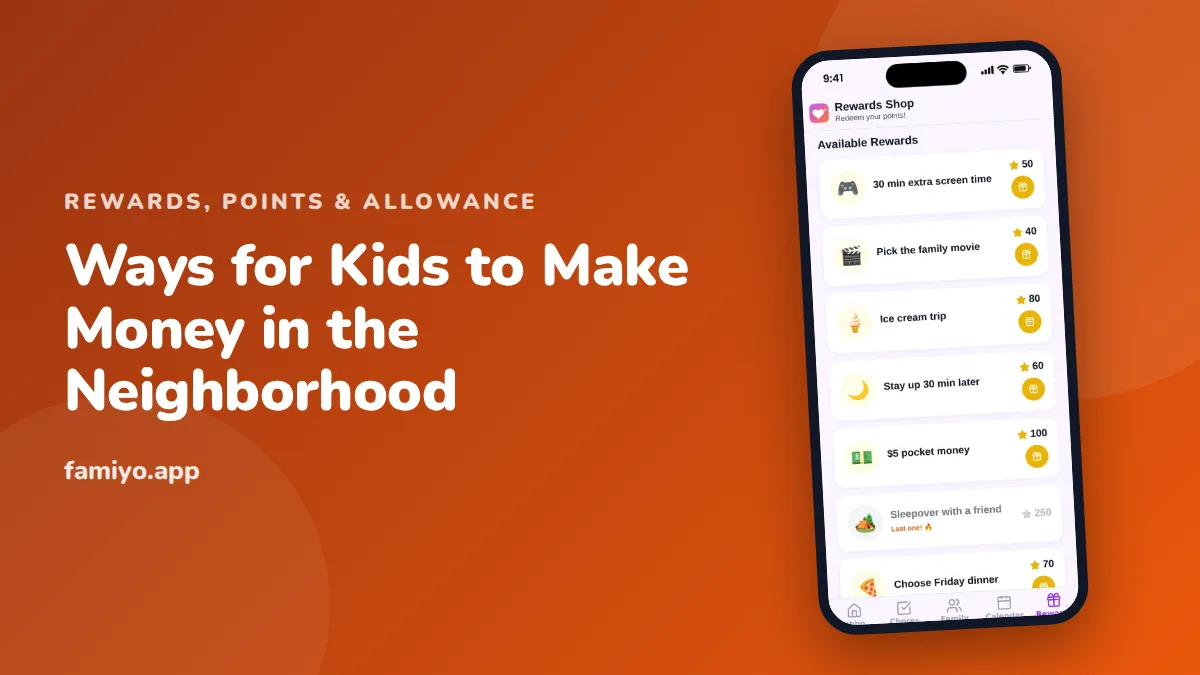
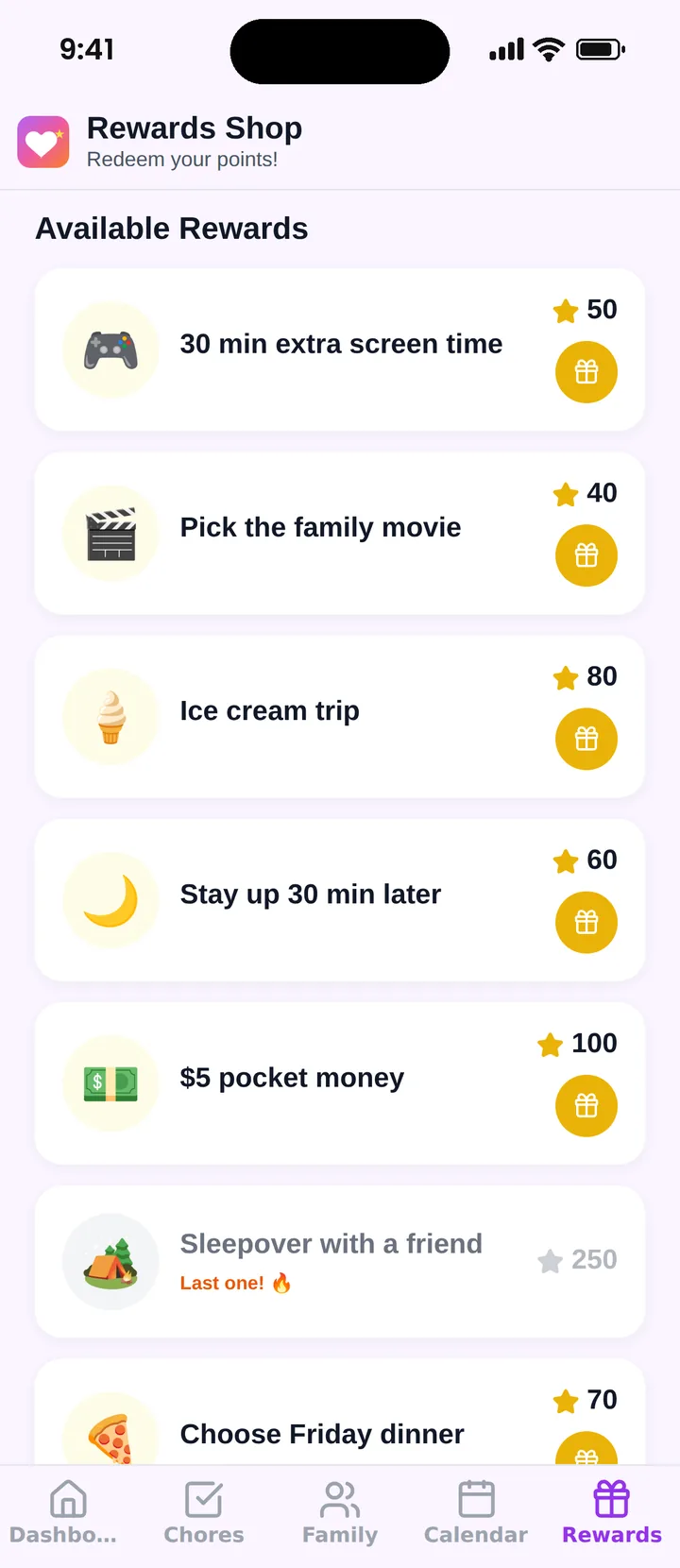
A common setup: neighborhood work is paid in cash by the customer, while household jobs earn points. Famiyo is a free family app for iPhone and Android that combines a shared family calendar, chores with points and a rewards shop; kids join with a code, no email needed. Kids earn points for chores, then exchange them for rewards you choose in the shop, including pocket money. The money itself changes hands outside the app. You set each reward's price in points and how many are available. If you're comparing tools, our list of the best allowance apps for kids is a good start.
For one weekend, have your child pick one job, one price and one neighbor to approach. A first customer is the hardest, and the second is easy.
Frequently asked questions
What can a 10-year-old do to make money in the neighborhood?
A 10-year-old can water plants, bring in mail, wash cars, rake leaves, walk a neighbor's dog with a parent's approval or run a lemonade stand. Jobs near home with a parent aware of the plan are safest.
How much should kids charge neighbors?
Look at what local teens and similar services charge, then start a little lower for younger kids. Agree on a flat price per job before starting, so there are no surprises and no awkward haggling afterward.
Is it safe for kids to work for neighbors?
It can be, with simple rules. Tell a parent where the child is, work with doors open or in the yard, stick to people the family knows, and never go inside a house alone. Parents should meet the customer first.
At what age can kids start earning money outside the home?
Kids as young as 7 or 8 can run a lemonade stand or water plants for a neighbor with a parent nearby. Independent jobs usually start around 11 or 12, and formal work is regulated by age and state rules.
Try Famiyo With Your Family
Chores with points, a rewards shop for kids and one shared family calendar. Set it up in a couple of minutes.



Free to download • No credit card required • Available on iOS & Android