Ways for Kids to Make Money in the Summer
Summer money ideas for kids by age, from lemonade stands to dog walking and online selling, with safety rules and how to track earnings without a mess.
By Famiyo Editorial Team5 min read

By mid-July, most kids have run through the list of things to do and have started asking about money. That is a good moment. A summer job, even a tiny one, teaches pricing, showing up and the odd feeling of handing someone a fair deal. This list sorts ideas by age, flags what needs an adult nearby, and covers the practical bit that usually gets skipped: how to keep track of the earnings.
Ideas for ages 6 to 9
At this age the work should happen at home or on your street, with you close. The jobs are short, and earnings are small.
- Lemonade or snack stand. Classic, and a good way to learn costs against sales. Have the child work out what the cups and lemons cost.
- Outgrown toys and books sale. Kids price their own things and negotiate. Set a rule that they keep the money from their own stuff.
- Water plants or collect mail for a neighbor on vacation, with your involvement.
- Craft sale. Friendship bracelets, painted rocks and bookmarks sell at a table in front of the house.
- Extra jobs at home. Washing the car or organizing the garage. Small extras can pay $0.25 to $1, and a big one $2 to $5.
Keep basic chores like making the bed unpaid. Pay only for jobs that go beyond a family member's share.
Ideas for ages 10 to 12
Kids in this range can take on small recurring jobs with a parent aware of who and where.
- Dog walking or pet feeding for neighbors you know.
- Car washing on a regular day each week.
- Yard help like weeding, raking or watering. Mowing only with the right equipment and adult supervision.
- Helper for a younger child, such as reading to a toddler while a parent works at home.
- Tech help for older neighbors. Setting up a phone or showing how to video call is a real service.
- Selling things online with a parent's account and a parent handling messages and payment.
Our guide on ways for kids to make money in the neighborhood has a longer list for jobs close to home, and jobs for kids under 13 covers what is realistic at this age.
Ideas for ages 13 and up
Teens can aim at steadier work and learn to treat it as a commitment.
- Babysitting or mother's helper after a basic safety course.
- Lawn care, pool help or pressure washing for several neighbors, once they are confident with the tools.
- Tutoring younger kids in math or reading.
- Camp counselor or lifeguard, where age and certification allow.
- Restaurant, retail or camp jobs, depending on state rules.
- A small online shop for crafts, art or digital designs, with a parent supervising the account.
If your teen isn't sure where to start, how to motivate a teenager to get a job offers some first steps.
What to charge
Local rates differ a lot, so there is no single number. A fair way to price a job:
- Estimate how long the job takes for your child, not for an adult.
- Ask what neighbors pay for similar help, or what a small local business charges.
- Set a flat price per job or per hour and say it before starting.
- Round to an amount that's easy to pay.
Kids undercharge or overcharge easily. A short practice chat helps: "If a neighbor asks how much, say 'It's $X for the job, and I'll text you when it's done.'" Rehearsing the sentence makes the real conversation less awkward.
Safety rules that apply to every idea
Treat these as house rules, not suggestions.
- Kids work only for people the family knows or has met, and always in a place you can reach.
- A parent knows the address, the start time and when the job ends.
- No going inside a stranger's home. Jobs are outdoors or at your house.
- Payment is cash, or goes through a parent's account. A child should never handle a payment account alone.
- Online sales use a parent's login and a public meetup spot, never the child's home.
- If a job feels wrong, a child can leave and call you. Make that rule clear.
A sample summer week for a 12-year-old
Seeing it laid out helps kids believe it is doable. This is an example, not a target, and the amounts depend on your area.
| Day | Job | Time |
|---|---|---|
| Monday | Walk a neighbor's dog | 30 minutes |
| Tuesday | Water plants and bring in mail for a family on vacation | 15 minutes |
| Wednesday | Day off, or help at home for points | 0 to 20 minutes |
| Thursday | Walk the dog again, wash one car | 60 minutes |
| Saturday | Small stand or yard sale with a sibling | 2 hours |
That is about four hours of work, spread out, which leaves the rest of the summer for play. Kids who work more than they want to tend to quit by August, so build in the days off on purpose.
When a job goes wrong
Some will. A customer pays late, a dog pulls on the leash, a stand sells nothing because it rained. Talk it through afterward without fixing it for them. Ask what they would do differently, then let them try again. This is where the real learning sits, and it costs much less at age 11 than at 21.
Keep track of the money
A summer of small jobs adds up and then disappears into snacks. A notebook works, or a spreadsheet for older kids. Each week write down what came in, what was spent, what was saved and what was set aside to give. For younger kids a simple split is spend, save, give (for example 50%, 40% and 10%), and our money activities for kids include ways to practice it.
Neighborhood money is only part of the picture. Many families also run a points system at home, where chores earn points that convert to rewards. If you do that, keep the two separate: outside jobs pay money, home chores pay points.
Points for home jobs, money for outside ones
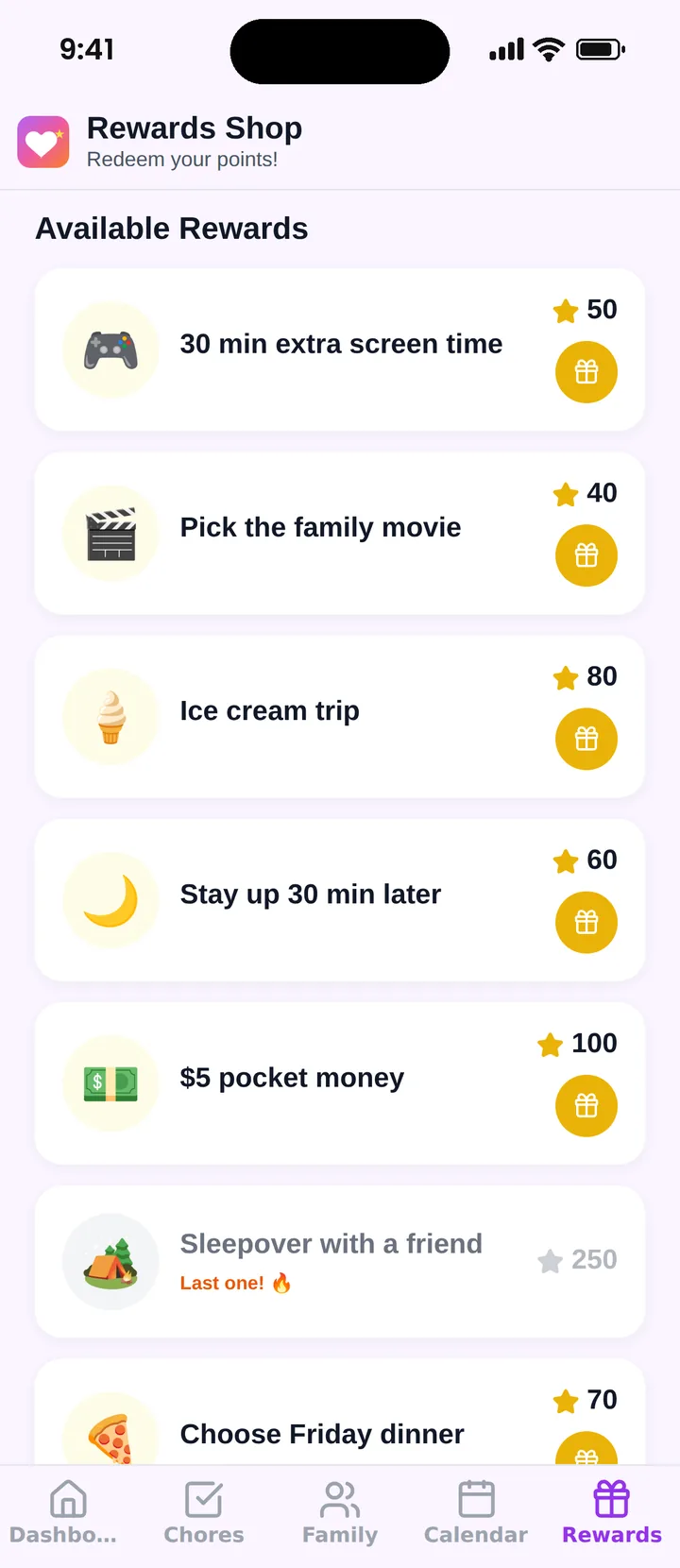
Famiyo is a free family app for iPhone and Android that combines a shared family calendar, chores with points and a rewards shop; kids join with a code, no email needed. For summer, it covers the home side. You give chores a point value, and kids spend those points in the rewards shop on things you set, with a price, how many are available and when. Pocket money can be one of the rewards, but the cash changes hands outside the app. Famiyo never holds or moves money. Our roundup of the best allowance apps for kids shows how that fits with other options.
A good first step: ask your child to pick one idea from the list, work out a price and call or visit one neighbor this week. One paying customer is enough to get started.
Frequently asked questions
How can a 10-year-old make money in the summer?
A 10-year-old can run a lemonade stand, wash cars, water plants for neighbors who travel, walk a dog with a parent's permission or sell crafts. Keep jobs close to home, agree on a price first and have an adult nearby.
What is the easiest way for a kid to make money fast?
A one-day sale is the quickest: a lemonade stand, a yard sale of outgrown toys or a car wash for neighbors. Each pays the same day. Regular jobs like dog walking build up slower but give more over the summer.
Can kids under 13 legally work?
Rules vary by state and by job. In general, small informal jobs for neighbors, like pet care or yard help, are common, while formal employment has age limits. Check your state labor department before a child takes a regular paid job.
How should kids handle the money they earn?
Split it before they spend it. A simple split is spend, save and give, for example 50%, 40% and 10%. Writing the amounts down each week helps kids see how a summer of small jobs adds up.
Try Famiyo With Your Family
Chores with points, a rewards shop for kids and one shared family calendar. Set it up in a couple of minutes.



Free to download • No credit card required • Available on iOS & Android