Daily Chores for Teenagers: A Realistic Everyday List
A realistic list of daily chores for teenagers by time of day and age 13 to 17, with minutes per task, what to leave for weekends and how to keep it to 45 minutes.
By Famiyo Editorial Team4 min read
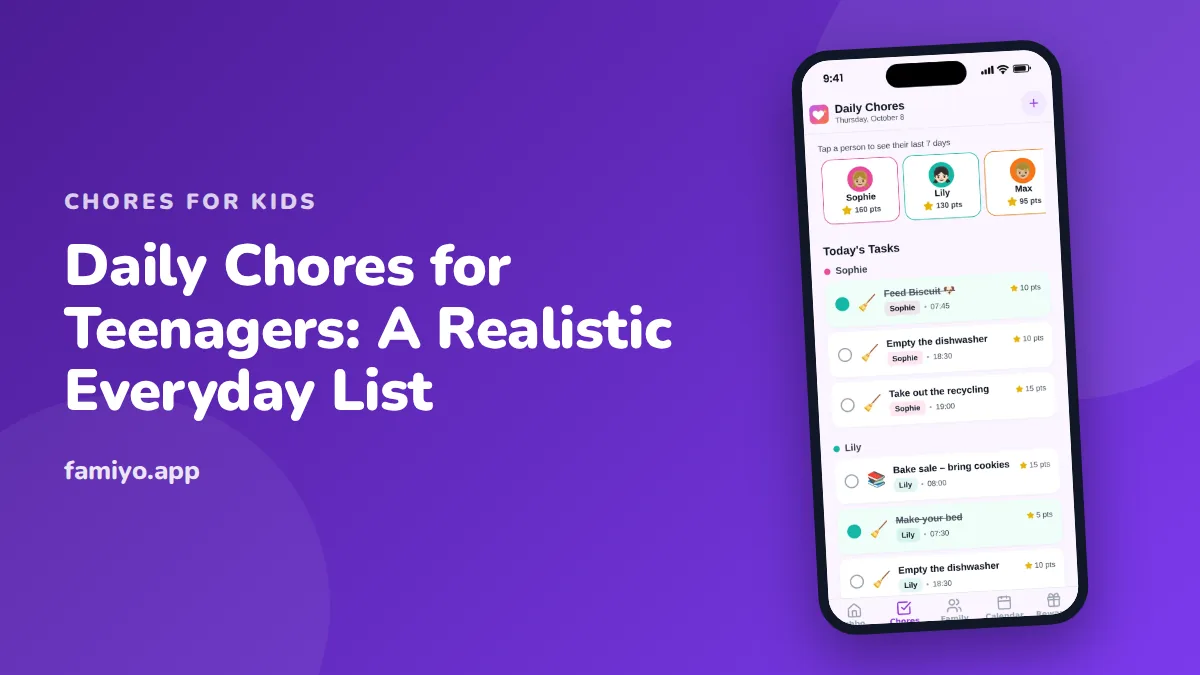
By 13, kids can do most of what the house needs, and by 17 they should be close to running their own life. The trouble with a daily chore list is size. Too long, and it competes with homework and sleep. Too thin, and nothing teaches responsibility. Here's a daily list built around how teens actually spend a day, with minutes, what changes between 13 and 17 and the jobs better saved for the weekend.
What daily responsibility looks like at 13 to 17
Teenagers are building executive skills: planning, starting tasks without a prompt and finishing them. Daily chores are a low-stakes place to practice. The American Academy of Pediatrics notes that teens need 8 to 10 hours of sleep, which is worth remembering when you plan the list. A schedule that eats an hour every evening will cost them sleep or homework.
A workable target for 13 and up is 30 to 45 minutes a day. That's a number to spread across three to five small jobs, not one long block. Short, concrete jobs with a clear "done" are easier to finish than "help around the house."
The everyday list, by time of day
Teens do better when jobs are attached to a moment in their day rather than floating. Use this as a menu and pick three to five.
| When | Job | Minutes |
|---|---|---|
| Morning | Make the bed | 2 to 3 |
| Morning | Dirty clothes into the hamper, towel on the hook | 1 to 2 |
| Morning | Rinse breakfast dishes and put them in the dishwasher | 3 to 5 |
| After school | Unload the dishwasher | 10 |
| After school | Feed or walk the pet | 10 to 15 |
| Dinner | Set the table or cook (two nights a week) | 10 to 30 |
| After dinner | Clear the table, load the dishwasher, wipe counters | 10 to 15 |
| After dinner | Take out the kitchen trash and recycling | 5 |
| Evening | Room reset: surfaces clear, floor clear | 5 to 10 |
| Evening | Pack the bag and lay out what's needed for tomorrow | 5 |
Nobody does all of these. A 14-year-old might get bed, after-dinner kitchen, and a 10-minute room reset on school nights, with cooking dinner on Tuesday and Thursday. That comes to about 25 to 40 minutes.
What changes from 13 to 17
The list grows in responsibility, not just in minutes.
| Age | What to expect | Example daily set |
|---|---|---|
| 13 to 14 | Still needs a time and a check-in. Follows a routine well when it's written down | Bed, hamper, unload dishwasher, trash |
| 15 to 16 | Can run a job without prompting. Starts cooking real meals and planning around a schedule | Bed, after-dinner kitchen, dinner twice a week, own laundry day |
| 17 | Close to adult: manages time, appointments and errands, helps with younger siblings | Own mornings and rooms, cook dinner, errands, help siblings with homework or rides |
At 13 or 14, plan on giving a reminder at first and writing the time next to each job. By 16 or 17, the aim is that the list lives on their phone and you only look at results. For the wider picture, our guide to chores for teenagers covers the full range by age, and our list of daily chores for kids by age shows how this list grows from the younger years.
What to keep off the daily list
Some jobs are better weekly. Putting them on every day produces fatigue and doesn't teach anything extra.
- Laundry: one set day for washing, drying, folding and putting away. See our tips on getting kids to do their own laundry.
- Bathrooms: weekly, 15 to 20 minutes.
- Mowing, raking and yard work: weekends, as a bigger job of 30 minutes or more.
- Vacuuming the whole house: weekly or split by room.
- Washing the car: occasional, and a good candidate for extra pay.
Daily is for the small, repeated things that keep the house from sliding. Weekly is for the larger resets.
Making the list stick
Three habits make a daily list easier to keep.
- Tie each job to a time or event: "dishwasher before dinner," "bag packed before you shower."
- Write the list down once, with the job, the time and what "done" means. "Room reset" means floor clear and surfaces clear, not a deep clean.
- Review it every few weeks. Exams, sports and part-time work change what a teen can handle, and a list that fits in October may not fit in March.
Reminders work better as a short check than a conversation. If a job isn't done, a one-line "Dishwasher?" is plenty. Tidying a room is often the hardest job for this age group, so see our advice on how to get teens to clean up after themselves.
Giving each teen their own daily list in Famiyo
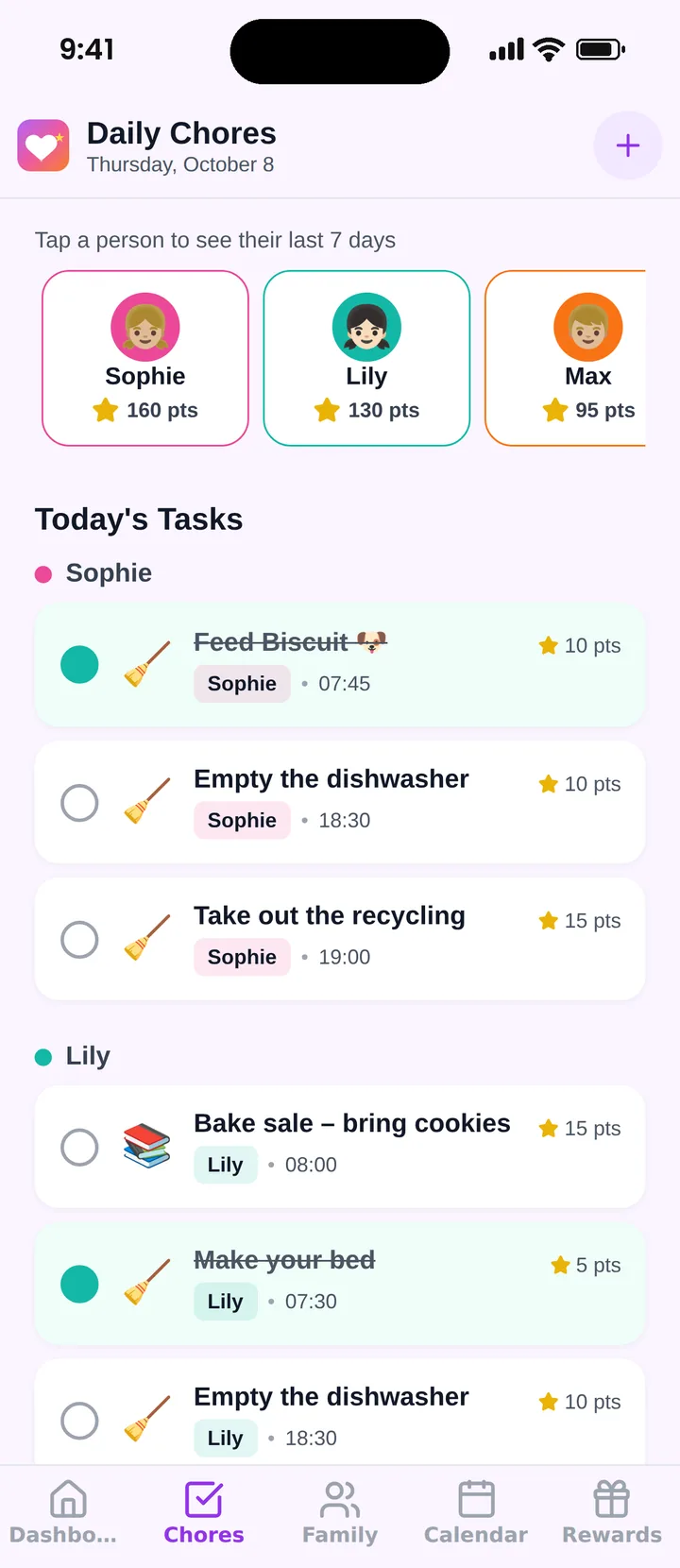
Famiyo is a free family app for iPhone and Android that combines a shared family calendar, chores with points and a rewards shop; kids join with a code, no email needed. For a teen's daily list, you add each job once, set it to repeat daily or on certain days, assign it to your teen and give it points. A small job might be 5, a medium one 10, and doing it without a reminder earns a bonus of 2. Your teen checks the jobs off on their own phone, or you approve them, and you decide which. Their points go toward rewards you set. For options, see our list of the best chore apps for kids.
Pick three jobs from the table tonight, attach a time to each and talk it over with your teen before you start.
Frequently asked questions
How many daily chores should a teenager have?
Three to five short ones is a good range, adding up to about 30 to 45 minutes a day. More than that starts to compete with homework, sleep and activities. Keep the daily list steady and put bigger jobs on one or two weekly days.
What are good daily chores for a 15-year-old?
Making the bed, loading or unloading the dishwasher, taking out the trash, a 10-minute room reset and cooking or helping with dinner a couple of nights a week. They should also manage their own laundry on a set day.
Should teenagers do chores every day, even on school nights?
Yes, but keep school nights light. Short jobs of 10 to 15 minutes fit around homework. Move heavier ones such as bathrooms, mowing and big cleanups to the weekend, and lighten the load during exams or sports seasons.
Do teens need reminders for daily chores?
Fewer than younger kids, but most still do at first. Give each job a time, like 'dishwasher before 6', and have a way for them to check it off. After a few weeks of steady use, most teens need far fewer reminders.
Try Famiyo With Your Family
Chores with points, a rewards shop for kids and one shared family calendar. Set it up in a couple of minutes.



Free to download • No credit card required • Available on iOS & Android