Reward System for Kids With Autism: A Practical Guide
How to build a reward system for an autistic child: pick real motivators, keep rewards visible and immediate, set clear rules, and adjust as skills grow.
By Famiyo Editorial Team5 min read
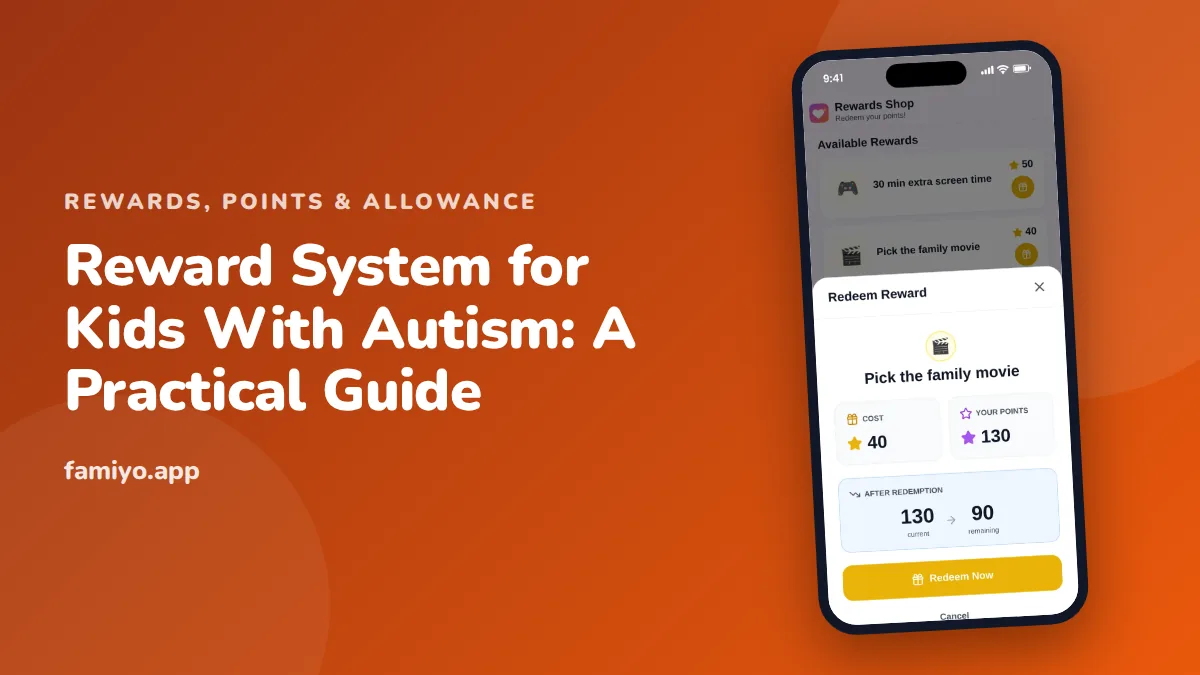
Many autistic children do well with structure that is clear, visible and the same every day, and a reward system can offer all three. It can also go wrong in quiet ways: a reward the child does not care about, rules that shift, a chart that is full of words they have to decode. This guide covers how reward systems tend to work for autistic kids, how to choose the pieces, and how to adjust as your child grows. Every child is different, so treat everything here as a starting point to test, not a prescription.
This is general parenting information, not medical or therapy advice. If your child has a therapist, an occupational therapist or a pediatrician involved, run the plan past them. They know your child and can fit it to existing goals.
Why reward systems can suit autistic children
Established guidance on autism support, including material from the CDC and the American Academy of Pediatrics, points to the same practical themes: clear expectations, predictable routines, visual supports and positive feedback for skills a child is building. A reward system is one way to put those together at home.
The reason it can help is not magic. Reward systems make an invisible expectation visible ("brush teeth, then star"), show what comes next and give quick, concrete feedback. For a child who finds unspoken social rules hard to read, a chart does the explaining.
It depends on the child. Some love tokens. Others find any system stressful, particularly if they are sensitive to demands or to being watched. If your child resists, that is information, and it is fine to change the format or pause.
Start with what your child actually likes
A reward only works if the child wants it. Parents often guess, and guessing is where many systems die.
Watch for a week. Note what your child chooses when given free time, what they ask for, what makes them calm and happy. Then build a short menu of three to five options. A menu helps because it gives choice, which gives control, and control is often what a child needs most.
Rewards that often land with autistic children include:
- Time with a special interest (trains, maps, a favorite game, dinosaurs)
- A preferred sensory activity, such as a swing, a quiet corner with a weighted blanket, or water play
- A short stretch of a favorite show or game
- A favorite snack
- One-on-one time doing something they pick
Social rewards like a big public cheer may not feel like rewards at all. Some children find loud praise unpleasant. Quiet, specific words ("You put your shoes on by yourself") or a thumbs up can work better.
Check preferences again every few weeks. A reward that thrilled them in September may be boring by November. That is not failure. It is just a reason to refresh the menu.
Keep the system visual and predictable
A reward system for an autistic child should be easy to read at a glance. Words may be harder than pictures, and the whole point is to reduce effort, not add it.
What tends to help:
- Photos or simple icons next to each task
- A short list, often three to five steps
- A clear picture of the reward, placed where the child can see it
- A first-then structure: "First shoes, then tablet"
- The same layout every day
Changes are the risk. If the rules, rewards or times shift without warning, the system stops being predictable, which defeats its purpose. When a change is needed, tell your child ahead of time and show it on the chart.
Make the steps small and the reward quick
Begin with one skill, not ten. Pick something your child can almost do and break it into small steps. "Get ready for bed" might be pajamas, teeth, book. Reward the first success, not the perfect version.
At the start, deliver the reward fast. A child who earns something and gets it at once learns the link. Later, you can stretch it: a token for each task, a prize after five tokens. Go at your child's pace. If tokens start losing meaning, shorten the wait again.
A rough way to grow the system:
| Stage | What it looks like | Reward timing |
|---|---|---|
| 1. Learning the link | One task, one reward | Right after the task |
| 2. Adding tokens | A token per task | A small reward after 2 or 3 tokens |
| 3. Longer goals | A few tasks a day | Reward once the day is done |
| 4. Weekly goals | Routine tasks plus one stretch skill | A bigger reward at the end of the week |
You don't need to hit every stage. Many families stay at stage 2 for a long time, and that works.
Rules that keep it fair
Some practices matter more than others for autistic kids:
- Never take earned rewards or points away. A loss feels like a punishment and can cause real distress.
- Say exactly what earns a reward. "Be good" is too vague. "Put your plate in the sink" is clear.
- Keep your promise every time. If you say tablet after shoes, give the tablet after shoes.
- Reward effort on hard things, not only success. A new skill takes many tries.
- Use praise that names the skill, delivered in the way your child can tolerate.
- Plan for bad days. If your child is sick, tired or overloaded, lower the demand. A system that survives off days lasts longer.
Be careful with rewards that serve as comfort or regulation, like a favorite sensory activity. If your child needs it to feel calm, do not put it behind a task. Ask your child's therapist if you are unsure.
What to do when it stops working
Reward systems fade for ordinary reasons. The reward got boring, the task got harder, or the child outgrew the format. Before you assume the child is being difficult, check the basics:
- Is the reward still wanted? Offer a new menu.
- Is the task too big? Split it.
- Is the system consistent? Look for slips on your side.
- Is something else going on, such as a school change, poor sleep or a sensory problem? Those can overwhelm any chart.
If the problem persists, bring it to the professionals who work with your child. For the general design of a home system, see our guide to a reward system for kids, and for how tokens work, our token economy for kids page explains the mechanics. Our page on positive reinforcement for kids shows examples of praise and feedback that you can adapt.
Doing this with Famiyo
Famiyo is a free family app for iPhone and Android that combines a shared family calendar, chores with points and a rewards shop; kids join with a code, no email needed. For a child who likes clear rules, the rewards shop makes the deal explicit. You create each reward with a price in points, how many are available and when. Your child redeems from their own phone and sees how many points they will have left.
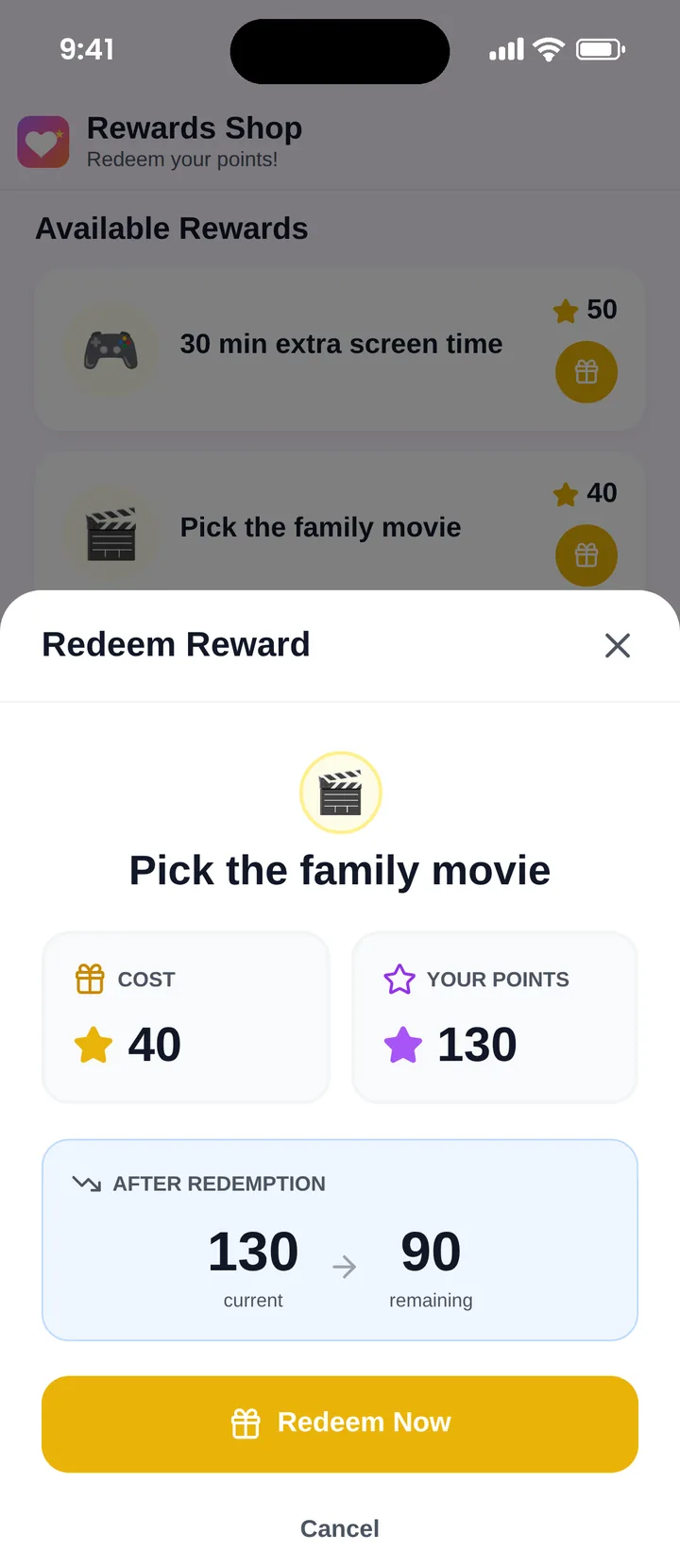
You can give the same chore different points for each child. See our list of the best reward chart apps for kids if you want to compare options.
Choose one small task and one reward your child loves, and run it for two weeks before changing anything.
Frequently asked questions
What are good rewards for an autistic child?
The best rewards are the ones your child chooses: time with a favorite topic, a preferred toy, a sensory activity, a snack, or a few minutes of a favorite show. Offer a short menu and watch what they pick, because preferences shift.
Should rewards be immediate for kids with autism?
Often yes, especially at the start. A short gap between the task and the reward makes the link clear. As the habit grows, many children can wait for tokens to add up, but go slowly and let your child's response guide you.
Can a reward system make autistic kids dependent on rewards?
It can if rewards are the only reason for every task. Pair rewards with specific praise, keep them for skills that are hard, and gradually raise the effort needed. Review the plan every few weeks, ideally with your child's therapist.
What if my child gets upset when they lose a point?
Do not take away earned points. Many autistic children find a loss very distressing, and it breaks trust in the system. Let points only go up, and handle behavior through clear expectations and calm routines instead.
Is a reward system a substitute for therapy?
No. A home reward system supports routines and daily skills. It does not replace professional support. If your child works with a therapist, share what you're doing so the goals and rewards line up across home and sessions.
Try Famiyo With Your Family
Chores with points, a rewards shop for kids and one shared family calendar. Set it up in a couple of minutes.



Free to download • No credit card required • Available on iOS & Android