Kids Reward Ideas by Age: 40 Rewards That Actually Work
Kids reward ideas by age, from toddlers to teens: 40 rewards that cost little or nothing, how big each should be and how to avoid turning every task into a deal.
By Famiyo Editorial Team5 min read
Parents don't usually run out of reasons to reward, they run out of rewards. After the third sticker chart and one too many trips for ice cream, ideas get stale and prices creep up. This list is organized by age, so you can pick something the child actually cares about, with a rough guide to how big each one should be and how long it should take to earn.
How big should a reward be?
Before the ideas, the sizing. A reward works best when the effort and the prize feel matched. The family numbers below are the ones many parents use as a starting point if they award points for tasks.
| Reward size | Examples | Price in points |
|---|---|---|
| Small | 15 extra minutes of screen time, choose dessert | 30 to 50 |
| Medium | Pick the family movie, stay up 30 minutes later | 100 |
| Big | A day out, a toy around $20 | 300 to 500 |
A child earning about 10 to 20 points a day should be able to afford a small reward every 2 to 3 days and a big one every 3 to 4 weeks. If a prize takes much longer, interest fades. If it takes much less, it feels like an entitlement.
Reward ideas for ages 2 to 3
Toddlers need rewards within seconds, and they care about attention more than objects.
- A sticker on the shirt or the chart
- A high five, a dance or a silly song
- Choosing the bedtime story
- Five minutes of bubbles
- Using the special cup or plate at dinner
- A short walk with a parent to pick a leaf or a stone, a small outing
Reward ideas for ages 4 to 7
Preschoolers and early elementary kids still love a physical sign of progress, but they begin to enjoy choosing.
- Extra story time or a second book
- Painting or playing with play dough with a parent for 15 minutes
- A game of their choice, played with you
- Choosing a snack from two options
- A trip to the playground or the library
- A new sticker sheet or stamp
- Picking music for the car
- A small toy from a prize box at home (a dollar-store bin works)
- Staying up 10 minutes later on a weekend
- Helping bake something and eating it together
Reward ideas for ages 8 to 12
Kids this age care about independence, friends and screens. They can also wait longer, so they can save up.
- 15 or 30 extra minutes of screen time (see earn screen time ideas for kids)
- Choosing the family movie or dinner
- Having a friend over or a sleepover
- A later bedtime on a non-school night, 30 minutes
- A special one-on-one outing with one parent
- Picking a new game, book or art supply up to a set price
- A day of being the "boss" of the playlist or the route
- A trip to a trampoline park, bowling or mini golf
- A small amount of money toward something they want, such as 100 points for $1
- Skipping one chore for a day, with a ticket they can save
Reward ideas for teens
Teens respond to freedom, money and respect. Bribery feels insulting, so frame these as earned privileges.
- Extra phone or gaming time on a weekend
- A later curfew by 30 minutes for a special occasion
- Gas money or a ride to a friend's place
- Choosing the restaurant for a family dinner
- Concert or event tickets after a stretch of steady effort
- A bigger contribution toward something they're saving for
- A day off from a regular chore, used when they choose
- Using the car, once they're licensed, for a planned outing
- A clothing or sneaker budget for a season
- A small sum of money, paid on a regular schedule
For teens in particular, see how to teach kids about money, which links rewards to budgeting skills.
Rules that make any reward work
- Say the deal before the task, not during. "If you finish the room by 5, you earn 10 points."
- Give the reward quickly after the effort, especially for young children.
- Don't take away a reward already earned as a punishment. Earned is earned.
- Mix in unexpected, unannounced praise too. Not everything needs a payment.
- Use fewer rewards over time. A child who has made the bed for two months doesn't need points for it.
- Keep a few rewards that cost nothing in the mix. Our list of free rewards for kids has 50 more.
Rewards also don't replace the internal reasons for doing things, and a child who only works for prizes may stall when the prizes stop. Pair them with comments on effort and see our intrinsic motivation examples for kids for what to protect.
Running a rewards shop in Famiyo
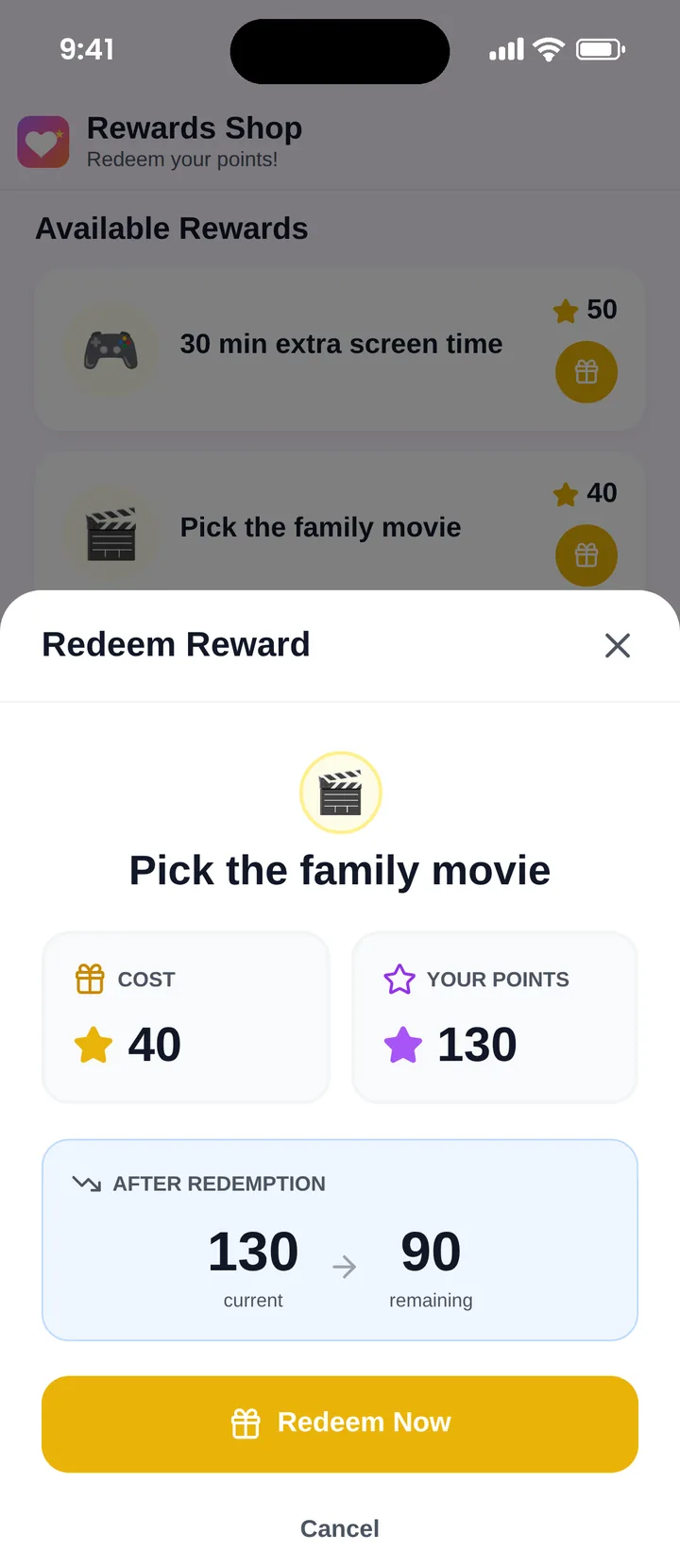
Famiyo is a free family app for iPhone and Android that combines a shared family calendar, chores with points and a rewards shop; kids join with a code, no email needed. The rewards shop is where the lists above live: you create each reward with a price in points, how many are available and when, so "pick the family movie" can be offered once a week and "a day out" once a month. Kids open the shop on their own phone, redeem, and see how many points they'll have left. You get a push notification when something is redeemed. Compare apps in our list of the best reward chart apps for kids.
When a reward stops working
Every reward has a shelf life. If your child shrugs at something that worked two weeks ago, don't raise the price. Ask what they'd like instead, or rotate the menu so that each reward comes back after a break. A reward that is always available is no longer a reward, which is another reason to limit how many of each are on offer in a week.
Start with five
Pick five rewards from your child's age group, in the three sizes above, and write the price next to each. Try them for three weeks, drop the ones nobody asks for, and replace them with something your child suggested.
Frequently asked questions
What are good rewards for kids that don't cost money?
Time and choice cost nothing: picking the family movie, an extra bedtime story, a game of cards with a parent, choosing dinner, a later bedtime on a weekend, or a trip to the park. Kids often value your attention and a say in the plan more than a small toy.
How big should a reward be?
Match it to the effort. Small rewards cover small steps and arrive quickly, within a day or two. Medium ones cost a week or so of effort, and big ones, like a day out or a toy around $20, should take several weeks. If a child can earn a big prize easily, it loses its meaning.
Should rewards be food?
Occasionally is fine, but food rewards can teach kids to link treats with achievement. Many parents prefer activities, privileges or small items. If you do use a treat, keep it small and rare, and make it a choice such as picking dessert, not a routine payment.
At what age should I stop using rewards?
There's no fixed age. Rewards usually shift from stickers to privileges to money as kids grow, and shrink as habits settle. Once a task is automatic, such as making the bed, stop rewarding it and move the reward to a new goal.
Try Famiyo With Your Family
Chores with points, a rewards shop for kids and one shared family calendar. Set it up in a couple of minutes.



Free to download • No credit card required • Available on iOS & Android